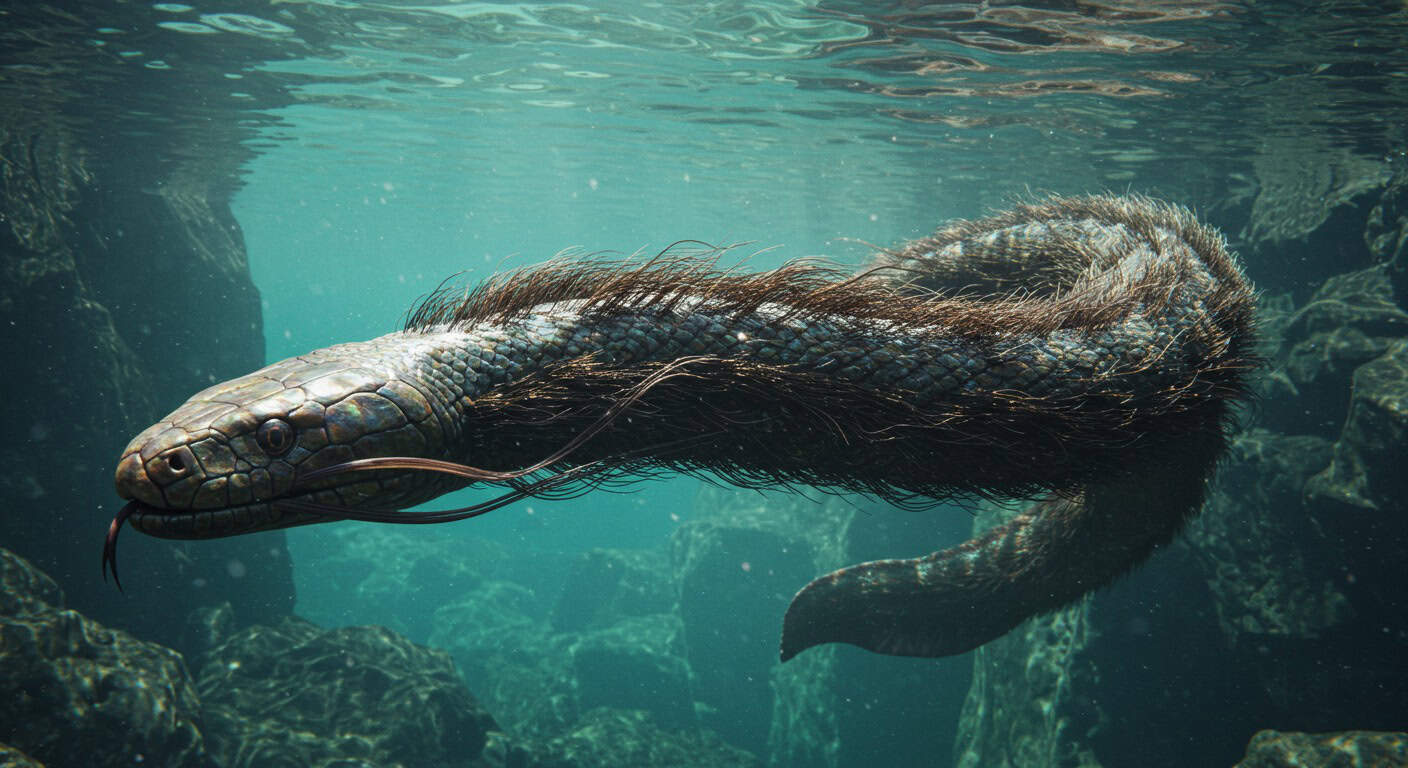
The Anguila Peluda stands as one of the Canary Islands’ most chilling cryptozoological mysteries. This legendary creature haunted the remote pools of Tenerife’s Anaga massif for generations. Local peasants whispered tales of a monstrous eel with hair-covered head and malevolent eyes. The beast’s terrifying presence gave its name to the Charco de la Anguila, or Eel Pool, where it allegedly dwelled.
Unlike typical lake monsters found elsewhere, this creature possessed distinctly demonic characteristics. Witnesses described its gaze as filled with “terrible intensity” and “threatening malice.” The locals believed they faced not just an oversized animal, but a supernatural entity requiring exorcism. The legend persisted so strongly that it became embedded in the region’s geography and folklore.
The Anaga region itself adds to the mystery’s eerie atmosphere. This ancient massif contains 40-million-year-old laurisilva forest, described as a “living fossil.” The landscape creates an otherworldly setting where such creatures might plausibly lurk. Dense mists roll through deep ravines, creating perfect conditions for monster sightings and supernatural encounters.
The 1897 Historical Account of the Anguila Peluda
Manuel de Ossuna y Van Den Heede documented the first official account of the Anguila Peluda in his 1897 work “Anaga y sus antigüedades.” This respected historian and professor discovered the legend while researching the region’s antiquities. His academic credentials lend credibility to what might otherwise be dismissed as folklore.
Ossuna wrote that “many years ago an eel of enormous size lived in the Barranco de los Infiernos.” This “Hell’s Ravine” is now known as the Palmital ravine. The name itself suggests the supernatural dread associated with the location. Local residents had maintained this oral tradition for generations before Ossuna recorded it.
The historian’s description reveals the creature’s most disturbing features. He noted that “this eel was a monster; its horrible head was covered with hair and its eyes were always directed with terrible intensity toward people.” The beast would fix its gaze on anyone brave enough to approach its pool. This predatory behavior distinguished it from ordinary eels, which typically avoid human contact.
Eyewitness Encounters with the Anguila Peluda
For more strange history, see: Siren Head: The Terrifying Digital Legend That Stalks Modern Folklore
The peasants of Punta de Anaga lived in constant fear of the creature. They avoided the pool where it resided, believing it harbored demonic powers. Unlike modern cryptid sightings, these encounters carried deep religious implications. The locals didn’t simply report seeing an unusual animal – they described confronting pure evil.
The creature’s hair-covered head particularly disturbed witnesses. Normal eels possess smooth, scaleless skin. This aberrant feature suggested something unnatural about the beast. Some theorized it represented a fallen angel or demon taking aquatic form. The combination of serpentine body and mammalian hair created an unsettling hybrid appearance.
Multiple generations reported similar encounters before the creature’s disappearance. Parents warned children away from certain pools and ravines. The consistent descriptions across decades suggest either a real creature or deeply embedded cultural memory. Either possibility makes the legend significant to understanding Canarian folklore and regional storytelling traditions.
The Mysterious Disappearance of the Anguila Peluda
According to local tradition, the community eventually took action against their tormentor. They believed the creature required religious intervention rather than physical confrontation. The peasants arranged for an exorcism to banish what they considered a demonic presence. This spiritual approach reflects the deep Catholic faith that had replaced earlier Guanche beliefs.
Following the exorcism ritual, the Anguila Peluda either died or vanished from the region. No one reported further sightings after this intervention. The sudden disappearance adds another layer of mystery to the legend. Did the creature actually exist and somehow perish? Or did changing cultural attitudes simply end the sightings?
The timing of the disappearance coincides with increasing modernization in the Canary Islands. As traditional beliefs gave way to scientific thinking, monster sightings naturally declined. However, the legend’s persistence in place names and oral tradition suggests its profound impact on local culture. The Charco de la Anguila still bears the creature’s name today.
Scientific Context and Modern Investigations
Modern researchers have found intriguing connections between the legend and actual eel populations. European eels (Anguilla anguilla) did historically inhabit Canarian waters, though they’re now critically endangered. These eels can grow quite large and live for decades in suitable pools. However, scientists note that finding such creatures in Tenerife’s subtropical climate would be “exceptional and unique.”
The Museum of Nature and Archaeology in Santa Cruz houses regional folklore alongside scientific specimens. Their collections include prehistoric animal fossils from the Canary Islands, providing context for understanding ancient creature legends. However, no physical evidence of the Anguila Peluda has ever been catalogued.
Recent cultural revival efforts have renewed interest in the legend. The Anaga Biosphere Reserve now incorporates the story into educational materials and hiking guides. Tourists specifically seek out the Charco de la Anguila location, though the original pool may have changed over the centuries. Artist interpretations continue appearing, showing the creature’s lasting grip on popular imagination.
The Anguila Peluda represents more than just a monster story – it embodies the collision between ancient beliefs and modern skepticism. Whether the creature ever existed remains unknown. But its impact on Tenerife’s cultural landscape proves undeniably real, continuing to fascinate and terrify new generations of listeners.