
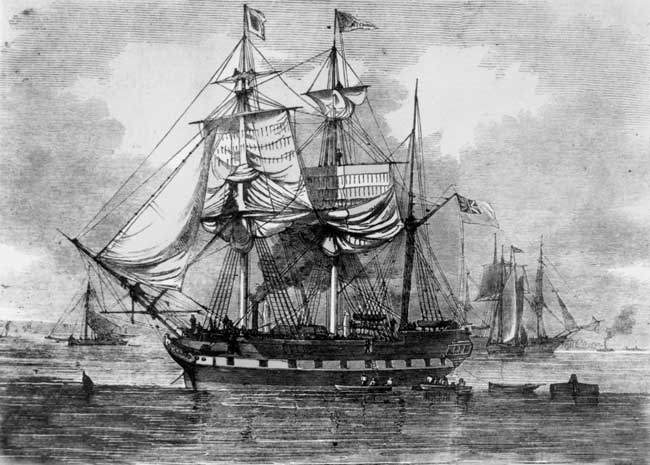
The term “Coffin Ship (insurance)” describes one of maritime history’s darkest chapters. These vessels were deliberately overinsured by their owners. The ships became worth more money at the bottom of the ocean than sailing safely to port. Sailors who boarded these floating death traps rarely knew they were stepping onto what amounted to a premeditated murder weapon.
The practice reached its horrifying peak in the mid-1800s. Unscrupulous shipowners would purchase rotting, worm-eaten vessels. They’d slap on fresh paint and give them new names. Then they’d falsely register them as seaworthy ships. The insurance policies they took out far exceeded the vessels’ actual value. When these ships inevitably sank, the owners collected massive payouts while crews drowned in icy waters.
What made this scheme particularly sinister was its calculated nature. These weren’t accidents or acts of God. They were cold-blooded business decisions where human lives served as acceptable losses in pursuit of profit.
The Coffin Ship (insurance) Epidemic That Terrorized Sailors
By the 1860s, the Coffin Ship (insurance) problem had reached epidemic proportions. Over 2,000 sailors found themselves in court. Their crime? Refusing to board ships they knew would kill them. These men had taken one look at their assigned vessels and walked away. They’d rather face legal consequences than certain death.
The ships themselves told horrifying stories. Hulls riddled with rot holes barely held together by fresh paint. Masts weakened by decades of woodworm damage. Sails patched so many times they resembled quilts more than proper rigging. Some vessels leaked so badly that pumping water became a full-time job for multiple crew members.
Samuel Plimsoll, a British Member of Parliament, became obsessed with exposing this murderous trade. He discovered that Lloyd’s of London, the famous insurance market, hadn’t seen a single ship voluntarily scrapped by owners in thirty years. Every vessel, no matter how decrepit, somehow found its way back to sea. The reason was simple: insurance fraud paid better than honest business.
Plimsoll’s investigations revealed the true scope of the horror. Ships that should have been broken up for scrap were instead sent on suicide missions. Their crews became unwitting participants in elaborate insurance schemes.
Deliberate Sabotage and the Coffin Ship (insurance) Murder Plots
Related article: Villa Epecuén: Argentina’s Lost Tourist Town Swallowed by Salt Water
Some Coffin Ship (insurance) cases went beyond mere negligence into outright murder. Owners didn’t just send out unseaworthy vessels and hope for the best. They actively sabotaged their own ships to ensure they’d sink. Time bombs, deliberately weakened hulls, and tampered safety equipment turned voyages into death sentences.
The 1977 Lucona incident shows how these schemes evolved into the modern era. Udo Proksch planted a time bomb aboard his cargo ship in the Indian Ocean. He’d insured worthless scrap metal as expensive uranium processing equipment. When the explosion killed six crew members, Proksch attempted to collect millions in fraudulent insurance money. The calculated cruelty mirrored the coffin ship mentality perfectly.
Earlier cases were often more subtle but equally deadly. Owners would remove crucial safety equipment before departure. They’d overload ships beyond any reasonable capacity. Some even bribed port inspectors to overlook obvious safety violations. The goal remained consistent: ensure the ship would sink while maintaining plausible deniability.
Sailors began developing their own warning systems. Experienced crew members could spot a coffin ship from its appearance and smell. The stench of rot was often the first clue. Unusual creaking sounds, excessive listing, or water already present in the hold were other red flags.
Strange Tales and Supernatural Warnings of Doomed Coffin Ship (insurance) Vessels
Maritime folklore developed around these cursed vessels. Sailors reported supernatural warnings about coffin ships. Phantom figures allegedly appeared on docks, warning crew members away from doomed voyages. Some men claimed to hear ghostly voices calling their names, urging them not to board.
The ship Bolivar became legendary in maritime circles. Rudyard Kipling immortalized it in his 1892 poem “The Ballad of the Bolivar.” The vessel was so obviously unseaworthy that its successful voyage from England to Spain seemed miraculous. Kipling described it as a “rusted, rotten and leaking” death trap that somehow defied the odds.
Other ships weren’t so fortunate. The London sank in 1866 with massive loss of life. Survivors described hearing strange sounds before the disaster. Some claimed the ship itself seemed to groan in protest, as if aware of its fate. These accounts, while likely influenced by trauma and superstition, reflected the very real horror of sailing on deliberately sabotaged vessels.
The London’s tragic fate became a rallying cry for maritime safety reform. The ship had been overloaded with passengers and cargo far beyond its capacity. When it encountered rough weather, the inevitable happened.
The End of an Era and Modern Echoes
Samuel Plimsoll’s crusade finally succeeded in the 1870s. His reforms, including the famous Plimsoll Line marking safe loading levels, largely eliminated the coffin ship trade. Ships now had to meet basic safety standards. Insurance companies faced stricter regulations about what they could cover.
The human cost of the coffin ship era remains staggering. Thousands of sailors died in what amounted to premeditated murders. Families lost breadwinners to schemes that prioritized profit over human life. The psychological trauma affected maritime communities for generations.
Modern maritime law includes strict penalties for insurance fraud. Contemporary cases still occur, but they’re far less common and face serious legal consequences. The days when owners could casually send crews to their deaths for insurance money have largely ended.
Yet the legacy of coffin ships persists in maritime culture. The term itself has entered common usage to describe any deliberately dangerous situation maintained for profit. The story serves as a chilling reminder of what happens when greed completely overrides human decency.
The Coffin Ship (insurance) era represents one of capitalism’s darkest chapters. It shows how easily human lives become expendable when money is the only consideration. These floating death traps claimed thousands of victims before public outrage finally forced change. Their ghost stories may be folklore, but the very real horror they represent continues to haunt maritime history.
Related Posts
 School Shooting Hoax Conspiracy Theories: When False Flags Meet Real Terror
 The Saguenay Flood of 1996: Canada’s Most Devastating 20th Century Deluge
 Capsizing: A Maritime Disaster That Changed Naval History Forever
 Bilderberg Meeting: The Secret Gathering That Spawned a Thousand Conspiracy Theories