The Dublin Whiskey Fire of June 18, 1875, stands as one of the most unusual disasters in Irish history. This catastrophic blaze began in a whiskey storehouse in Dublin’s Liberties district. It created a burning river of alcohol that flowed through the city streets. The fire destroyed 35 houses and caused over £100,000 in property damage.
The incident occurred during a time when Dublin was experiencing rapid industrial growth. Whiskey production was a major industry in the city. Large bonded warehouses stored thousands of gallons of the valuable spirit. These facilities posed significant fire risks due to the highly flammable nature of alcohol. The Liberties area housed many such warehouses alongside residential buildings.
Origins of the Dublin Whiskey Fire Disaster
The fire began at Laurence Malone’s bonded storehouse on Ardee Street corner. This facility contained 5,000 hogsheads of whiskey valued at £54,000. That amount equals approximately £6.58 million in today’s currency. The storehouse had been inspected at 4:35 PM with no problems detected. However, by 8:30 PM, flames were visible throughout the building.
The exact cause remains unknown to this day. Investigators suspected spontaneous combustion or an accidental ignition source. The fire spread rapidly through the wooden structure. By 9:30 PM, the intense heat caused whiskey barrels to explode violently. Contemporary newspaper accounts described the sound as thunderous explosions that could be heard across the city.
Streams of burning whiskey began pouring from the building’s doors and windows. The alcohol was at cask strength, meaning it was undiluted and highly potent. This created an extremely dangerous situation as the flaming liquid spread beyond the warehouse walls.
The Deadly River of Fire
For more strange history, see: Nottingham Cheese Riot: When Angry Citizens Rolled Cheese Through the Streets in 1766
The escaped whiskey formed a burning river six inches deep. This deadly stream flowed down Cork Street before turning onto Ardee Street. It continued its destructive path to Chamber Street and Mill Street. The flowing alcohol demolished a row of small houses in its wake.
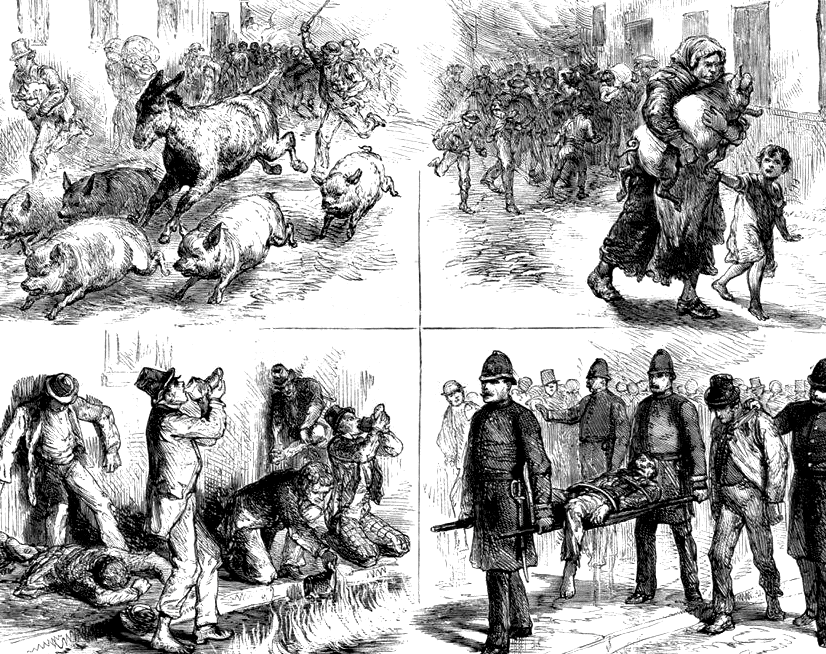
Residents first became aware of the disaster through the sounds of squealing pigs. Nearby livestock pens had caught fire from the spreading flames. This early warning system proved crucial for evacuation efforts. People had little time to escape as the fire spread rapidly through the densely packed neighborhood.
The Lord Mayor of Dublin, Peter Paul McSwiney, praised the quick evacuation. He noted that despite the short escape time, no lives were lost directly from the fire. However, the real tragedy was yet to unfold as residents discovered the flowing whiskey.
Human Tragedy and the Dublin Whiskey Fire’s Victims
Many residents gathered along the streams of burning alcohol with containers. They filled caps, porringers, and other vessels with the free whiskey. This decision proved fatal for many who participated. The whiskey was at full cask strength, making it extremely potent and dangerous to consume.
Twenty-four people were hospitalized due to alcohol poisoning. Thirteen of these individuals died from consuming the undiluted spirits. These deaths represent the only human fatalities from the disaster. The victims likely didn’t understand the dangers of drinking such concentrated alcohol.
The incident highlights the desperate poverty in Dublin’s Liberties district. Residents saw an opportunity to obtain valuable whiskey for free. They couldn’t have known that their actions would prove deadly. Alcohol poisoning from high-proof spirits can be fatal even in small quantities.
Aftermath and Historical Impact
The total property damage exceeded £100,000, with lost whiskey accounting for £54,000. This made it one of the most expensive fires in Dublin’s history at that time. The disaster destroyed 35 houses and left many families homeless. Several pigs also perished in the flames, adding to the agricultural losses.
The fire prompted discussions about warehouse safety regulations. Authorities began examining the risks of storing large quantities of flammable liquids near residential areas. However, significant regulatory changes would take years to implement fully.
The incident became part of Dublin folklore and local legend. Stories of the whiskey river were passed down through generations. The disaster also appeared in contemporary newspapers across Ireland and Britain. Modern historians continue to study the event as an example of industrial accidents in Victorian Ireland.
The Dublin Whiskey Fire remains a unique chapter in the city’s history. It demonstrates how industrial accidents could have devastating consequences for working-class communities. The tragedy also shows how desperate poverty could lead people to make fatal decisions when faced with unexpected opportunities. This historical event serves as a reminder of the complex relationship between industry, urban development, and public safety in 19th-century Ireland.