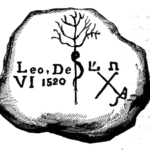
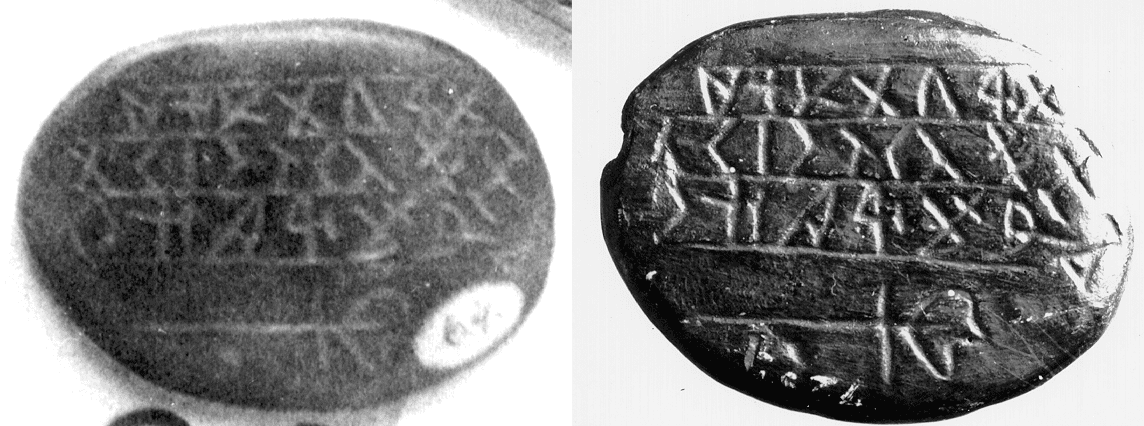
The Grave Creek Stone emerged from a West Virginia burial mound in 1838, igniting one of archaeology’s most contentious debates. This small sandstone disk, inscribed with mysterious characters, promised to rewrite American history. Yet its discovery would ultimately expose the dangerous intersection between scientific ambition and elaborate deception.
The stone’s emergence from the ancient Grave Creek Mound seemed like a archaeological miracle. Workers digging through layers of earth and human remains suddenly encountered something unprecedented. Twenty-three strange symbols stared back at them from the weathered surface. No one could read the inscription, but everyone sensed its potential importance.
What followed was a century-long mystery that would divide experts, fuel wild theories, and eventually reveal disturbing truths about scientific fraud. The stone’s journey from celebrated discovery to suspected hoax reads like a cautionary tale about the lengths people will go to rewrite history.
The Grave Creek Stone Discovery That Shocked America
June 9, 1838, started like any other excavation day at the massive Grave Creek Mound in Moundsville, West Virginia. Brothers Jesse and Abelard Tomlinson had been methodically digging through the ancient burial site, uncovering human skeletons and artifacts. Then worker Peter Catlett made a discovery that would haunt archaeology for generations.
The accounts of what happened next vary dramatically. Abelard Tomlinson claimed he personally removed the stone “with my own hands” from near a skeleton in the upper vault. Catlett insisted he was the true discoverer, finding it “on the inside of a stone arch” among loose debris. Colonel Wharton supported Catlett’s version, saying he spotted the stone in dirt being wheeled from the mound.
These conflicting stories should have raised immediate red flags. Instead, the Grave Creek Mound became a sensation. The stone measured just 1.875 inches wide, but its implications seemed enormous. If authentic, it could prove that ancient peoples in America possessed writing systems before Columbus arrived.
The inscription itself defied explanation. Twenty-three mysterious characters arranged in three lines covered one side of the sandstone disk. No similar writing had ever been found in North America. Experts studied the symbols, searching for connections to known alphabets, but found only tantalizing possibilities and frustrating dead ends.
Strange Theories and the Grave Creek Stone Controversy
Another fascinating historical case is: Unraveling the Enigma: The Philosophy of Conspiracy Theories
The mysterious inscription sparked wild speculation across America. Some scholars suggested the characters resembled ancient Greek or Hebrew letters. Others proposed connections to Celtic runes or Phoenician scripts. Each theory seemed to offer hope that America’s ancient past was far more complex than previously imagined.
Henry Rowe Schoolcraft, a respected geologist, became the stone’s first serious investigator in 1843. He found it “lying unprotected among broken implements of stone, pieces of antique pottery, and other like articles.” This casual treatment troubled him. Such a potentially revolutionary artifact deserved better care and study.
Schoolcraft consulted “noted antiquarians” across the country, seeking expert opinions on the inscription. The responses varied wildly. Some experts saw legitimate ancient writing. Others suspected fraud. The lack of consensus only deepened the mystery and fueled more speculation.
The stone’s champions argued it proved advanced civilizations had flourished in prehistoric America. Critics pointed to the convenient timing of its discovery and the suspicious circumstances surrounding the excavation. The debate raged in academic journals and popular newspapers, dividing the archaeological community.
Meanwhile, the stone itself began a strange journey through various private collections. Its exact whereabouts became increasingly uncertain as it passed from owner to owner, adding another layer of mystery to an already perplexing artifact.
The Grave Creek Stone Fraud Exposed
For over 150 years, the stone’s authenticity remained hotly debated. Then in 2008, anthropologist David Oestreicher made a shocking discovery that changed everything. While researching in a library, he found a 1752 Spanish book titled “An Essay on the Alphabets of the Unknown Letters That are Found in the Most Ancient Coins and Monuments of Spain.”
The book contained symbols that matched the Grave Creek Stone inscription almost perfectly. Oestreicher found “identical clusters of letters” appearing “sometimes in the same order” as on the stone. Even more damning, the stone replicated specific errors from the Spanish text. This couldn’t be coincidence.
Oestreicher identified Dr. James W. Clemens as the likely forger. Clemens had loaned approximately $2,600 to fund the excavation – over $60,000 in today’s money. He owned a substantial personal library that likely included European scholarly works. He also possessed a home machine shop capable of precise engraving work.
The motive became clear: Clemens needed to recoup his massive investment. A sensational discovery would attract tourists and railroad development to the area. The Baltimore and Ohio Railroad was already showing interest in the region. A genuine pre-Columbian artifact could transform the site into a major destination.
The evidence against the stone’s authenticity became overwhelming. Historical records showed numerous inconsistencies in witness accounts. The discovery circumstances kept changing with each retelling. Even the stone’s appearance varied between early drawings and descriptions.
Modern Mysteries and Lost Evidence
Today, the original stone has vanished completely. It was last documented in E.H. Davis’s collection in 1868 before being sold to the Blackmore Museum, now part of the British Museum. However, the British Museum confirms the stone isn’t in their collection. Its current location remains unknown.
Only plaster casts survive at the Smithsonian Institution, preserving the controversial inscription for future study. These replicas continue to fascinate visitors, even as most experts now accept the fraud theory. The stone’s disappearance adds a final mysterious chapter to its troubled history.
Some researchers still challenge the fraud conclusion. Michael Burk, a retired educator and president of the Marshall County Historical Society, published books in 2020 and 2022 defending the stone’s authenticity. He claims new evidence from archived materials supports genuine ancient origins.
Recent geophysical surveys of the Grave Creek Mound using ground-penetrating radar have detected unexplained anomalies beneath the surface. Graduate students discovered these mysterious readings, though researchers admit they could be anything from tree roots to prehistoric remains. The mound continues yielding secrets nearly two centuries after the stone’s discovery.
The Grave Creek Stone remains one of America’s most controversial archaeological artifacts. Whether genuine relic or elaborate hoax, it demonstrates how desperately people wanted to believe in a more exotic American past. The stone’s legacy lives on in museums, academic debates, and the imaginations of those who still wonder what ancient secrets might lie buried beneath American soil.