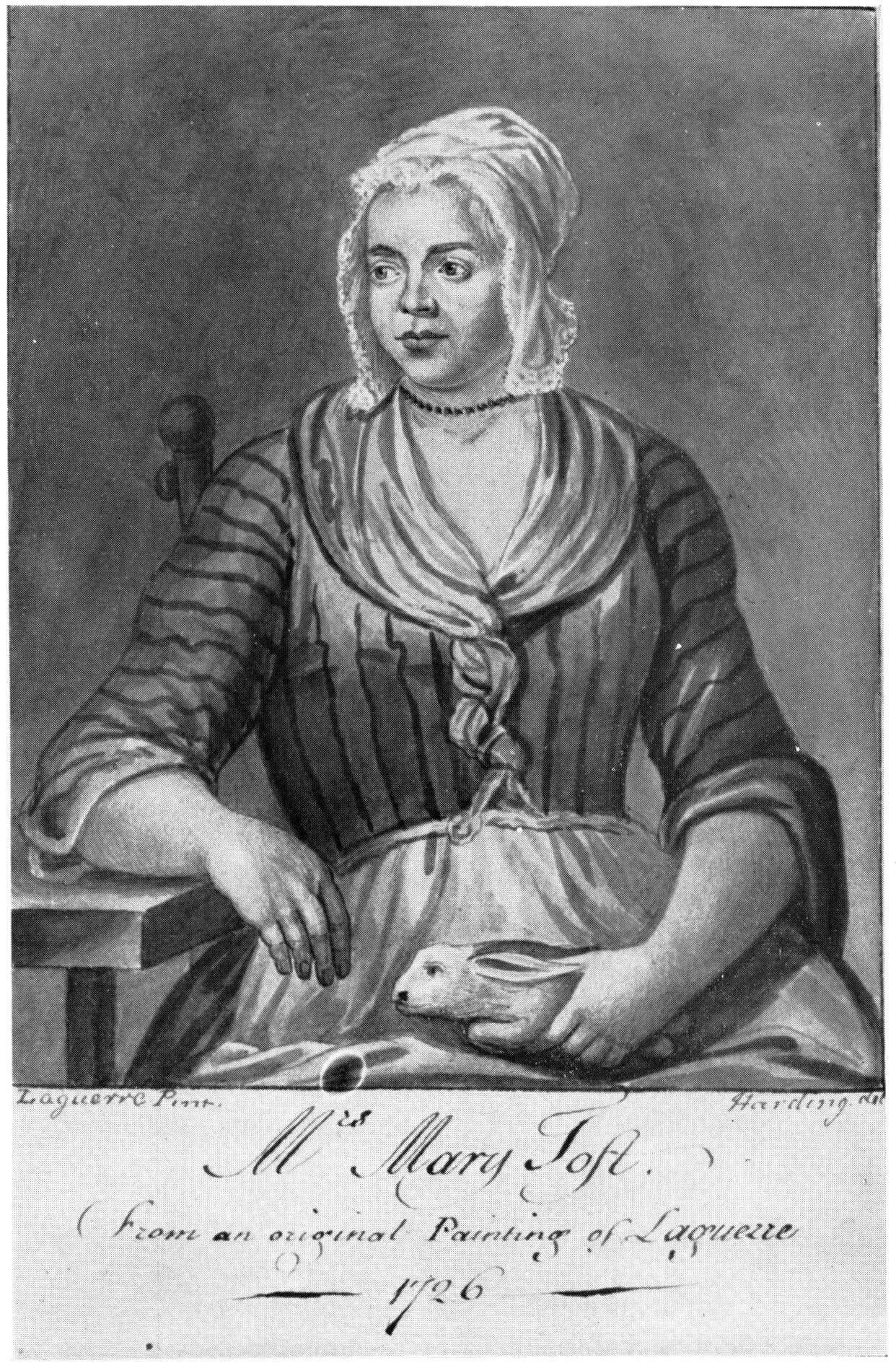
Mary Toft became one of history’s most notorious medical hoaxers in 1726 when she convinced prominent physicians that she had given birth to rabbits. This 23-year-old peasant woman from Godalming, Surrey, orchestrated a deception so elaborate and disturbing that it fooled some of England’s most respected surgeons. Her grotesque performance involved inserting dismembered rabbit parts into her own body, enduring excruciating pain and risking death from infection.
The scandal began when Toft claimed that her fascination with a rabbit she’d seen while working in the fields had somehow affected her pregnancy. She told doctors that after chasing the creature unsuccessfully, she couldn’t stop thinking about rabbits. When she miscarried, she insisted the trauma had fundamentally altered her reproductive system. What followed was a series of increasingly bizarre “births” that would captivate and horrify Georgian England.
The Mary Toft Rabbit Births Begin
On September 27, 1726, Toft went into what appeared to be labor. Her neighbor watched in horror as she seemingly gave birth to several animal parts. The flesh was shown to Ann Toft, Mary’s mother-in-law, who served as an unofficial midwife in the community. Ann immediately sent the grotesque specimens to John Howard, a respected man-midwife from Guildford with thirty years of experience.
Howard initially dismissed the impossible claim. But when he examined Toft the next day, he witnessed her appearing to deliver more rabbit parts during what seemed like genuine labor pains. The pieces included organs, limbs, and fur-covered flesh that looked disturbingly authentic. Over the following weeks, Toft continued producing these horrific “births,” sometimes delivering multiple rabbit parts in a single day.
The local surgeon documented each incident carefully. He observed that Toft appeared to be in genuine agony during these episodes, writhing and screaming as if experiencing real childbirth. The rabbit parts emerged bloody and warm, as if they had genuinely developed inside her body. Howard found himself increasingly convinced that he was witnessing a medical miracle – or perhaps something far more sinister.
Mary Toft Attracts Royal Attention
For more strange history, see: Prillwitz Idols: The Bronze Forgeries That Fooled European Nobility for Decades
Word of the impossible births spread rapidly through England’s medical community. The case reached Nathaniel St. André, surgeon to the Royal Household of King George I, who traveled to Surrey to investigate personally. St. André examined both Toft and the rabbit specimens, conducting what he believed to be rigorous scientific analysis.
To his amazement, St. André concluded that the case was genuine. He documented his findings in detailed reports that he sent directly to the king. The surgeon became convinced that Toft represented a new type of human-animal hybrid reproduction that science had never encountered before. His endorsement gave the case unprecedented credibility within England’s medical establishment.
King George I, intrigued by the reports, decided to send his own investigator. He dispatched Cyriacus Ahlers, another court surgeon, to provide a second opinion. Unlike St. André, Ahlers remained deeply skeptical from the beginning. He noticed inconsistencies in the rabbit parts and questioned whether such births were biologically possible. His doubts would prove prophetic, though they were initially dismissed by other physicians who had already committed to believing Toft’s claims.
The Mary Toft Investigation Intensifies
By November 1726, Toft had become a national sensation. Contemporary newspapers reported breathlessly on each new “birth”, with some publications treating the story as a medical marvel while others expressed horror at the implications. The public was divided between fascination and revulsion at the idea that a woman could somehow give birth to animals.
Toft was brought to London for more intensive study under the supervision of the capital’s most prominent physicians. She was housed in comfortable quarters and examined by teams of doctors who hoped to witness the phenomenon firsthand. However, under this increased scrutiny, something changed. The rabbit births suddenly stopped completely.
Days passed without any new deliveries. The physicians grew increasingly suspicious as Toft failed to produce any evidence of her supposed condition. Meanwhile, investigators began examining the rabbit parts more carefully. Ahlers made a crucial discovery when he found that the dung pellets inside one rabbit’s rectum contained corn, hay, and straw – proving the animal had been eating normal food outside a human body.
The investigation revealed other damning evidence. The rabbit parts showed signs of having been butchered rather than naturally developed. Some pieces appeared to have been kept in cool conditions before being inserted into Toft’s body. Under mounting pressure and facing the possibility of serious criminal charges, Toft finally broke down.
The Confession and Aftermath
On December 7, 1726, Mary Toft confessed to the elaborate hoax. In a series of detailed statements recorded by Dr. James Douglas, she revealed the disturbing truth behind her deception. She had been purchasing live rabbits, killing them, dismembering their bodies, and inserting the pieces into her vagina and rectum. The process was agonizingly painful and extremely dangerous, risking severe infection and death.
Toft’s confessions, preserved in the University of Glasgow’s archives, provide chilling insight into her motivations. She admitted that poverty had driven her to attempt the scheme, hoping to receive a royal pension as a unique medical phenomenon. Her family had encouraged the deception, seeing it as their path to financial security. The physical and psychological toll of maintaining the hoax had been enormous.
The revelation destroyed several medical careers overnight. St. André lost his position at court and never recovered his reputation. Contemporary accounts describe how he couldn’t bear to eat rabbit meat for the rest of his life, suffering nervous tics whenever he encountered it. Other physicians who had endorsed Toft’s case faced public ridicule and professional ruin.
The scandal had lasting consequences for public trust in the medical profession. William Hogarth, the famous satirist, created scathing artwork mocking the doctors’ gullibility. The case became a symbol of medical incompetence and highlighted the dangers of accepting extraordinary claims without proper scientific verification. Mary Toft was eventually released from prison without formal charges, but her name became synonymous with one of history’s most elaborate and disturbing medical hoaxes.
The rabbit birth deception remains a fascinating example of how desperation, social pressure, and medical arrogance can combine to create believable impossibilities that fool even the most educated minds.