
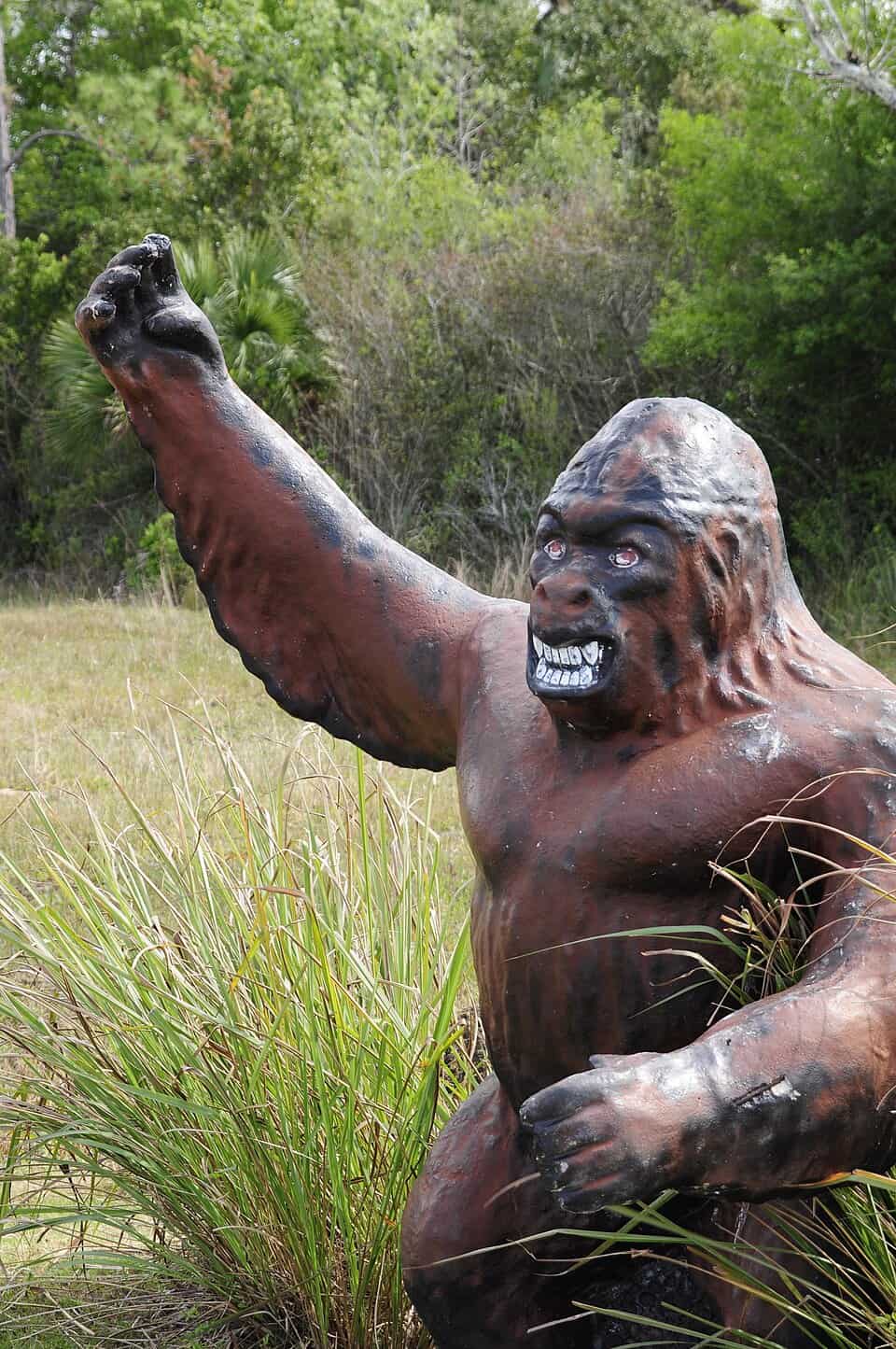
The skunk ape stands as one of America’s most enduring cryptid legends. This mysterious creature has captivated the southeastern United States for generations. Unlike its famous cousin Bigfoot, this swamp-dwelling beast carries a distinctive foul odor. Early settlers in Florida, Georgia, and Alabama first documented encounters in the 1800s. The creature’s reputation has only grown stronger over time.
Standing between five and seven feet tall, witnesses describe a bipedal, ape-like figure. Its reddish-brown hair appears matted and unkempt. The most notable feature remains its terrible smell, similar to a skunk’s spray. This characteristic gave the creature its memorable name. Local newspapers began reporting sightings as early as 1818 near Apalachicola, Florida.
Early Historical Accounts of the Skunk Ape
The first documented encounter appeared in an 1818 Florida newspaper. Residents reported a “man-sized monkey” raiding food stores along the coast. Fishermen claimed the creature stalked them during their work. These early accounts established patterns that continue today.
Native American tribes may have known this creature long before European settlers arrived. The Seminole and Miccosukee peoples supposedly called it “Esti Capcaki.” This name translates roughly to “Furry Tall Man” or “Hairy Giant.” However, cryptozoologists haven’t verified these cultural connections definitively.
The creature’s reputation spread throughout the 19th century. Settlers moving into Florida’s interior reported similar encounters. These stories often involved the beast approaching human settlements at night. Food theft and property damage became common themes in witness accounts.
Peak Sighting Years and Notable Encounters
Related article: Rasputin
The mid-20th century marked the height of reported sightings. Between 1950 and 1980, encounters increased dramatically across Florida. The Bigfoot Field Researchers Organization has documented hundreds of reports from this period. Nearly every Florida county has recorded at least one alleged sighting.
In 1929, witnesses reported an unusual incident at Perky Bat Tower in the Florida Keys. An ape-like creature allegedly investigated the newly constructed tower. After examining the structure, it shook the tower violently, scaring away all the bats. The creature then disappeared into the surrounding wilderness.
Putnam County’s “Bardin Booger” became locally famous in the 1940s. Multiple families in the small community of Bardin reported encounters. The creature appeared near homes and peered through windows at night. These incidents terrified local residents for several years.
The 1970s brought perhaps the most dramatic encounter on record. Two Palm Beach County sheriff’s deputies, Marvin Lewis and Ernie Milner, claimed an ape-like creature stalked them. They fired their weapons at the beast before it fled. Following a trail of footprints, they recovered hair samples from a damaged fence.
Scientific Skepticism and Cultural Impact
Mainstream scientists remain highly skeptical of the skunk ape’s existence. They attribute sightings to misidentification, folklore, and deliberate hoaxes. Bears, particularly Florida black bears, often explain reported encounters. Poor lighting conditions and human imagination contribute to mistaken identities.
No physical evidence has ever conclusively proven the creature exists. Hair samples have yielded inconclusive results when tested. Footprint casts show inconsistencies that suggest human fabrication. Photographs and videos lack the clarity needed for scientific verification.
Despite scientific skepticism, the creature maintains cultural significance throughout the Southeast. Florida has embraced the legend as part of its unique identity. Tourist attractions feature skunk ape displays and merchandise. Local festivals celebrate the mysterious beast annually.
The creature appears in numerous books, documentaries, and television shows. Cryptozoology enthusiasts continue investigating reported sightings. Amateur researchers organize expeditions into Florida’s remote swamplands. These efforts keep the legend alive in popular culture.
Modern Investigations and Continuing Mystery
Contemporary researchers use advanced technology in their investigations. Trail cameras monitor remote locations where sightings occur. Thermal imaging equipment helps detect heat signatures in dense vegetation. Audio recording devices capture unusual sounds from the wilderness.
Social media has transformed how people report encounters. Witnesses can instantly share photographs and videos online. This immediate documentation creates more detailed records than ever before. However, digital manipulation also makes evidence easier to fake.
Professional wildlife biologists occasionally investigate compelling reports. They examine physical evidence and interview witnesses carefully. Most conclude that known animals explain the sightings. Florida’s diverse ecosystem includes many large, rarely seen species.
The state’s rapid development has reduced suitable habitat for any unknown species. Urban sprawl has eliminated many remote areas where creatures might hide. This environmental change makes the legend’s persistence even more remarkable.
The skunk ape remains an integral part of southeastern folklore despite scientific skepticism. Whether real or imaginary, this creature continues capturing human imagination. Its story reflects our fascination with the unknown wilderness that once dominated the region. The legend endures as a reminder of nature’s mysteries that may still await discovery in America’s remaining wild places.
Related Posts
 Spook Hill: Florida’s Mysterious Gravity-Defying Road That Captivated America
 May-Stringer House: A Victorian Jewel in Florida’s Historic Brooksville
 St. Augustine Light: Florida’s Historic Maritime Guardian and Its Enduring Legacy
 Chocochatti: The Lost Seminole Village Where Spirits Still Roam Florida’s Haunted Prairie