
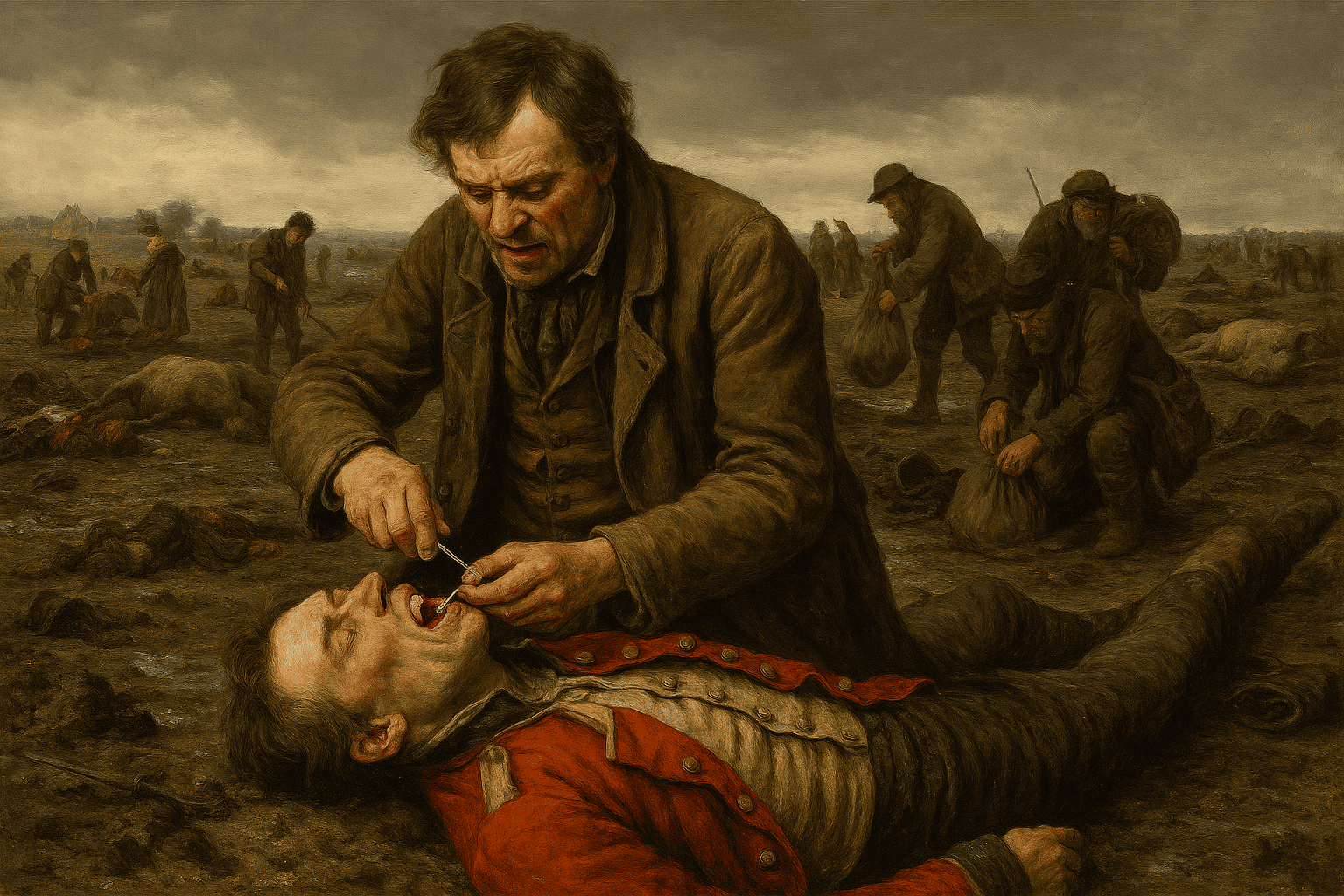
Souvenir Hunting on the Battlefield of Waterloo began within hours of Napoleon’s defeat on June 18, 1815. What started as innocent memento collecting quickly transformed into something far more sinister. Visitors didn’t just take buttons and bullets. They harvested teeth from corpses, stole bones, and created an entire industry built on death and deception.
The aftermath of Waterloo became a feeding frenzy. Tourists flocked to Belgium seeking authentic pieces of history. But the reality was darker than anyone imagined. Local entrepreneurs saw opportunity in tragedy. They began manufacturing fake relics on an industrial scale.
P.T. Barnum himself fell victim to this elaborate hoax. The famous showman later discovered the truth during a visit to Birmingham. Local manufacturers were producing barrels of fake “relics” every year. These counterfeit artifacts were shipped to Waterloo, buried in the ground, then “discovered” and sold to unsuspecting tourists at premium prices.
The Ghoulish Business of Souvenir Hunting on the Battlefield of Waterloo
The most disturbing aspect wasn’t the fake souvenirs. It was what happened to the real human remains. Contemporary accounts describe scenes that would horrify modern sensibilities. Visitors pulled teeth from dead soldiers’ mouths. These “Waterloo teeth” became prized possessions among the wealthy.
One poet claimed to know “one honest gentleman, who has brought home a real Waterloo thumb, nail and all, which he preserves in a bottle of gin.” Sir Walter Scott, the famous author, allegedly made off with a human skull belonging to Corporal John Shaw.
The tooth trade was particularly gruesome. Waterloo teeth were considered superior to other sources because they came from young, healthy soldiers. Dentists across Europe coveted these macabre trophies. The practice continued well into the mid-19th century. When the American Civil War began, teeth from Union and Confederate soldiers replaced the dwindling Waterloo supply.
Industrial-Scale Bone Harvesting at Waterloo
This event shares similarities with: James Bartley: The Sailor Who Allegedly Survived Being Swallowed by a Whale
By 1822, something even more shocking emerged. A letter in The Times of London revealed that more than a million bushels of “human and inhuman” bones had been imported from continental battlefields, including Waterloo. These bones weren’t destined for museums or memorials.
They were ground up in steam-powered mills and sold as fertilizer.
The bone trade became incredibly lucrative. In Belgium, prices for 100 kilos of bones jumped from 2 francs to 14 francs between 1832 and 1837. That’s a sevenfold increase in just five years. The discovery that bone char could filter sugar effectively sealed the fate of Waterloo’s fallen soldiers.
A massive sugar refinery was built just miles from the battlefield. The timing wasn’t coincidental. French industrialists had discovered in 1811 that granulated bone char was an excellent filtering medium. The Waterloo dead became raw materials for Belgium’s growing sugar industry.
Modern Archaeological Discoveries Reveal Souvenir Hunting Secrets
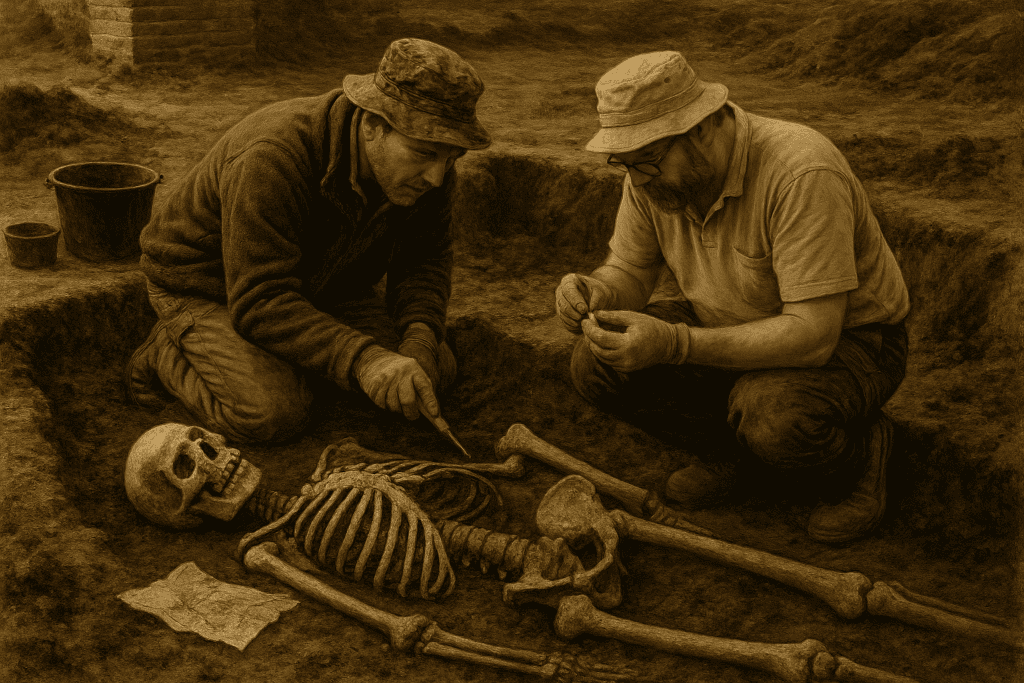
Recent excavations have shed new light on this dark chapter. In 2022, archaeologists from Waterloo Uncovered made a startling discovery. They found a complete human skeleton near Mont-Saint-Jean farm. This was only the second complete skeleton ever found on the battlefield.
The burial was bizarre. The skeleton had been interred with a severed left leg placed over its shoulder. Nearby, excavators discovered piles of amputated human limbs. Many still showed evidence of surgical saws. Seven horse skeletons, an ox, and parts of a cow were also found.
These discoveries help explain one of archaeology’s greatest mysteries: where are Waterloo’s dead? Historical records suggest around 10,000 soldiers died in the battle. Yet very few complete skeletons have been found. The Battle of Waterloo left thousands dead, but their remains seem to have vanished.
The evidence points to systematic bone harvesting. Commercial operations likely stripped the battlefield clean within decades of the battle. The bones were shipped to England and ground into fertilizer or sugar-refining materials.
The Psychological Impact on Modern Veterans
Today’s archaeological work has unexpected emotional resonance. Clive Jones, a Welsh Guards veteran participating in the excavations, found the experience deeply moving. Jones had served during the 1982 Hyde Park Bombing, which killed 11 military personnel and seven cavalry horses.
Reflecting on the horse skeletons at Waterloo, Jones said something surprising: “I thought the soldier would affect me the most, but it was actually the horses.” This connection across centuries highlights the enduring trauma of battlefield death.
The fake souvenir trade also had lasting psychological effects. Families who thought they owned genuine Waterloo artifacts discovered they’d been deceived. The emotional investment in these objects made the revelation particularly painful.
Modern excavations continue to uncover evidence of the extensive souvenir hunting operations. Each discovery adds another piece to this macabre puzzle. The systematic exploitation of battlefield remains represents one of history’s most disturbing examples of commercialized death.
Souvenir Hunting on the Battlefield of Waterloo reveals humanity’s complex relationship with mortality and memory. What began as innocent memento collecting evolved into industrial-scale exploitation of human remains. The fake relic trade shows how grief and fascination can be weaponized for profit. Today’s archaeological work helps restore dignity to the forgotten dead while exposing the dark truth behind Europe’s most famous battlefield souvenirs.
Related Posts
 Prillwitz Idols: The Bronze Forgeries That Fooled European Nobility for Decades
 Hodag: Wisconsin’s Terrifying Hoax That Fooled Thousands and Sparked a Legend
 Pompey Stone: The 70-Year Archaeological Hoax That Fooled New York’s Best Scholars
 Buytigers.com: The Internet Hoax That Fooled PETA and Exposed the Dark Side of Exotic Animal Trade