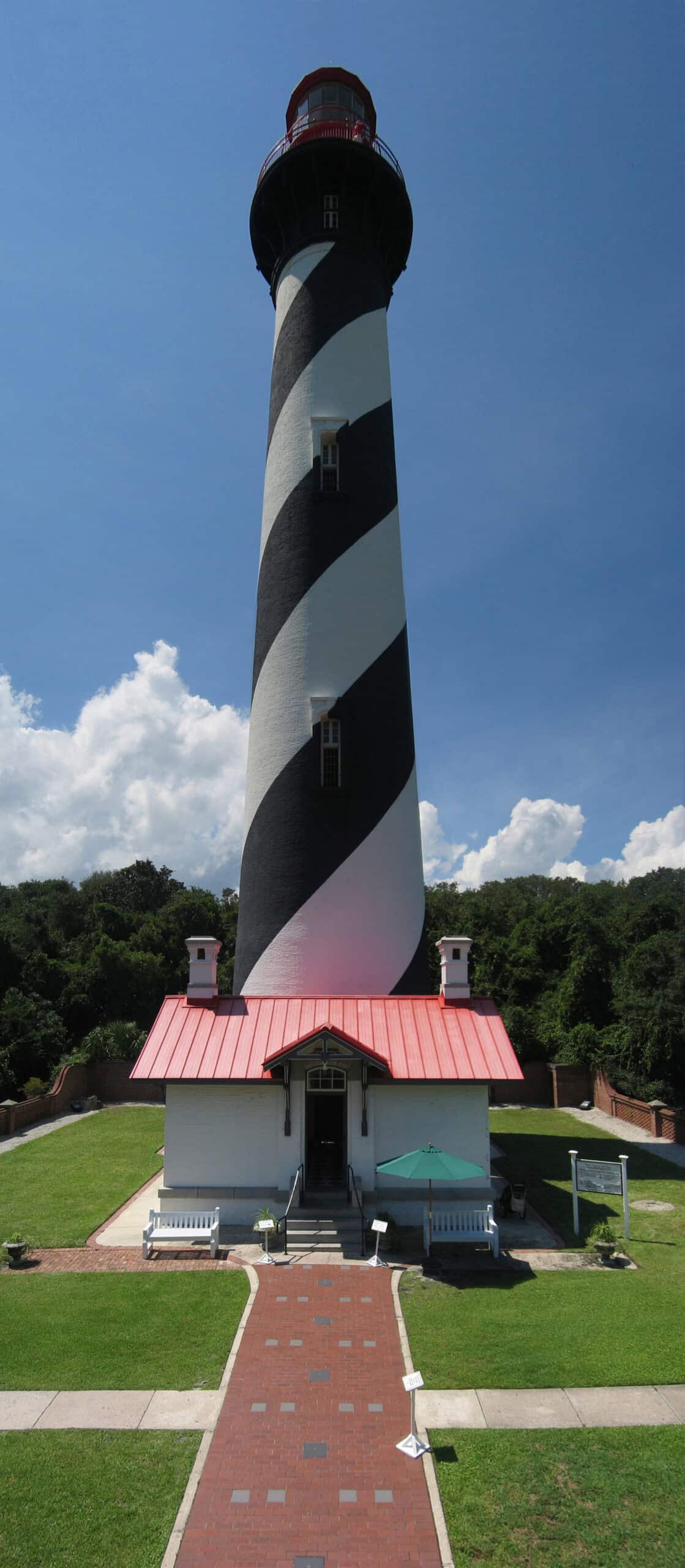
The St. Augustine Light stands as one of America’s most significant maritime landmarks. Located on Anastasia Island near St. Augustine, Florida, this towering beacon has guided ships through dangerous coastal waters for over 150 years. Built in 1874, the lighthouse replaced an earlier Spanish watchtower that had served the area since the 1600s. Today, visitors from around the world come to experience this remarkable piece of American history.
The current lighthouse rises 165 feet above sea level. Its distinctive black and white spiral stripes make it easily recognizable from both land and sea. The tower’s construction required over one million bricks and took five years to complete. Workers faced numerous challenges during construction, including harsh weather conditions and difficult terrain. The project cost approximately $95,000, a substantial sum for the era.
Origins and Early History of the St. Augustine Light
Spanish colonists first established a watchtower at this location around 1683. This early structure served as both a lookout post and navigation aid for ships entering Matanzas Bay. The original tower was built from coquina, a local stone made from compressed shells and coral. Over time, erosion and storms damaged this first lighthouse beyond repair.
By the early 1800s, American authorities recognized the need for a proper lighthouse. The National Park Service documents how the first American lighthouse was constructed in 1824. This 52-foot tower used Winslow Lewis lamps with reflectors to produce its light. However, this structure also proved inadequate for the growing maritime traffic along Florida’s coast.
The 1824 lighthouse served for fifty years before officials decided to build a replacement. Coastal erosion threatened the old tower’s foundation. Ships reported difficulty seeing the light from sufficient distances. These factors led to plans for a much taller and more powerful lighthouse.
Construction of the Modern Tower
Another fascinating historical case is: Sablon, California: The Forgotten Railroad Ghost Town of the Mojave Desert
Construction of the new lighthouse began in 1871 under architect Paul J. Pelz’s direction. Pelz had designed several other important lighthouses along the Atlantic coast. The project required innovative engineering solutions to build such a tall structure on sandy soil. Workers drove wooden pilings deep into the ground to create a stable foundation.
The tower’s unique spiral design wasn’t just decorative. Engineers calculated that the black and white stripes would make the lighthouse visible during daylight hours. This daymark function helped ships navigate even when the light wasn’t operating. The pattern also distinguished it from other lighthouses along the coast.
Hezekiah H. Pittee supervised the actual construction work. His crew included skilled masons, carpenters, and laborers. They worked year-round despite Florida’s challenging climate. Summer heat and humidity made working conditions extremely difficult. Hurricane seasons brought additional dangers and delays.
The St. Augustine Light’s Technical Innovations
The lighthouse received its first-order Fresnel lens in 1874. This massive lens system weighed over 12,000 pounds and stood twelve feet tall. French physicist Augustin-Jean Fresnel had invented this revolutionary lens design in the 1820s. The Fresnel lens could focus light into a powerful beam visible for miles at sea.
The original light source came from a whale oil flame. Lighthouse keepers had to climb 219 steps multiple times daily to maintain the light. They trimmed wicks, refilled oil reservoirs, and cleaned the lens surfaces. This demanding work required dedication and physical stamina. Keeper families often lived on-site in quarters attached to the lighthouse.
Later improvements included changes to kerosene and eventually electric lighting. The light’s characteristics also evolved over time. Before 1936, the lighthouse produced a three-minute fixed flash. Officials then changed it to a thirty-second flash pattern. These modifications helped distinguish the St. Augustine Light from other regional beacons.
Preservation and Modern Legacy
The lighthouse was added to the National Register of Historic Places in 1981. This designation recognized its architectural and historical significance. The St. Augustine Lighthouse & Maritime Museum now operates the site as a popular tourist destination. Thousands of visitors climb the lighthouse steps each year.
Restoration efforts have maintained the lighthouse’s original appearance and function. Workers have carefully preserved the Fresnel lens and other historic equipment. The keeper’s quarters now house museum exhibits about maritime history. Educational programs teach visitors about lighthouse operations and coastal navigation.
The lighthouse continues operating as an active navigational aid. Modern GPS systems haven’t eliminated the need for traditional lighthouses. Ships still rely on these visual references during storms and equipment failures. The Coast Guard maintains the light’s automated systems.
Today, the St. Augustine Light represents more than just maritime safety. It symbolizes human ingenuity and perseverance. The lighthouse has weathered countless storms, wars, and technological changes. Its survival demonstrates the enduring value of well-built infrastructure. As Florida’s oldest continuously operating lighthouse, it connects modern visitors with centuries of maritime heritage.