
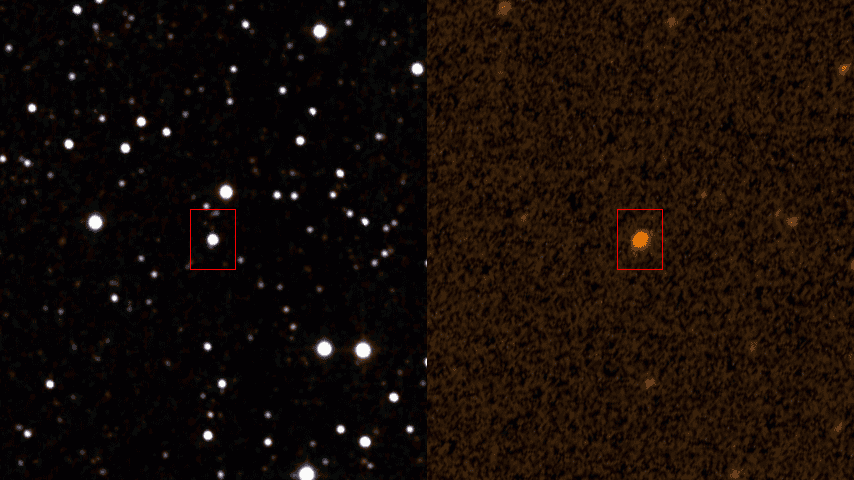
Something in deep space is eating starlight. Tabby’s Star sits roughly 1,470 light-years away in the constellation Cygnus. It looks ordinary enough at first glance. But this star does something no other star in the known universe has been caught doing. It dims. Dramatically. Unpredictably. In patterns that break every rule astronomers thought they understood. We’re not talking about a slight flicker. At its worst, this star loses up to 22% of its brightness in a matter of days. Our own Sun dims by less than 1% when Jupiter , a planet eleven times Earth’s diameter , crosses in front of it. Something enormous is blocking this star’s light. Something we can’t fully explain. And the theories that have emerged to fill that gap range from the scientifically plausible to the genuinely terrifying.
How Tabby’s Star Was Discovered
The story begins with citizen scientists. In 2015, astronomer Tabetha Boyajian was leading a project called Planet Hunters. Volunteers were combing through data from NASA’s Kepler Space Telescope. Kepler had been staring at over 150,000 stars for years. It was hunting for planets by watching for tiny, regular dips in starlight. What the volunteers found in the data for KIC 8462852 stopped them cold. The dips weren’t tiny. They weren’t regular. They were chaotic, massive, and deeply weird. The volunteers flagged it as the most bizarre star they had ever seen. Boyajian agreed. She published a paper in 2016 detailing the strange behavior. The scientific community erupted. The star was quickly nicknamed Tabby’s Star in her honor. What made it stranger still was the long-term picture. Historical photographic plates suggested the star had been dimming slowly for over a century. Something had been quietly draining its light for decades before anyone noticed.
Tabby’s Star and the Alien Megastructure Theory
Another fascinating historical case is: The Great Molasses Flood: A Disaster of Epic Proportions
This is where things get truly unsettling. Astronomer Jason Wright at Penn State suggested something most scientists are reluctant to say out loud. What if the dimming wasn’t natural at all? Wright proposed that the light blockages could be consistent with a Dyson sphere , a massive artificial structure built by an advanced civilization to harvest energy from their star. The idea sounds like science fiction. But the math didn’t immediately rule it out. The dipping patterns were too irregular for a planet. Too large for a comet swarm. Too strange for any known natural phenomenon. The alien megastructure hypothesis spread like wildfire. It dominated headlines worldwide in late 2015. NASA’s Kepler mission had found thousands of exoplanets. But nothing like this. The public was captivated. A crowdfunding campaign raised over $100,000 to buy telescope time to monitor the star around the clock. Scientists wanted to catch it dimming in real time and study exactly which wavelengths of light were being blocked. The answer to that question would be crucial.
What Tabby’s Star Reveals About Deep Space Mysteries
In 2018, results from the crowdfunded observation campaign came in. They were fascinating , and deeply frustrating. The dimming events were wavelength-dependent. Blue light dimmed more than red light. That’s a critical clue. An opaque solid object , like a planet or an alien structure , would block all wavelengths equally. The fact that blue light was preferentially blocked pointed toward something made of fine dust particles. This was good news for those who preferred a natural explanation. It was bad news for the alien megastructure crowd. The leading theory now involves massive clouds of dust and debris. Perhaps the remnants of a shattered planet. Perhaps a family of disintegrating comets. Perhaps something stranger still , an enormous cloud of interstellar dust caught in the star’s gravitational pull. But here’s the thing. None of these explanations fully work. The sheer scale and irregular timing of the dimming events still defies easy explanation. Some researchers have pointed to the star’s unusual long-term fading as evidence that whatever is blocking the light is also slowly consuming or redistributing material around the star. The mystery deepens every time new data arrives.
The Strange Behavior That Keeps Scientists Awake
The dimming events have been given names. Elsie. Celeste. Skara Brae. Angkor. Each one represents a separate, distinct dipping event with its own bizarre shape and duration. They don’t repeat on a predictable schedule. Some last days. Some last weeks. The depths vary wildly. Between 2017 and 2019, the star dimmed by nearly 3% overall , a slow fade that no single dust cloud can easily explain. There are researchers who still haven’t entirely ruled out the alien megastructure idea. They argue that dust is the most likely explanation but not a proven one. The star behaves in ways that push the boundaries of known astrophysics. Some scientists have proposed that we might be watching a star in the process of consuming a planet. Others suggest a massive ring system around an unseen companion object. Every theory raises new questions. None close the book.
What makes this story so compelling isn’t just the science. It’s the feeling it produces. Out in the constellation Cygnus, 1,470 light-years away, something is happening that we can’t explain. Tabby’s Star has become a symbol of how vast and strange the universe truly is. It reminds us that space isn’t a solved puzzle. It’s a place full of shadows. And some of those shadows are moving.