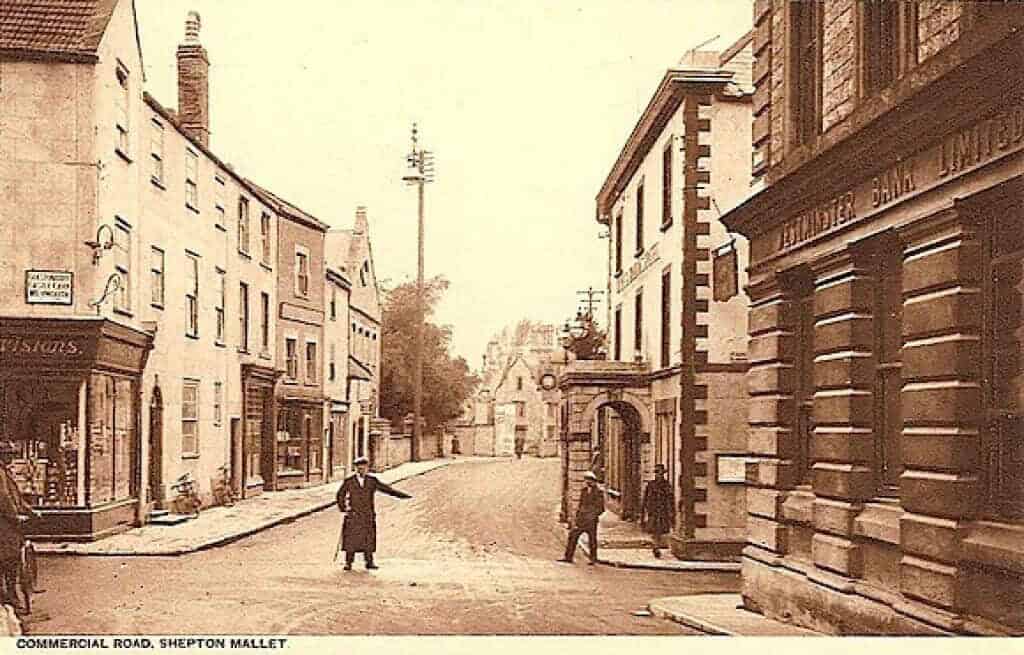
The Disappearance of Owen Parfitt stands as one of England’s most perplexing unsolved mysteries. On a summer evening in 1768, the 69-year-old disabled tailor simply vanished from his chair outside his cottage in Shepton Mallet, Somerset. What makes this case truly extraordinary isn’t just that he disappeared without a trace. It’s that he did so in broad daylight, within seconds, while his sister was mere feet away inside their home.
Owen Parfitt was born on April 12, 1699, to John Parfitt and Martha Tucker. By 1768, he had become a familiar sight in Shepton Mallet. Paralyzed on his left side, possibly from a stroke, Owen couldn’t walk without assistance. His sister Mary cared for him daily, helping him to his favorite spot outside their cottage each morning. There, he would sit in his wooden chair, watching the world go by and chatting with neighbors who passed.
The evening of his disappearance started like any other. Mary had settled Owen in his usual chair outside their cottage. She went inside to prepare supper, leaving the door open so she could keep an ear out for him. According to witness accounts, she was gone for less than three minutes. When she returned, Owen was gone. His chair remained exactly where she’d left it, but her disabled brother had vanished completely.
The Disappearance of Owen Parfitt: Witness Accounts
What makes The Disappearance of Owen Parfitt so chilling are the witness testimonies collected over the years. Several neighbors were in the area that evening, yet none saw or heard anything unusual. Mrs. Susannah Snook, who lived nearby, testified that she had been hanging laundry in her garden with a clear view of the Parfitt cottage. She swore she never saw Owen leave his chair.
Even stranger, some witnesses reported hearing Mary scream from inside the cottage, followed by the sound of a chair scraping against stone. When they rushed to help, they found Mary staring at Owen’s empty chair in shock. One neighbor, Jehosaphat Stone, later stated: “Many folk round here at the time believed that Owen Parfitt had been spirited off by supernatural means.”
The physical evidence was equally baffling. Owen’s chair showed no signs of struggle. There were no footprints leading away from it, despite the soft ground from recent rain. Most puzzling of all, Owen’s walking stick remained propped against the cottage wall. Given his disability, he couldn’t have gone anywhere without it. Yet somehow, this paralyzed man had vanished without leaving a single trace.
A violent thunderstorm struck the area shortly after the disappearance was discovered. Local residents took this as an ominous sign, with many whispering that supernatural forces were at work.
Theories Behind Owen Parfitt’s Mysterious Vanishing
For more strange history, see: Biblical Conspiracy Theory: The Hidden Truth About Sacred Texts and Secret Societies
Over the centuries, numerous theories have attempted to explain Owen Parfitt’s disappearance. The most practical suggestion involves human abduction. Some historians propose that Owen was kidnapped by people with a grudge against him or his family. However, this theory fails to address several key problems. How could abductors silently lift a disabled man from his chair and carry him away without anyone noticing? Why would they leave behind his essential walking stick?
Another theory suggests Owen orchestrated his own disappearance. Perhaps he had secretly regained more mobility than he let on and staged his vanishing to escape debts or family obligations. Yet this explanation seems highly unlikely given witness accounts of his severe paralysis. Multiple people had helped him move around in the weeks before his disappearance, confirming his inability to walk unassisted.
The supernatural explanation gained significant traction among locals. Owen’s sister Mary firmly believed that “the devil had taken him.” This theory was reinforced by the timing of the thunderstorm and the complete absence of any physical evidence. Folk tales from the area suggested that Owen had been “spirited away” by otherworldly forces, possibly as punishment for unknown sins.
Some modern researchers have proposed that Owen fell victim to press gangs seeking sailors for the Royal Navy. However, historical newspaper accounts from the period make no mention of naval recruitment activity in the Somerset area during that time.
The Disappearance of Owen Parfitt: Investigations and Discoveries
The mystery of Owen Parfitt attracted formal investigation attempts spanning over two centuries. In 1814, attorney William Maskell conducted a thorough re-investigation, interviewing surviving witnesses and examining available evidence. His findings, preserved in the Downside Abbey Archives, revealed contradictory statements and fading memories but no new clues.
The most dramatic development came in 1813 when construction workers discovered human remains near the original cottage site. Local excitement peaked as people wondered if Owen’s body had finally been found. However, medical examination revealed the skeleton belonged to a young woman, not an elderly man. The discovery only deepened the mystery surrounding the case.
In 1933, another investigation took place during area development. Researchers hoped that modern techniques might uncover evidence previous searches had missed. They found nothing. No bones, no clothing fragments, no personal items that could be linked to Owen Parfitt. It was as if he had simply evaporated into thin air.
The Downside Abbey Archives contain the most comprehensive collection of documents related to the case. These materials include William Maskell’s investigation records, witness statements, character testimonies, and correspondence from the period. According to researchers, this collection “may be the closest anyone has ever come to unraveling the mystery of Owen Parfitt.”
Legacy of an Unsolved Mystery
Modern genealogical research has traced possible descendants of the Parfitt family, but none have provided new insights into Owen’s fate. The case continues to fascinate researchers and paranormal investigators alike. Shepton Mallet itself has embraced its connection to this enduring mystery, with local historians regularly revisiting the case.
Recent investigations have employed ground-penetrating radar and other modern technologies to search areas around the original cottage site. These efforts have yielded no results. The mystery remains as impenetrable today as it was over 250 years ago.
What makes Owen Parfitt’s case particularly haunting is its complete lack of resolution. Unlike other historical disappearances that eventually produce bodies, confessions, or explanations, this case offers nothing. No evidence, no witnesses, no logical explanation for how a disabled man could vanish so completely.
The story has inspired numerous books, articles, and documentaries exploring England’s unexplained mysteries. Paranormal researchers often cite it as evidence of supernatural intervention in human affairs. Skeptics continue searching for rational explanations, but none have emerged that adequately address all the case’s peculiarities.
The Disappearance of Owen Parfitt remains one of history’s most baffling vanishing acts, a reminder that some mysteries may never be solved.