
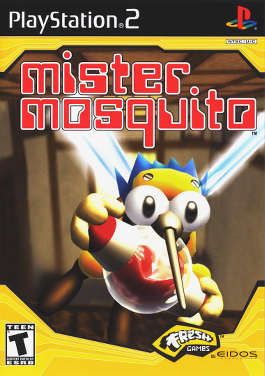
Mister Mosquito stands as perhaps the most bizarre and memorable video game to emerge from Japan’s experimental gaming scene in the early 2000s. Released by Sony Computer Entertainment in June 2001 for the PlayStation 2, this unconventional stealth simulation challenged players to assume the role of a mosquito attempting to survive in a typical Japanese household. The game’s premise was so unusual that it left many Western gamers scratching their heads, yet it carved out a unique niche in gaming history that continues to fascinate players more than two decades later.
The Birth of Mister Mosquito and Its Unlikely Origins
The concept for Mister Mosquito originated from developer Zoom’s desire to create something completely different from the action-heavy games dominating the market. Director Hiroaki Nakagawa and producer Yasuhide Kobayashi envisioned a game that would explore the mundane aspects of daily life from an entirely new perspective. Rather than controlling a heroic warrior or skilled athlete, players would experience the world through the compound eyes of nature’s most annoying pest.
The development team at Zoom faced numerous challenges in bringing this unconventional vision to life. Programming a realistic mosquito flight system required innovative approaches to game physics, while creating believable human AI that could react naturally to the player’s presence demanded sophisticated behavioral algorithms. The programmers, including Junichi Takeda and Yoshinori Nakamura, spent months perfecting the delicate balance between stealth gameplay and comedic absurdity that would define the final product.
Sony Computer Entertainment’s decision to publish such an unusual title reflected the experimental spirit of early PlayStation 2 development. The company was actively seeking unique experiences that would showcase the console’s capabilities while appealing to Japan’s diverse gaming audience. Gaming publications of the era noted that Sony’s willingness to support unconventional projects like this demonstrated their commitment to creative risk-taking in an increasingly conservative industry.
Gameplay Mechanics That Made Mister Mosquito Unforgettable
This event shares similarities with: The Infamous Exploding Whale of 1970: A Cautionary Tale of Unintended Consequences
The core gameplay of Mister Mosquito revolved around a deceptively simple concept: survive the summer by feeding on the blood of the Yamada family without being detected or killed. Players had to carefully observe each family member’s daily routines, identifying optimal feeding opportunities when their targets were distracted or relaxed. The game’s stress meter system added layers of complexity, requiring players to maintain the perfect sucking rhythm to avoid detection.
Each family member presented unique challenges and behavioral patterns. The father might be easier to approach while watching television, but his quick reflexes made him dangerous if alerted. The teenage daughter required different strategies, often presenting opportunities during her beauty routines but remaining highly alert to unusual sounds or movements. The mother’s predictable household activities created windows of opportunity, though her maternal instincts made her particularly vigilant about potential threats to her family.
The game’s battle system activated whenever players were discovered, transforming the stealth experience into frantic boss encounters. These sequences required quick reflexes and strategic thinking as players attempted to evade swatting hands, rolled-up newspapers, and various household implements wielded by increasingly frustrated humans. Success meant escaping to fight another day, while failure resulted in the mosquito’s immediate demise and the need to restart the current scenario.
Cultural Impact and International Reception
When Fresh Games brought Mister Mosquito to North American and European markets in March 2002, the title sparked intense debate about the nature of interactive entertainment. Western gaming critics struggled to categorize the experience, with some dismissing it as incomprehensible Japanese eccentricity while others praised its innovative approach to game design. The cultural gap between Japanese and Western sensibilities became particularly apparent in discussions about the game’s more provocative elements.
The game’s portrayal of family dynamics and domestic life resonated differently across cultural boundaries. Japanese players often appreciated the attention to mundane details and the game’s gentle satire of everyday routines, while Western audiences sometimes found the premise uncomfortable or confusing. Contemporary gaming magazines noted that Mister Mosquito represented a fascinating case study in how cultural context shapes the interpretation of interactive media.
Despite mixed critical reception, the game developed a devoted cult following among players who appreciated its unique vision and uncompromising commitment to its bizarre premise. Online communities formed around sharing strategies, discussing the game’s deeper meanings, and celebrating its status as one of gaming’s most unusual experiences. The title’s reputation grew over time, transforming from a curiosity into a recognized classic of experimental game design.
Legacy and Modern Resurrection
The 2024 re-release of Mister Mosquito on PlayStation 4 and PlayStation 5 through PlayStation Network marked a significant moment in gaming preservation. Sony’s decision to make the title available to modern audiences reflected growing appreciation for experimental games and the importance of maintaining access to gaming’s more unusual historical artifacts. The updated ESRB rating from T to E10+ suggested that contemporary standards had evolved to better accommodate the game’s unconventional content.
This digital resurrection introduced Mister Mosquito to a new generation of players who had only heard legends about its bizarre gameplay and unique premise. Streaming platforms and social media amplified interest in the title, with content creators sharing their experiences and reactions with audiences hungry for unusual gaming experiences. The game’s second life demonstrated how truly innovative titles can find new relevance decades after their original release.
The influence of Mister Mosquito can be traced through subsequent experimental games that challenged conventional design wisdom. Independent developers have cited it as inspiration for projects that prioritize unique experiences over commercial appeal, while academic researchers have examined it as an example of how games can explore unconventional perspectives and challenge player expectations.
Modern gaming’s embrace of diverse experiences and experimental design owes a debt to pioneering titles like Mister Mosquito. The game proved that interactive entertainment could succeed by embracing absurdity and refusing to conform to established genres or expectations. Its legacy continues to inspire developers who believe that games can be more than entertainment – they can be art, commentary, and windows into entirely different ways of experiencing the world.
The strange tale of this blood-sucking protagonist reminds us that gaming’s greatest innovations often come from its most unexpected corners. In an industry increasingly dominated by familiar formulas and safe bets, Mister Mosquito stands as a testament to the power of creative risk-taking and the enduring appeal of truly original ideas. Its place in gaming history remains secure, not despite its strangeness, but because of it.