
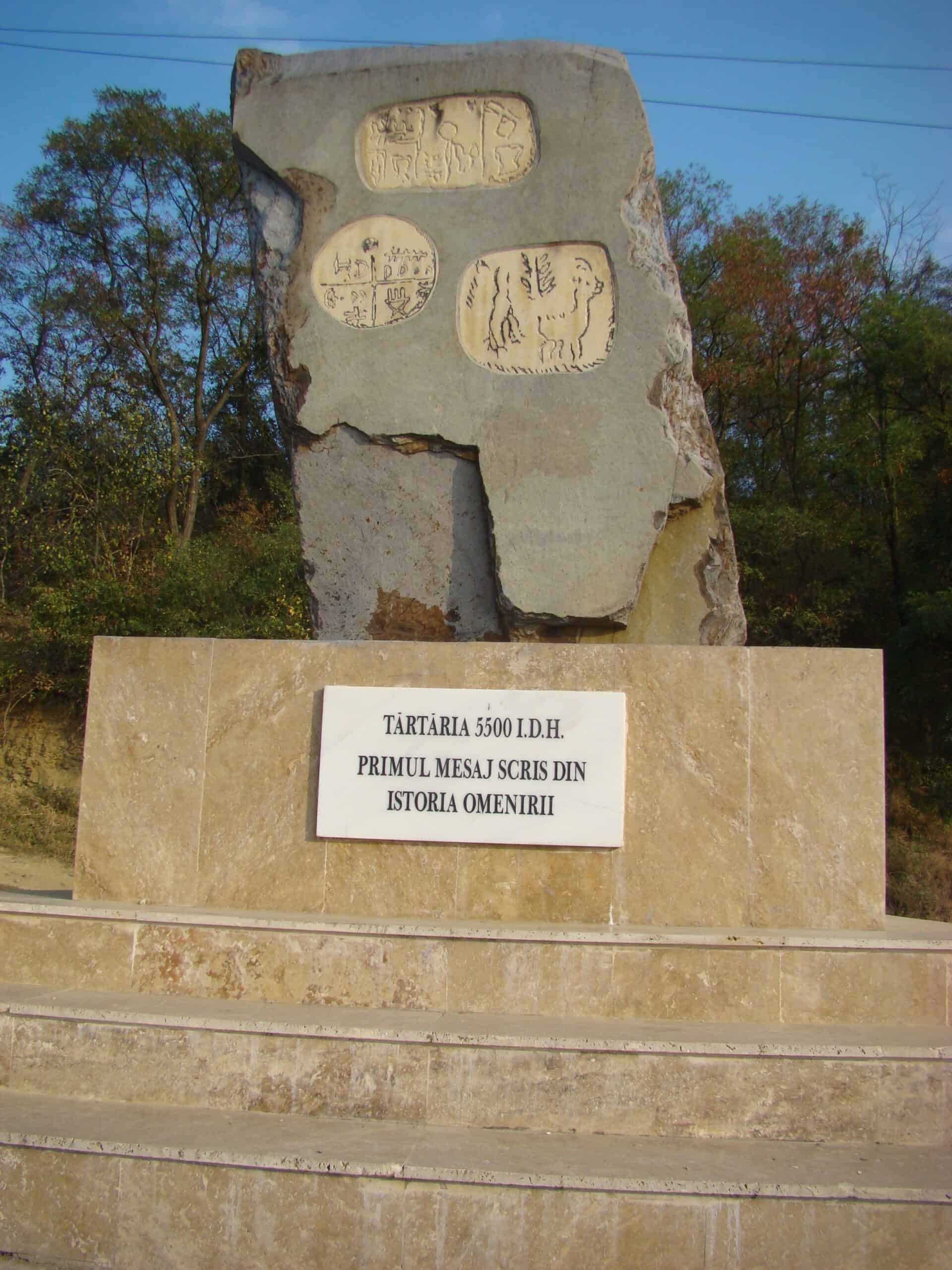
What if everything you learned about history was a lie? The Tartarian Empire conspiracy theory claims exactly that. It says a vast, advanced civilization once ruled most of the known world. Then it vanished. And someone worked very hard to make sure you’d never find out. This isn’t just fringe internet chatter. Millions of people worldwide have fallen down this rabbit hole. The theory weaves together real historical mysteries, eerie architectural puzzles, and genuinely unsettling questions. Whether you believe it or not, the story it tells is one of the strangest in modern conspiracy culture. It touches on mud floods, suppressed technology, secret wars, and buildings that shouldn’t exist. So buckle up. This one gets weird fast.
The Tartarian Empire and the Civilization That History Forgot
“Tartary” was a real geographical term. Historical maps of Tartary show a vast region covering Central Asia and Siberia. European cartographers used the name for centuries. That part is fact.
But here’s where things get strange.
Conspiracy theorists claim the Tartarian Empire wasn’t just a geographic label. They say it was a full-blown civilization. Advanced. Powerful. Possibly the most sophisticated culture that ever existed. They claim it had wireless energy technology. They claim it achieved something like world peace. And they claim it was deliberately erased from the history books.
The theory first emerged from Russian pseudoscience in the 1970s. Mathematician Anatoly Fomenko developed what he called the “new chronology.” He argued that official history had been falsified. His work planted seeds. Later, the racial occult writings of Nikolai Levashov watered them. Levashov presented Tartaria as the true name for ancient Russia. He claimed Western powers had maliciously buried this truth.
By 2016, the theory had broken free from its Russian nationalist roots. It spread across the internet like wildfire. YouTube videos racked up millions of views. Reddit threads exploded. Instagram accounts dedicated to Tartarian architecture gained massive followings.
The Russian Geographical Society wasn’t impressed. They debunked the conspiracy as an extremist fantasy. But their debunking actually backfired in a strange way. To prove Tartary was just a geographical term, they shared dozens of old maps from their collection. Conspiracy theorists immediately used those very maps as proof that Tartary was real and significant.
You genuinely can’t make this stuff up.
Mud Floods and the Tartarian Empire’s Terrifying End
Another fascinating historical case is: Piltdown Man: The 41-Year Hoax That Fooled the Scientific World
Every great civilization needs a great catastrophe. For the Tartarian Empire, that catastrophe was the mud flood.
This is where the theory gets genuinely creepy.
Believers claim a colossal wave of mud once swept across the entire planet. It killed most of the population. It buried entire cities. It wiped out almost all evidence of Tartarian civilization. And the survivors? They were left with no memory of what came before.
The “evidence” people point to is actually striking. Walk around any old European city. Look at the buildings. You’ll notice something odd. Many grand old structures have windows, doors, and archways that are partially buried underground. Sometimes several feet below street level. Why would architects design doorways that open into dirt?
Mud flood theorists have an answer. Those buildings weren’t built that way. The lower sections were buried after the flood. Streets were raised. History was reset. The survivors were told a new story about where they came from.
Both World War I and World War II get folded into the theory too. The massive bombing campaigns of WWII did destroy countless historic buildings. That’s real. Theorists claim this destruction wasn’t just war. It was a targeted operation to erase remaining Tartarian structures. The Bolshevik Revolution gets the same treatment. Communism’s spread across Europe, they argue, was a secret program to eliminate any last traces of the old empire.
It’s a dark vision of history. Everything you think you know is a cover story. The real past is buried under your feet.
The Tartarian Empire’s Strange Architectural Fingerprints
Here’s the part that hooks people. Even skeptics admit it’s oddly compelling.
Look at photographs from the late 1800s and early 1900s. Major cities around the world. The images show something jarring. Enormous, impossibly ornate stone buildings tower over muddy streets. Horse-drawn carts struggle through unpaved roads. Ordinary people in simple clothes look tiny beneath massive domed structures and elaborate facades.
The contrast is shocking. How did relatively primitive societies build such staggering monuments?
Tartarian theorists point to the 1915 World’s Fair in San Francisco. The Palace of Horticulture was a breathtaking structure. It was supposedly built in just a few years for a temporary exhibition. Then it was demolished. Theorists ask: why would you tear down something so magnificent? Their answer: because it wasn’t built for the fair. It was a Tartarian structure. The fair was a cover story for its brief public display before its destruction.
The Singer Building in New York. The original Penn Station. Grand capitol buildings with identical domes across different continents. Star-shaped forts appearing in countries with no known connection to each other. The White House itself. The Great Pyramids. All claimed as Tartarian constructions.
Historical texts referencing Tartary date back centuries, giving the theory an air of ancient legitimacy that its followers find irresistible.
Architectural critic Zach Mortice called it “the QAnon of architecture.” He argues it reflects deep cultural anger at modernism. People see ugly glass towers replacing beautiful old buildings. They feel something was lost. The Tartarian theory gives that feeling a villain and a narrative.
Why This Strange Theory Won’t Go Away
Religious scholar Moritz Maurer links the Tartarian theory to another wild idea: the “giant trees” theory. This claims that enormous flat-topped buttes and mesas are actually ancient tree stumps. Primordial trees, hundreds of feet tall, cut down by unknown forces long ago.
Both theories share something important. Neither has a clear, complete narrative. The villains are vague. The timeline shifts. The evidence is mostly images shared on social media. Maurer says this is intentional. Meme culture thrives on mystery. It doesn’t need a tidy explanation. It just needs an eerie image and a question mark.
That’s the real engine driving this phenomenon. Not Russian nationalism. Not architectural grievances. It’s the deeply human feeling that something is hidden. That the world we see is a stage set. That somewhere beneath the mud, beneath the official story, something extraordinary once existed.
Is the Tartarian Empire real? No credible historian or archaeologist thinks so. The evidence doesn’t hold up under scrutiny. But the questions the theory asks? Those stick around. Why do similar architectural styles appear across disconnected cultures? Why are so many old buildings partially buried? Why were so many magnificent structures torn down?
The Tartarian Empire may be a conspiracy theory built on misread history and internet memes. But the eerie feeling it taps into? That’s very, very real.
Related Posts
 Debunker: The Strange History of Those Who Challenged the Paranormal, the Occult, and the Unexplained
 Biblical Conspiracy Theory: The Hidden Truth About Sacred Texts and Secret Societies
 Blue Star Tattoo Legend: The LSD Scare That Terrified Parents for Decades
 Modern Flat Earth Beliefs: The Strange Conspiracy That Refuses to Die