
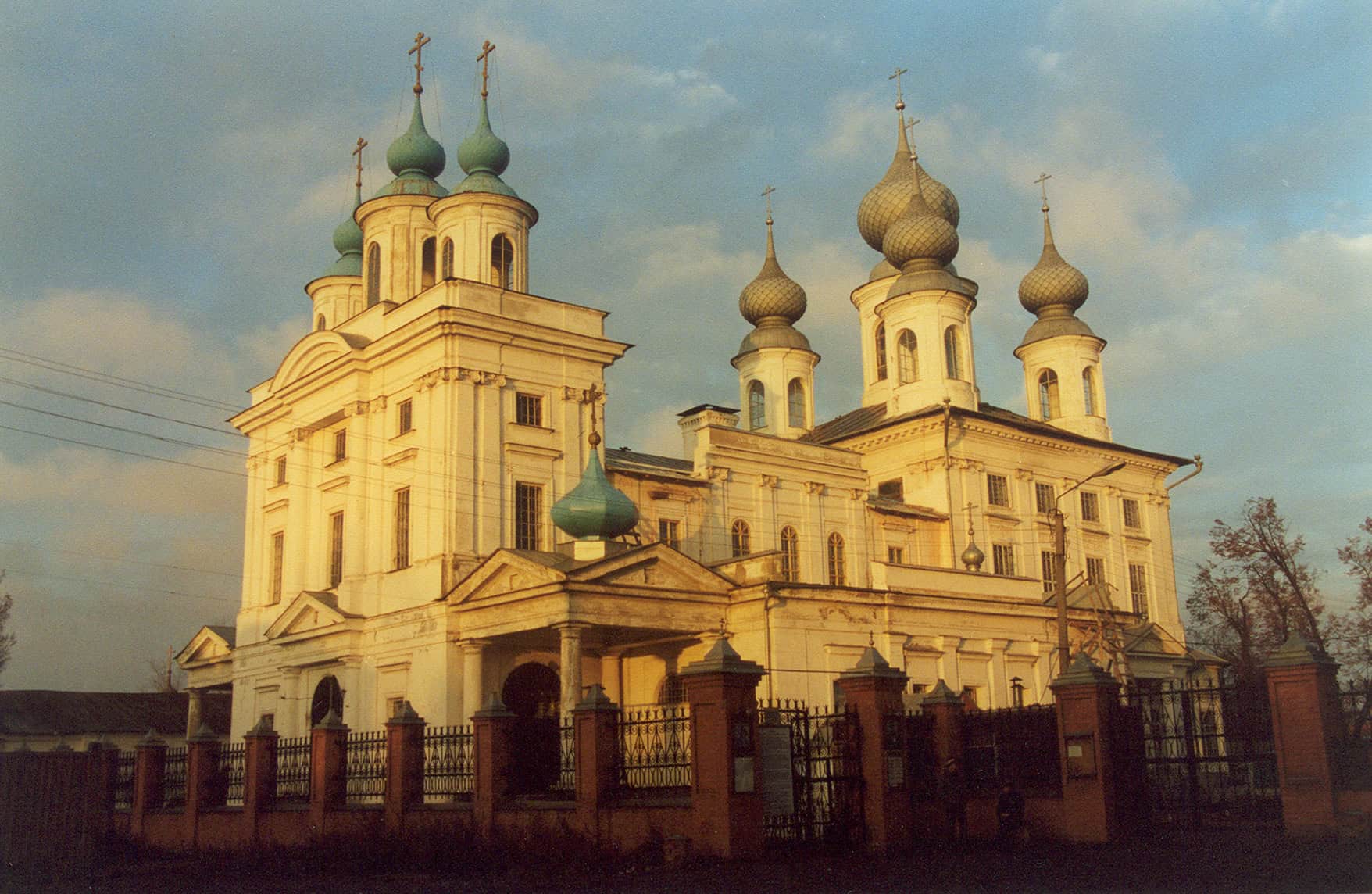
The 1922 Unrest in Shuya began as a simple religious protest but transformed into something far more sinister. On March 15, 1922, Orthodox believers gathered outside Shuya Cathedral to protect their sacred treasures from Bolshevik confiscation. What happened next would haunt the small Russian city for decades to come.
The crowd had assembled to defend the Shuya-Smolensk Icon of the Mother of God. This miraculous icon was believed to possess healing powers. Local residents claimed it had protected their city from plague and invasion for centuries. When government commissioners arrived to strip the cathedral of its gold and silver, the faithful refused to budge.
Witnesses described an eerie atmosphere that morning. The air felt heavy with foreboding. Children clung to their mothers’ skirts as adults formed a human wall around the cathedral entrance. Some parishioners later claimed they heard strange whispers coming from inside the church. Others reported seeing shadowy figures moving near the altar, even though no one was supposed to be inside.
The Mysterious Deaths During the 1922 Unrest in Shuya
When Bolshevik militia opened fire on the crowd, chaos erupted. Four or five people died instantly, though accounts vary wildly about what actually happened. Some witnesses insisted they saw muzzle flashes from multiple directions. Others claimed the shots came from inside the cathedral itself.
The official report blamed “counter-revolutionary agitators” for inciting violence. But survivors told a different story. They described hearing unearthly screams that seemed to come from beneath the ground. Several witnesses reported seeing the victims’ bodies glow with an otherworldly light moments before they died.
Among the dead was young Anastasia, a girl whose age remains unknown to this day. Her body was found clutching a small icon, her face peaceful despite the violence around her. Local residents whispered that she had predicted her own death three days earlier. The girl had allegedly told her mother that “the Mother of God was calling her home.”
The other victims included Nikolai Malkov, Avksentiy Kalashnikov, and Sergei Mefodiev. All were ordinary workers with no political connections. Yet something had compelled them to risk everything for their faith. Their families later reported strange phenomena in their homes – doors opening by themselves, religious icons weeping, and the sound of church bells ringing at midnight.
Lenin’s Secret Orders and the Shuya Conspiracy
Related article: Baron 52: The Vanished Airmen Who May Have Been Taken to Soviet Gulags
Behind the scenes, Vladimir Lenin was orchestrating something much darker than a simple property seizure. His secret letter to Vyacheslav Molotov, dated March 19, 1922, revealed chilling instructions. Lenin demanded that “the maximum number of death sentences be handed down” in Shuya.
The letter contained disturbing details that weren’t made public for decades. Lenin specifically ordered the arrest of “not less than several dozen representatives of the local clergy.” He wanted to make an example of Shuya that would terrify Orthodox believers across Russia. The timing seemed deliberately chosen to coincide with religious holidays, maximizing the psychological impact.
Historical archives reveal that Lenin viewed the Shuya incident as an opportunity to crush religious resistance permanently. His correspondence suggests he believed supernatural forces were somehow protecting the Orthodox Church. Lenin’s atheist ideology couldn’t tolerate any suggestion of divine intervention.
Three local leaders – priests Ivan Rozhdestvensky and Pavel Svetozarov, plus layman Pyotr Yazykov – were arrested immediately after the shooting. Their show trial was a foregone conclusion. All three were executed on May 10, 1922, despite having no direct involvement in organizing the protest.
Strangely, prison guards reported unusual phenomena during the men’s final days. Lights flickered without explanation in their cells. Guards heard hymns being sung, even though the prisoners were kept in solitary confinement. On the night before their execution, multiple witnesses claimed to see three figures in white robes walking through the prison walls.
Unexplained Events Following the 1922 Unrest in Shuya
The aftermath of the Shuya shootings was marked by a series of inexplicable occurrences. Local Bolshevik officials began reporting disturbing dreams featuring the executed priests. Several commissioners who participated in the church raids suffered mysterious illnesses that baffled doctors.
The confiscated treasures themselves seemed to carry a curse. Items taken from Shuya Cathedral reportedly caused accidents and misfortune wherever they went. A government warehouse storing the religious artifacts burned down under suspicious circumstances. No cause was ever determined, and witnesses claimed the flames burned in unusual colors.
Most unsettling were the reports from Shuya Cathedral itself. Even after the Orthodox services were banned, residents heard church bells ringing at night. Passersby claimed to see lights moving inside the supposedly empty building. Some brave souls who investigated reported finding fresh candles burning before empty icon stands.
The Bolshevik authorities tried to suppress these stories, but they spread like wildfire through the community. Workers began refusing night shifts near the cathedral. Children avoided walking past the building after dark. Even committed communists started crossing themselves when they passed the site of the shooting.
The Canonization and Modern Legacy
In 2000, the Russian Orthodox Church officially canonized the victims of the Shuya massacre as New Martyrs. The canonization process revealed previously unknown details about the events of March 15, 1922. Church investigators documented dozens of miraculous healings attributed to the martyrs’ intercession.
The Orthodox Church now recognizes four people killed outside the cathedral as saints. Their feast day is celebrated annually on March 15th. Pilgrims travel from across Russia to pray at the monument erected in their honor.
Modern Shuya residents continue to report unusual phenomena near the cathedral. Visitors describe feeling an overwhelming sense of peace in the square where the shooting occurred. Some claim to see apparitions of the martyrs during religious processions. Photography enthusiasts have captured unexplained orbs of light in pictures taken near the memorial.
The cathedral itself has been restored to its former glory, but locals say it’s never quite the same. The Shuya-Smolensk Icon was lost during the Soviet period, though some believe it still exists in hiding. Believers claim that on quiet nights, you can still hear the faint sound of Orthodox hymns drifting from the cathedral walls.
The 1922 Unrest in Shuya remains one of the most haunting episodes of Soviet persecution. What began as a political confrontation became something far more mysterious – a testament to faith that transcended death itself.
Related Posts
 Uvb-76: The Mysterious Russian Radio Station That Never Stops Broadcasting
 Biblical Conspiracy Theory: The Hidden Truth About Sacred Texts and Secret Societies
 2009 Aftonbladet Israel Controversy: The Organ Harvesting Allegations That Shook Diplomacy
 Conspiracy Theory (legal Term): When Courts Embrace the Unthinkable