The Bilderberg Meeting stands as one of the most secretive and controversial gatherings on Earth. Since 1954, this annual conference has brought together roughly 150 of the world’s most powerful individuals behind closed doors. No press allowed. No recordings permitted. No public statements released. Just the global elite discussing matters that could shape the future of humanity.
What makes this gathering so unsettling isn’t just its secrecy,it’s the sheer power concentrated in one location. Presidents, prime ministers, tech billionaires, media moguls, and banking titans all converge for three days of off-the-record discussions. The official agenda remains vague. The real conversations? Unknown to the outside world.
The meeting’s origins trace back to concerns about growing anti-American sentiment in Europe after World War II. Polish politician Józef Retinger worried about fracturing Western alliances. He approached Prince Bernhard of the Netherlands with an idea: gather European and American leaders in secret to discuss shared interests. The Council on Foreign Relations notes that CIA director Walter Bedell Smith quickly became involved in the planning.
The Mysterious Bilderberg Meeting Origins
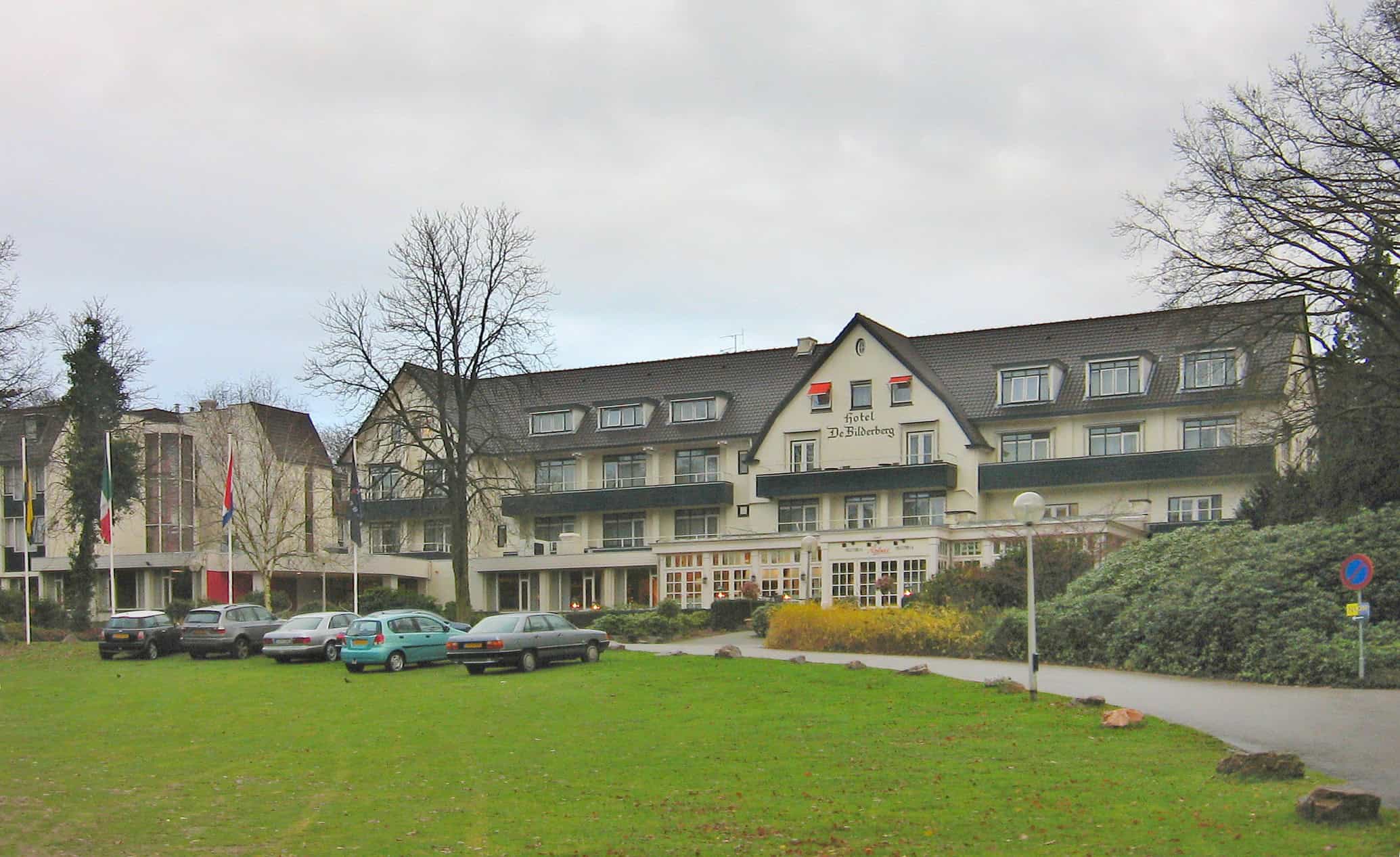
The first Bilderberg Meeting took place at the Hotel de Bilderberg in Oosterbeek, Netherlands, from May 29-31, 1954. The location wasn’t chosen randomly. This quiet hotel, just seven kilometers from Arnhem, offered complete privacy. No curious journalists. No protesters. Just 61 carefully selected individuals from 11 Western nations.
The guest list followed a peculiar formula. Each country would send two representatives,one “conservative” and one “liberal.” This balance was supposed to encourage honest debate. But critics wondered: who decided these political labels? What qualified someone for invitation to this exclusive club?
Prince Bernhard served as the meeting’s first chairman. He would hold this position for over two decades until scandal forced his resignation. The Lockheed bribery affair of 1976 revealed that the Prince had accepted millions in questionable payments from the aircraft manufacturer. The revelation was so damaging that the 1976 Bilderberg Meeting was cancelled entirely.
The Ford Foundation provided $30,000 for the first U.S. meeting in 1957 on St. Simons Island, Georgia. This funding raised immediate questions. Why would a charitable foundation finance a gathering of the world’s wealthiest individuals? What did the Foundation hope to gain from these secretive discussions?
Inside the Bilderberg Meeting: What Really Happens
Another fascinating historical case is: Persian Princess: The Archaeological Hoax That Fooled the World in 2000
The Bilderberg Meeting operates under the Chatham House Rule. Attendees can use information from discussions but cannot reveal who said what. This arrangement supposedly encourages candid conversation while maintaining deniability. Critics see it differently,as a perfect cover for coordinating global policies without public accountability.
Meeting locations rotate annually between luxury hotels and resorts in Europe and North America. Security is always intense. Local police create exclusion zones. Private security firms sweep for surveillance devices. Attendees arrive via private jets and armored vehicles. The level of protection rivals that given to heads of state.
Topics officially include economics, technology, and geopolitics. But leaked documents and whistleblower accounts suggest more specific discussions. Currency manipulation. Regime change operations. Media narrative coordination. Population control measures. The real agenda remains hidden behind layers of secrecy and non-disclosure agreements.
Former attendees occasionally break their silence. They describe an atmosphere of assumed superiority and entitlement. Discussions proceed as if attendees have the right to shape global events without consulting the billions affected by their decisions. Democracy becomes an obstacle to overcome rather than a principle to respect.
The Bilderberg Meeting Conspiracy Theories
The meeting’s secrecy has spawned countless conspiracy theories across the political spectrum. Left-wing critics see it as capitalist coordination to suppress workers’ rights and environmental protection. Right-wing theorists view it as globalist plotting to destroy national sovereignty and traditional values. Both sides agree on one thing: something sinister happens behind those closed doors.
Some theories border on the fantastical. Claims of reptilian shapeshifters and occult rituals lack credible evidence. But other concerns carry more weight. The documented presence of media owners raises questions about news coverage coordination. Banking executives meeting with finance ministers suggests potential market manipulation. Tech leaders discussing regulation with politicians implies policy coordination.
The participant list reads like a who’s who of global power. Amazon’s Jeff Bezos. Google’s Eric Schmidt. Goldman Sachs executives. NATO officials. European Central Bank governors. When these individuals gather in secret, public suspicion seems entirely rational.
Leaked documents occasionally surface, providing glimpses into actual discussions. The 2012 agenda included “US Elections” and “Cyber Warfare.” The 2019 meeting covered “The Future of Capitalism” and “Russia.” These topics suggest conversations far more specific than the vague public descriptions indicate.
Modern Secrecy and Growing Scrutiny
Recent decades have brought increased scrutiny to the annual gathering. Protesters now regularly demonstrate outside meeting locations. Independent journalists attempt to document attendee arrivals and departures. Social media makes complete secrecy increasingly difficult to maintain.
The COVID-19 pandemic forced cancellations in 2020 and 2021,the first interruptions since the 1976 Lockheed scandal. When meetings resumed, security had intensified further. Digital surveillance countermeasures expanded. Media exclusion zones grew larger. The response suggested organizers felt genuinely threatened by growing public awareness.
Current chairman Henri de Castries, former CEO of insurance giant AXA, maintains the meeting serves legitimate purposes. He argues that informal dialogue between leaders prevents misunderstandings that could lead to conflict. Critics respond that democratic societies require transparent decision-making processes, not secret elite coordination.
The 2024 meeting in Madrid drew the largest protests in the gathering’s history. Thousands of demonstrators demanded transparency and accountability. Spanish police deployed water cannons and tear gas to maintain security perimeters. The violent response only fueled more suspicion about what requires such extreme protection.
The Bilderberg Meeting continues to operate in an era of declining trust in institutions and growing demands for transparency. Each year of maintained secrecy generates more questions than answers. Whether the gathering represents legitimate diplomatic dialogue or something more sinister remains hotly debated. What’s certain is that when the world’s most powerful individuals meet in secret, the public has every right to wonder what they’re planning,and why it can’t be discussed in the light of day.