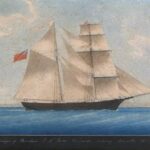
The Bridgewater (1785 Eic Ship) sailed the treacherous waters of the Indian Ocean for twenty years before vanishing into maritime legend. This British East India Company vessel became infamous not for its successful voyages, but for a shocking act of abandonment that haunted its final years. In 1803, Captain E.H. Palmer made a decision that would curse his ship forever. When two companion vessels wrecked on Australia’s deadly Wreck Reefs, Palmer sailed away, leaving dozens of men stranded to die. The ship’s own crew turned against their captain, and whispers of betrayal followed the vessel until it disappeared completely in 1805.
Built in Deptford in 1785, this three-decked merchant ship initially served the East India Company with distinction. She carried precious cargo between England, India, and China for nearly two decades. But something dark was brewing aboard this cursed vessel.
The Bridgewater (1785 Eic Ship) and the Wreck Reefs Betrayal
On August 17, 1803, three ships sailed together through dangerous waters near Australia’s coast. The HMS Porpoise, merchant vessel Cato, and the Bridgewater (1785 Eic Ship) encountered treacherous sandbanks 157 miles north and 51 miles east of Sandy Cape. In the dead of night, disaster struck with terrifying swiftness.
The Porpoise and Cato smashed into the hidden reefs with bone-crushing force. Sailors screamed as their ships broke apart on the jagged coral. Captain Palmer of the Bridgewater watched the horrific scene unfold. His vessel remained afloat, offering the only hope of rescue for the drowning men.
But Palmer made a decision that would haunt maritime history. Despite desperate signals from the wreck sites, he ordered his crew to sail away. The Wreck Reefs claimed their victims as Palmer abandoned nearly 100 souls to their fate. Survivors later described watching the Bridgewater’s sails disappear over the horizon, taking their last hope with it.
Mutiny and Madness Aboard the Cursed Bridgewater
For more strange history, see: James Bartley: The Sailor Who Allegedly Survived Being Swallowed by a Whale
The crew of the Bridgewater witnessed their captain’s cowardly act with growing horror. When they reached Calcutta, the ship’s third mate could no longer stay silent. He gave testimony that directly contradicted Palmer’s official report, revealing the captain’s lies to authorities.
Palmer claimed he had done everything possible to rescue the stranded sailors. He insisted that contrary winds and dangerous seas prevented any rescue attempt. But his own third mate told a different story. The officer described how Palmer could have saved lives but chose to preserve his cargo instead.
The confrontation between captain and crew reached a breaking point. The third mate, disgusted by “his captain’s lies,” abandoned ship before the Bridgewater left Calcutta. Other crew members whispered of mutiny and madness aboard the cursed vessel. Some sailors reported strange sounds at night and an atmosphere of dread that seemed to follow the ship.
Palmer’s reputation was destroyed, but he remained in command. The Bridgewater prepared for what would become her final voyage.
The Bridgewater (1785 Eic Ship) Disappears Forever
In 1805, the Bridgewater (1785 Eic Ship) departed Bombay for her eighth and final voyage to England. Captain Palmer commanded a crew that no longer trusted him. The ship carried valuable cargo and passengers eager to reach home safely.
But the cursed vessel never arrived. Somewhere in the vast Indian Ocean, the Bridgewater simply vanished without a trace. No distress signals were received. No wreckage was ever found. The ship that had abandoned others to die had itself disappeared completely.
The irony was not lost on maritime observers. Historical records note that the vessel which reported both Porpoise and Cato lost with no survivors was itself “lost with all hands at a later date.” Some saw this as divine justice for Palmer’s cowardly betrayal.
Theories about the Bridgewater’s fate range from storms to piracy. Others whispered of supernatural revenge. Had the ghosts of the abandoned sailors finally claimed their justice? The truth remains hidden beneath thousands of feet of ocean water.
Legacy of a Maritime Mystery
The story of the Bridgewater became a cautionary tale among sailors. Maritime law required captains to assist vessels in distress, but Palmer’s actions showed how easily this duty could be ignored. His decision haunted the shipping industry for decades.
In 1965, explorer Ben Cropp discovered the wreck sites of the Porpoise and Cato at Wreck Reefs. After extensive research and just fifteen minutes of diving, he found the remains of both vessels. But no trace of the Bridgewater has ever been located.
The abandoned sailors’ story gained new attention through these discoveries. Matthew Flinders, the famous explorer, had been aboard the Porpoise when it wrecked. He survived the ordeal and later wrote about Palmer’s betrayal. Flinders believed the Bridgewater captain deliberately sailed away despite knowing the other ships had come to grief.
Modern maritime historians continue studying this dark chapter. The Wreck Reefs area now enjoys protection as a historic site, preserving the memory of those who died there. But questions about the Bridgewater’s final fate remain unanswered.
The Bridgewater (1785 Eic Ship) serves as a reminder that the ocean keeps its secrets well. Captain Palmer’s cowardly decision may have sealed his ship’s doom, creating one of maritime history’s most enduring mysteries. Somewhere in the depths, the cursed vessel rests with her crew, finally paying the price for abandoning those who needed help most.