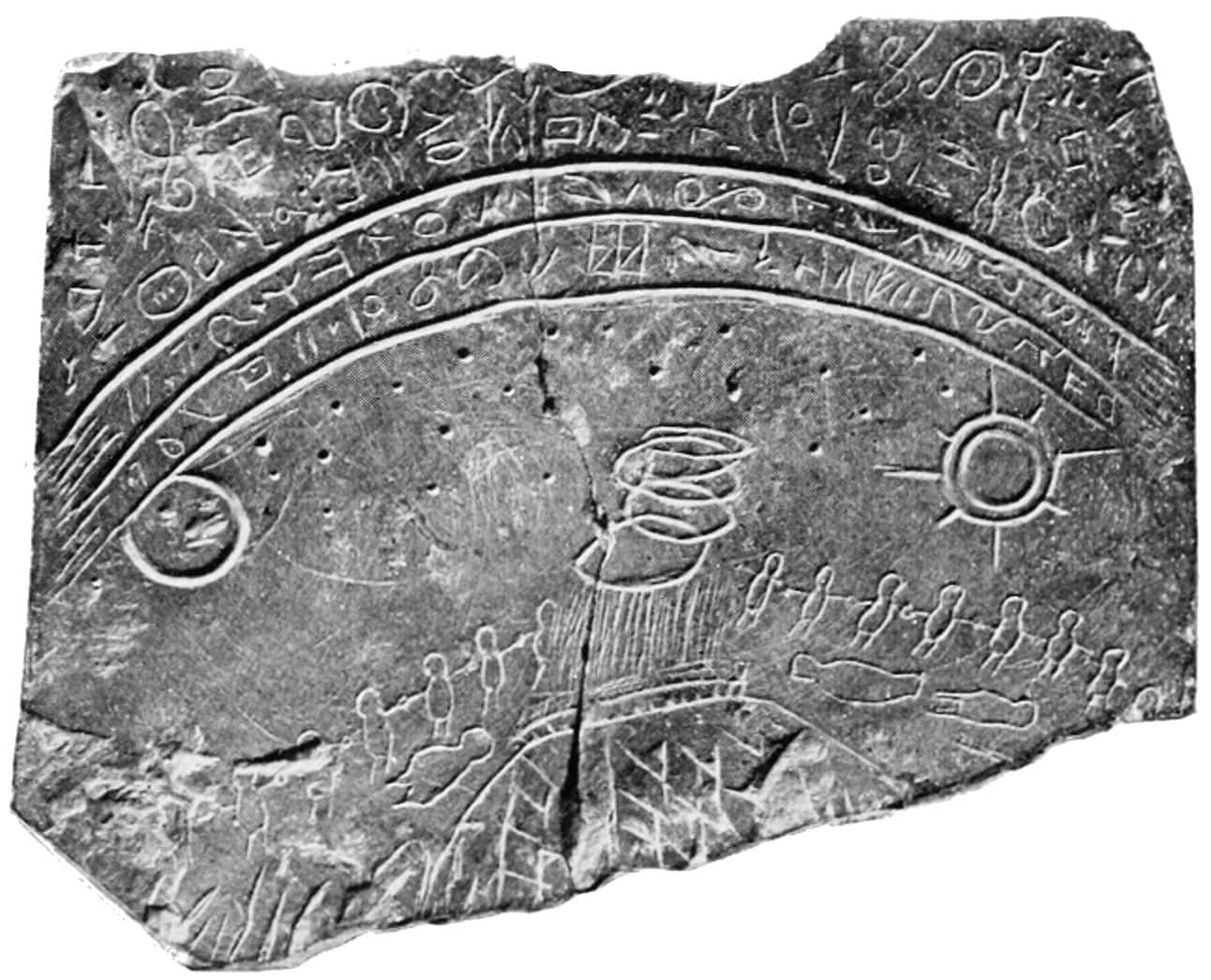
The Davenport Tablets represent one of America’s most elaborate archaeological hoaxes. These three inscribed slate tablets surfaced from ancient burial mounds near Davenport, Iowa in the 1870s. Their discovery ignited fierce debates about ancient civilizations in North America. What seemed like groundbreaking evidence of pre-Columbian contact became a cautionary tale of scientific deception.
The tablets contained mysterious symbols, hunting scenes, and what appeared to be astronomical calendars. For nearly a decade, respected scholars defended their authenticity. The Smithsonian Institution itself initially validated the finds. Yet beneath the surface lurked a conspiracy that would span generations.
The Mysterious Discovery of the Davenport Tablets
Reverend Jacob Gass made the first shocking discovery on January 10, 1877. While excavating Mound No. 3 at Cook’s Farm, he unearthed two slate tablets buried alongside human skeletons. The artifacts lay 5½ feet underground, wrapped in decaying cloth near copper axes and beads.
The timing seemed urgent. Gass claimed he needed to excavate quickly before losing access rights to the site. This pressure would later raise suspicions about the find’s legitimacy.
A year later, Charles Harrison joined Gass for another dig. Harrison served as president of the Davenport Academy of Natural Sciences. Together, they discovered the third tablet in nearby Mound No. 11. The archaeological reports from this period document their excitement over the unusual inscriptions.
Each tablet told a different story. One depicted a cremation scene with figures gathered around a funeral pyre. Another showed hunters pursuing game animals. The third contained rows of symbols that resembled an ancient calendar system.
Strange Symbols and Suspicious Evidence on the Davenport Tablets
Another fascinating historical case is: 2012 Phenomenon: When Ancient Maya Calendars Sparked Global Doomsday Panic
The inscriptions themselves defied easy explanation. The tablets contained 74 distinct letters, though 24 were repetitions. These symbols appeared to blend different writing systems. Some resembled Hebrew characters. Others looked like ancient Phoenician script.
Dr. E. Foreman from the Smithsonian noticed troubling details during his examination. The incisions showed no weathering despite supposedly being buried for centuries. Perfect circles on the tablets suggested someone had used a steel compass. The slate itself remained in pristine condition.
Even more suspicious was the soil around the burial sites. Mound No. 11 contained loose, easily disturbed earth. Any genuine ancient burial should have shown stratified layers built up over time. Instead, the dirt appeared recently moved.
Local farmers reported finding unusual stones while plowing near the mounds. Gass returned to investigate these reports. He discovered five more inscribed stones, though three proved too large to remove from the ground.
The Davenport Tablets Conspiracy Unravels
Cyrus Thomas delivered the death blow to the tablets’ credibility in 1885. This respected ethnologist published a damning analysis for the Bureau of American Ethnology. He noted that many symbols matched illustrations on page 1766 of Webster’s 1872 dictionary.
The evidence of forgery became overwhelming. Thomas discovered that the Hebrew and Phoenician-looking characters could be traced directly to dictionary illustrations. Someone had simply copied ancient alphabets from a reference book.
The physical evidence told an even stranger story. The tablets appeared to be modified roof slates. University of Iowa Professor Marshall McKusick later tracked their origin to a local house of prostitution. The nail holes in the tablets matched those from the building’s slate roof.
Confessions and the Truth Behind the Hoax
The full conspiracy didn’t emerge until 1991. McKusick published “The Davenport Conspiracy Revisited” after decades of investigation. He uncovered testimony from James Willis Bollinger, a Davenport Academy member who participated in the deception.
Bollinger’s confession revealed the hoax’s true scope. Academy members had grown jealous of Reverend Gass, a foreign-born outsider gaining attention for his discoveries. They decided to play an elaborate prank on the gullible minister.
The janitor John Graham admitted to creating fake artifacts in the academy’s basement. Edwin Gass, Jacob’s brother, helped plant evidence at dig sites. Even Jacob’s brother-in-law Alfred Blumer participated in the scheme.
What began as a simple joke spiraled into a century-long deception. The tablets remained in museum collections long after experts knew they were fake. The Davenport Academy didn’t officially admit the fraud until 1930.
The Davenport Tablets serve as a chilling reminder of how easily scientific evidence can be manipulated. Today, they rest in the Putnam Museum, correctly labeled as fraudulent artifacts. Their legacy warns archaeologists about the dangers of accepting extraordinary claims without extraordinary evidence. The conspiracy that fooled America’s top scholars proves that even experts can fall victim to elaborate deceptions.