
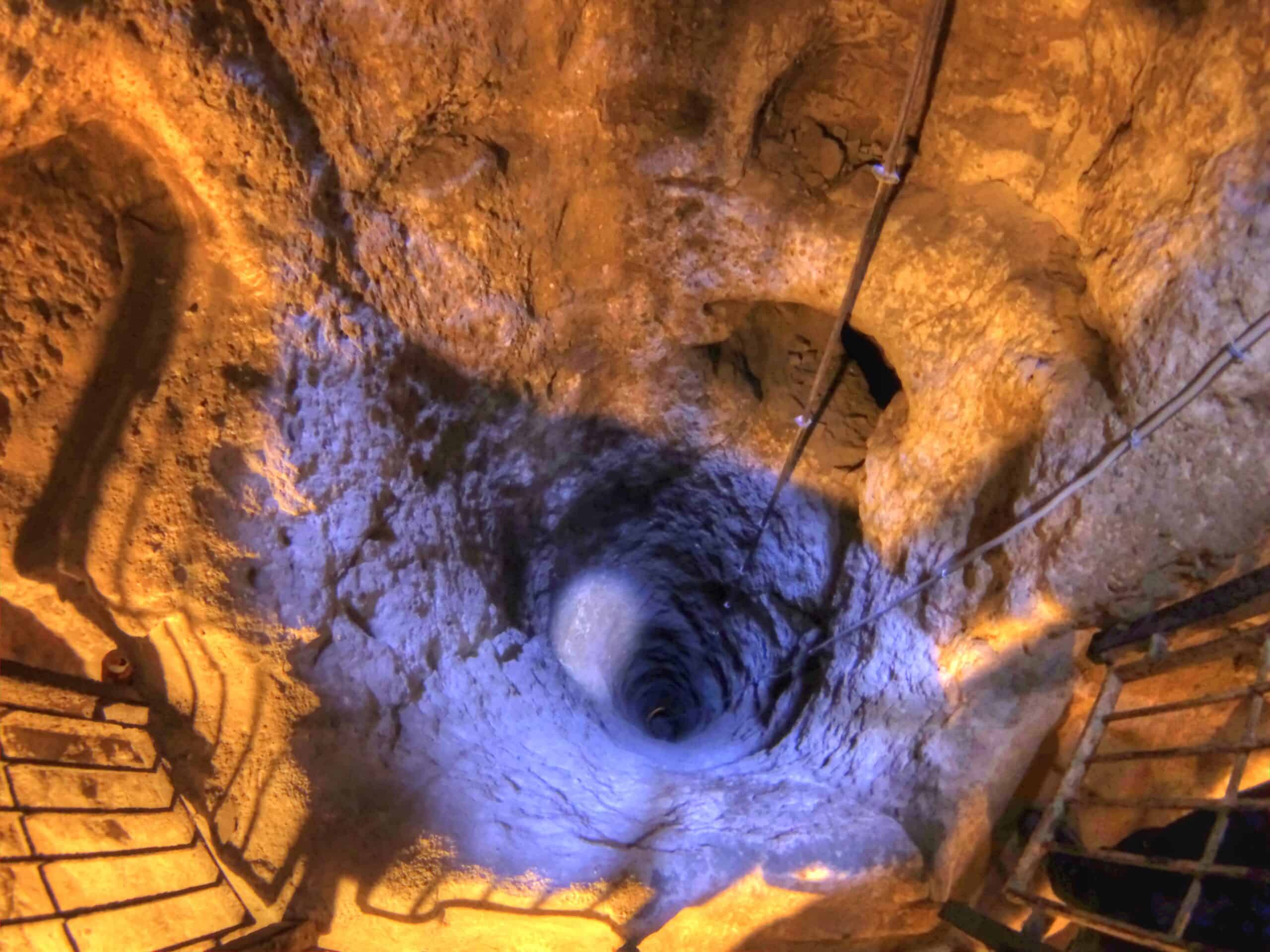
The Derinkuyu Underground City plunges 85 meters into Turkey’s volcanic bedrock, hiding secrets that have baffled archaeologists for decades. This massive subterranean maze could shelter 20,000 people in its shadowy depths. But who built this underground world? And why did they carve such an elaborate network of tunnels and chambers?
The city’s discovery reads like something from a thriller novel. In 1963, a Turkish man chasing his vanishing chickens knocked down a basement wall. Behind it lay a tunnel leading into darkness. What he found defied explanation – an entire civilization buried beneath his feet.
The deeper researchers venture into Derinkuyu, the more questions arise. Ancient engineering techniques that shouldn’t exist. Chambers with mysterious purposes. Tunnels that lead nowhere. Some locals whisper that the deepest levels remain sealed for good reason.
The Bizarre Discovery of Derinkuyu Underground City
The man’s chickens kept disappearing through a crack in his basement wall. When he finally broke through, his flashlight revealed a narrow passage descending into blackness. He had stumbled upon one of history’s most incredible archaeological finds.
What started as a simple home renovation became an international sensation. The tunnel led to room after room, level after level. Each chamber revealed more mysteries. Who had carved these perfect passages? How long had they been abandoned?
The discovery team found rolling stone doors that could seal entire sections. Ventilation shafts that plunged impossibly deep. Storage rooms filled with ancient pottery. Chapel walls covered in Byzantine crosses and Greek inscriptions.
But the strangest find was a Star of David carved near a chamber ceiling. This symbol suggested diverse spiritual traditions had coexisted in the underground world. What kind of society had thrived in these depths?
Engineering Mysteries Beneath Derinkuyu Underground City
Another fascinating historical case is: Alyoshenka: The Kyshtym Dwarf That Vanished Without a Trace
The precision of Derinkuyu’s construction defies explanation. Ancient builders carved 18 levels without modern tools or blueprints. Yet not a single floor has ever collapsed. How did they achieve such structural perfection?
The ventilation system presents another puzzle. A central shaft drops 55 meters, providing fresh air to every level. Side passages branch off like arteries, carrying oxygen to the farthest chambers. This engineering feat rivals modern subway systems.
Each level could be sealed independently using massive rolling stones. These circular doors weigh several tons but move with surprising ease. The mechanism remains a mystery. No pulleys or counterweights have been found.
The official archaeological record attributes the city to Phrygian builders from the 8th century BC. But some chambers show construction techniques that seem far more advanced. Could an earlier civilization have started the work?
Dark Secrets and Unexplained Features of Derinkuyu
Only eight levels are open to tourists. The remaining ten levels stay sealed behind locked gates. Turkish authorities won’t explain why these depths remain forbidden. What lies in those unexplored chambers?
Local legends speak of tunnels that stretch for miles underground. Some claim passages connect Derinkuyu to other buried cities across Cappadocia. An 8-kilometer tunnel to nearby Kaymakli has been confirmed. But how many other connections exist?
Strange chambers serve unknown purposes. One room features a barrel-vaulted ceiling and mysterious stone platforms. Archaeologists call it a school, but the design suggests something more ritualistic. Carved niches line the walls like ancient altars.
The deepest accessible level contains a cruciform church. But why build a place of worship so far underground? The chamber’s acoustics create eerie echoes that seem to whisper from the walls. Visitors report feeling watched in this sacred space.
Modern Mysteries and Ongoing Investigations
Recent ground-penetrating radar has revealed even more chambers beneath the known levels. These discoveries suggest Derinkuyu might extend far deeper than anyone imagined. The full extent of the underground city remains unknown.
Construction crews occasionally break through basement walls and find new passages. Over 600 entrances have been identified beneath modern Derinkuyu’s streets. Each discovery raises new questions about the city’s true size.
Some researchers propose controversial theories about Derinkuyu’s origins. Could it have been built as an ancient doomsday bunker? The city’s design suggests preparation for long-term isolation. Food storage areas, livestock stables, and water sources could sustain thousands for months.
The archaeological evidence shows continuous habitation for over a millennium. Christians used these tunnels to escape persecution well into the 20th century. Richard MacGillivray Dawkins recorded refugees hiding underground during the 1909 Adana massacres.
The Derinkuyu Underground City continues to guard its secrets. Each excavation reveals new chambers and fresh mysteries. Perhaps the most intriguing question remains unanswered: what drove ancient people to carve such an elaborate refuge beneath the earth? The tunnels seem to whisper their secrets, but only to those brave enough to descend into the darkness and listen.
Related Posts
 Piri Reis Map: The Mysterious Ottoman Chart That Defies Explanation
 Tarim Basin Mummies: Ancient Secrets and Bizarre Burial Rituals in China’s Desert
 Biblical Conspiracy Theory: The Hidden Truth About Sacred Texts and Secret Societies
 Ballista Balls of Gamla: The Cursed Ancient Weapons That Keep Coming Home