
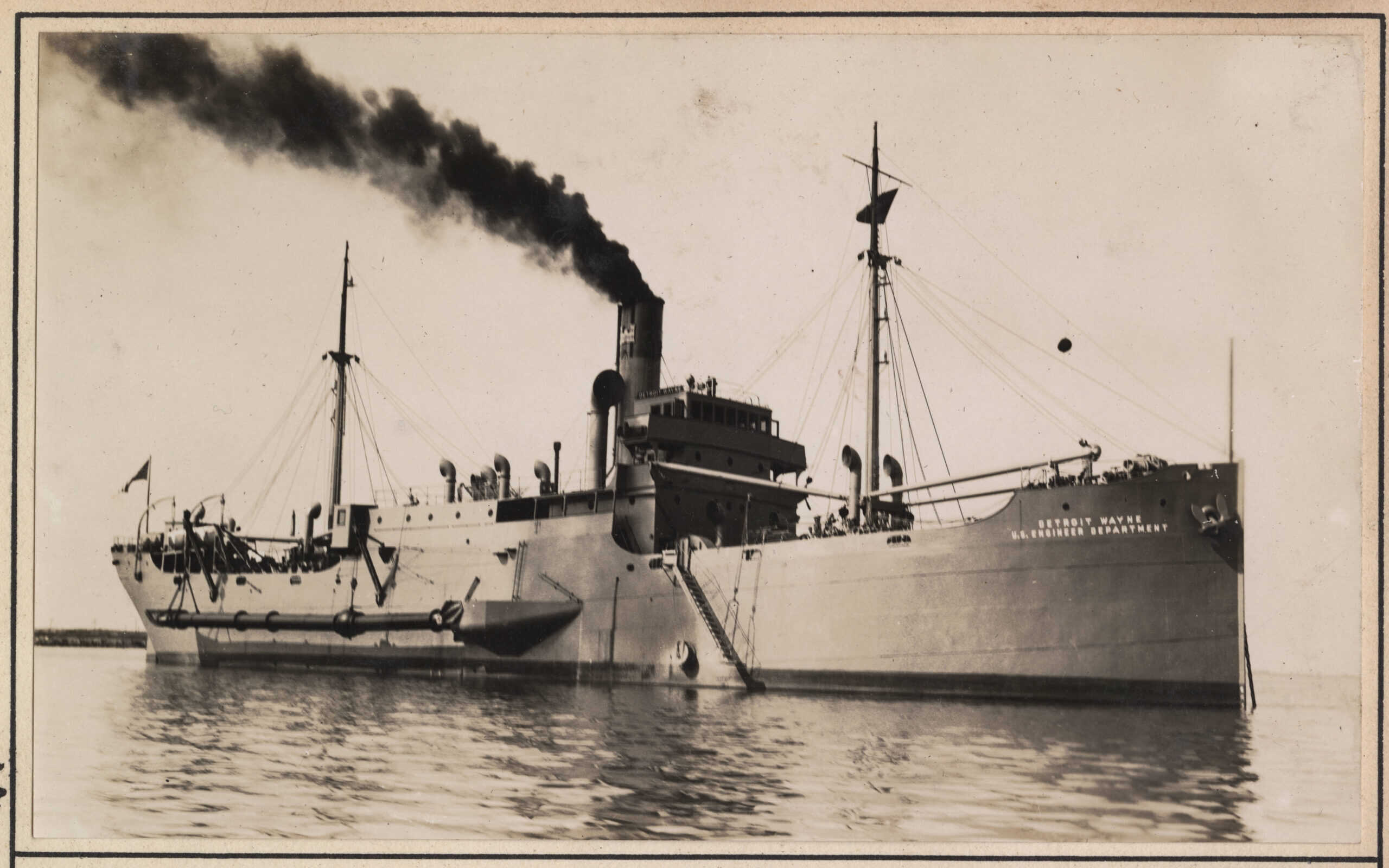
The Detroit Wayne (1919 Ship) began its existence under an ominous shadow that would follow it to a watery grave. Built in the aftermath of World War I’s carnage, this steel-hulled freighter seemed destined for tragedy from the moment it left the shipyard. What started as a symbol of American industrial might would end as another victim of the Atlantic’s most feared waters.
The ship’s construction coincided with one of history’s deadliest maritime periods. German U-boats had already claimed nearly 5,000 vessels during the Great War. The Detroit Wayne emerged from this chaos in November 1919, launched by Detroit Shipbuilding Company as part of the Emergency Fleet Corporation’s desperate “bridge across the ocean” program. At 251 feet long with a beam of 43 feet, the vessel could carry 4,050 tons of cargo powered by a single triple-expansion steam engine.
Something felt wrong from the beginning. Originally named Lake Fairton, the ship’s identity changed before launch. Workers whispered about the name switch bringing bad luck. The vessel honored Detroit and Wayne County for their Liberty Bond contributions, but sailors knew ships didn’t like having their names changed. It was the first of many maritime superstitions that would haunt the Detroit Wayne’s troubled existence.
The Detroit Wayne (1919 Ship) Enters Cursed Waters
After delivery in April 1920, the Detroit Wayne began its Atlantic crossings under the Clyde Steamship Company’s management. The vessel made eight trans-Atlantic voyages between 1920 and 1921, carrying cargo to Genoa, Marseilles, and various European ports. Crew members reported strange occurrences during these early voyages. Unexplained noises echoed from empty cargo holds at night. Equipment malfunctioned without reason. Several sailors claimed to see shadowy figures moving through the ship’s corridors.
The ship’s troubles multiplied during its European service. On one voyage to Italy, the crew discovered all compass readings had mysteriously shifted overnight. Navigation instruments failed repeatedly, forcing captains to rely on celestial navigation. Port authorities in Genoa noted unusual delays and mechanical problems that plagued the vessel. By September 1921, the Detroit Wayne completed its final Atlantic crossing, departing Marseilles for Philadelphia like a ship fleeing some unseen curse.
The Shipping Board redelivered the troubled freighter at Norfolk, Virginia in October 1921. Officials noted extensive wear and damage that seemed excessive for such a young vessel. The Detroit Wayne sat idle for over a decade, as if the maritime world sensed something malevolent about the ship. During this dormant period, dock workers reported strange lights emanating from the vessel’s interior at night, despite no electrical power being connected.
Transformation and the Detroit Wayne (1919 Ship)’s Dark Rebirth
Related article: Soviet evacuation of Tallinn: The Tragic Naval Disaster of August 1941
In 1932, the U.S. Army Corps of Engineers converted the Detroit Wayne into a dredging vessel for Mississippi River operations. This transformation seemed to awaken something sinister within the ship’s steel hull. Workers during the conversion reported tools disappearing and reappearing in impossible locations. Welding equipment sparked and failed without explanation. Several laborers quit after experiencing what they described as an overwhelming sense of dread while working below deck.
The dredging years brought new mysteries. River pilots reported the Detroit Wayne appearing in locations where it shouldn’t be, only to vanish when approached. Local fishermen claimed the ship’s dredging operations stirred up more than river sediment. Strange objects surfaced in the Mississippi’s muddy waters near the vessel’s work sites. Some witnesses described seeing the ghostly outlines of other ships reflected in the water around the Detroit Wayne, as if the vessel attracted spirits of sunken vessels.
The Raritan’s Final Voyage and Supernatural Warnings
In 1940, private interests purchased the Detroit Wayne, renaming it Raritan and converting it back to freight service. The name change couldn’t shake the vessel’s cursed reputation. Captain Otto Lohr took command for what would become the ship’s final voyage in February 1942. Crew members later reported that Lohr seemed unusually nervous before departure, mentioning strange dreams about drowning and shipwrecks.
The Raritan departed Buenaventura, Colombia with a cargo of coffee bound for New York. World War II had transformed the Atlantic into a submarine-infested killing ground. German U-boats prowled the waters off North Carolina, turning the region into what mariners called the “Graveyard of the Atlantic.” The ship’s radio remained sealed and locked to maintain wartime silence, cutting off potential calls for help.
As the Raritan approached North Carolina’s treacherous waters, crew members noticed disturbing phenomena. The ship’s compass spun wildly without explanation. Strange fog banks appeared and disappeared around the vessel. Most unsettling, several sailors reported seeing ghostly ships sailing parallel to the Raritan, as if escorting it toward some predetermined fate.
Doom in the Graveyard of the Atlantic
Around midnight on February 25, 1942, the Raritan met its destiny on Frying Pan Shoals. The treacherous 30-mile stretch of shallow sandbars had claimed hundreds of vessels over the centuries. The critical Frying Pan Shoals lightship had been withdrawn for wartime service, leaving mariners without this crucial navigational aid. Captain Lohr and his 29 crew members found themselves stranded on the deadly shoals, eighteen miles off Cape Fear.
The grounding occurred with supernatural precision, as if some malevolent force had guided the ship to this exact spot. Rescue came after seven agonizing hours, with the U.S. Coast Guard successfully evacuating all hands. The contemporary newspaper accounts described the dramatic rescue but couldn’t explain the ship’s inexplicable navigation failure.
The Coast Guard cutter Calypso later found the wreck in twelve fathoms of water, marked only by “one lifeboat partly showing” and a red warning flag. The Raritan had slipped from the shoals into deeper waters, where it broke apart and settled into its final resting place. The vessel that began life as the Detroit Wayne (1919 Ship) had joined the countless other souls claimed by North Carolina’s maritime graveyard.
Today, the wreck remains largely unexplored and unstudied. Unlike other famous shipwrecks in the area, the former Detroit Wayne seems forgotten by maritime archaeologists and treasure hunters alike. Perhaps some vessels are meant to rest undisturbed in their watery graves, taking their dark secrets with them to the ocean floor.
Related Posts
 USS Craven (TB-10): The Cursed Torpedo Boat That Met a Fiery End
 Tristan Da Cunha Lifeboat Disaster: 15 Men Vanished Without a Trace in 1885
 English Ship Centurion (1650): The Cursed Warship That Met a Christmas Day Doom
 2024 Manila Bay Oil Spill: The Mysterious Sinking That Sparked Smuggling Suspicions