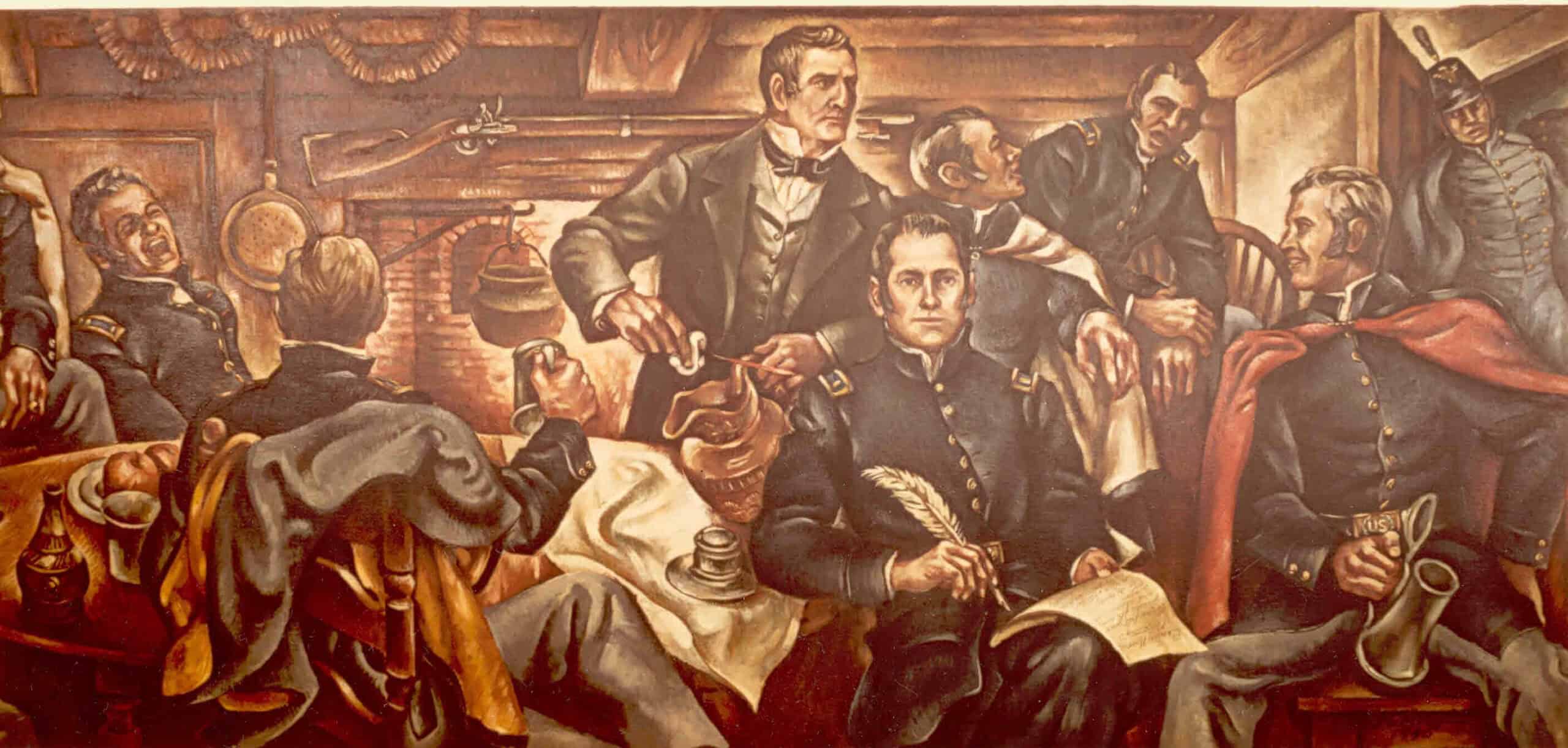
The Eggnog Riot erupted at West Point on Christmas Eve 1826, transforming a festive holiday celebration into one of the most violent uprisings in military academy history. What began as cadets smuggling whiskey for Christmas eggnog quickly spiraled into a full-scale mutiny. Over one-third of the academy’s 260 cadets joined the chaos. They fired pistols at officers, smashed windows, and barricaded themselves in dormitories.
The riot’s aftermath would shake the very foundations of America’s premier military institution. Among the participants was future Confederate President Jefferson Davis, though he escaped court-martial through clever legal maneuvering. The violence was so severe that witnesses compared it to a scene “fit for Bedlam.” The mysterious circumstances surrounding the night’s events continue to puzzle historians today.
The Sinister Plot Behind the Eggnog Riot
Two days before Christmas, three cadets hatched a dangerous plan. William Burnley, Alexander Center, and Samuel Roberts crossed the Hudson River under cover of darkness. Their mission was simple but forbidden: smuggle whiskey into West Point for their Christmas party.
The academy’s strict alcohol prohibition made their task treacherous. Superintendent Sylvanus Thayer had banned all liquor from the grounds. Getting caught meant immediate expulsion. Yet the cadets pressed forward with their illicit scheme.
Private James Dougan, the duty guard, agreed to help them. This decision would prove catastrophic. The conspirators successfully smuggled two gallons of whiskey into North Barracks room 33. Cadet T.M. Lewis added another gallon of rum from Benny’s Tavern to room 5.
The stage was set for disaster. What the cadets didn’t know was that their innocent Christmas party would transform into something far more sinister. The official investigation later revealed the full scope of their conspiracy.
Christmas Eve Chaos and the Eggnog Riot Explosion
Related article: Disappearance of Owen Parfitt: The 1760s Mystery That Defied All Logic
On December 24th, the forbidden party began in earnest. Cadets gathered in the North Barracks, mixing their smuggled spirits with eggs and cream. The alcohol flowed freely as young men celebrated their first taste of Christmas freedom.
But the festivities quickly turned dark. As the night progressed, the cadets grew increasingly intoxicated and belligerent. They began defying academy rules with reckless abandon. What started as holiday cheer became something far more menacing.
Captain Ethan Allen Hitchcock discovered the illegal gathering around 4:00 AM. When he attempted to break up the party, the cadets turned violent. They barricaded doors and refused his orders. The situation escalated rapidly beyond anyone’s control.
The most chilling moment came when someone fired a pistol directly at Hitchcock. The shot missed, but the intent was clear. The cadets had crossed from insubordination into outright rebellion. The identity of the shooter remains a mystery to this day.
The Strange Case of Jefferson Davis and the Eggnog Riot
Jefferson Davis found himself at the center of the investigation, though his exact role remains shrouded in mystery. The future Confederate president was present during the chaos but managed to avoid the worst consequences. His escape from punishment raises intriguing questions about what really happened that night.
Davis claimed he tried to calm the situation and return to his room. However, witness testimony contradicted his version of events. Some cadets reported seeing him actively participating in the violence. Others said he attempted to restore order.
The most puzzling aspect was Davis’s legal defense. He was charged with a technical violation that was incorrectly worded. Davis successfully argued that he couldn’t be found guilty of the specific charge as written. This legal loophole saved his military career.
His roommate wasn’t so fortunate. According to official records, Davis actually implicated his roommate when questioned by investigators. This betrayal contradicts his later memoir claims about protecting fellow cadets. The truth about Davis’s actions that night remains buried in conflicting testimony.
The Mysterious Aftermath and Cover-Up Attempts
The morning of December 25th revealed the full extent of the destruction. Broken windows, shattered railings, and damaged property littered the barracks. The financial damage exceeded $168 – equivalent to over $5,500 today.
Academy officials launched an immediate investigation. Twenty cadets faced court-martial proceedings, while 70 others received disciplinary action. The trials revealed disturbing details about the night’s events that officials preferred to keep quiet.
Strange inconsistencies emerged in witness testimonies. Some cadets claimed to remember nothing due to intoxication. Others provided detailed accounts that contradicted each other. The official records contain gaps and unexplained discrepancies that suggest information was deliberately withheld.
Perhaps most mysteriously, the riot’s legacy was quickly suppressed. Within decades, few people at West Point knew the story. Modern cadets remain largely unaware of this dark chapter in their institution’s history. The academy’s command historian estimates fewer than 30 people among thousands of current personnel know about the incident.
The Eggnog Riot stands as one of West Point’s strangest and most violent episodes. The unanswered questions surrounding that Christmas night continue to intrigue historians. Why was the true extent of the violence covered up? What really happened during those chaotic hours? The full truth may never be known, but the riot’s impact on military discipline and academy culture remains undeniable.