
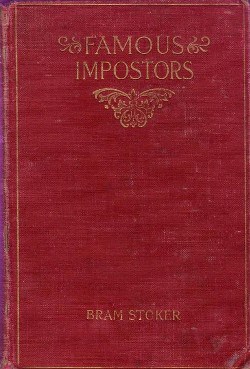
Famous Impostors stands as Bram Stoker’s final and most unsettling work. The Dracula author spent his last years investigating history’s most disturbing cases of deception. Published in 1910, just two years before his death, this book reveals Stoker’s fascination with the dark art of identity theft. The work catalogs centuries of pretenders, fraudsters, and mysterious figures who fooled entire nations.
Stoker didn’t simply write another vampire tale. He dove deep into real-world horrors that were often stranger than fiction. The book features cases that would make even his fictional monsters seem tame. From royal pretenders to supernatural charlatans, these stories expose humanity’s willingness to believe the impossible. Each chapter reveals how easily people can be manipulated by clever deception.
The timing of this work wasn’t coincidental. Stoker was dying, and he seemed driven to expose the frauds that had haunted history. His research methods were obsessive, almost supernatural in their thoroughness. He uncovered details that had been buried for centuries. The result is a chilling catalog of human deception that reads like a gothic nightmare.
The Royal Pretenders in Famous Impostors
Stoker’s investigation into royal pretenders reveals some of history’s most audacious deceptions. Perkin Warbeck claimed to be Richard, Duke of York, one of the vanished Princes in the Tower. For years, he convinced European courts of his royal bloodline. His story ended on the gallows, but questions about his true identity persist to this day.
The case of Sebastian of Portugal proves even more mysterious. After his death in battle, multiple impostors claimed to be the lost king. One convinced an entire monastery of his identity. Another gathered armies and nearly reclaimed the throne. Stoker documents how these men used intimate knowledge of court secrets to support their claims. The source of this knowledge remains unexplained.
Šćepan Mali’s story borders on the supernatural. This mysterious figure appeared in Montenegro claiming to be the Russian Emperor Peter III. He ruled for four years before his assassination. Local legends suggest he possessed otherworldly knowledge of Russian court life. Some whispered he was aided by dark forces. Stoker’s research uncovered testimonies of witnesses who swore Mali knew things no mortal man could know.
Supernatural Practitioners and Famous Impostors
Another fascinating historical case is: Piltdown Man: The 41-Year Hoax That Fooled the Scientific World
The chapter on magical practitioners exposes fraudsters who claimed supernatural powers. Paracelsus, the famous physician-alchemist, may have been history’s greatest medical impostor. The National Library of Medicine documents how his mysterious cures often involved theatrical deception rather than genuine healing.
Count Cagliostro represents the most elaborate supernatural fraud in Stoker’s collection. This enigmatic figure claimed to possess the elixir of life and the philosopher’s stone. He convinced European nobility of his immortality through elaborate stage magic. His séances reportedly contacted the dead, though Stoker’s investigation reveals the mechanical tricks behind these “miracles.”
Franz Mesmer’s animal magnetism movement captivated 18th-century Paris. His healing sessions involved mysterious forces that seemed to cure the incurable. Patients fell into trances and experienced dramatic recoveries. Stoker uncovered evidence suggesting Mesmer genuinely believed in his powers. This makes his case more disturbing than simple fraud. The line between delusion and deception becomes terrifyingly thin.
The Wandering Jew legend takes on new meaning in Stoker’s hands. He documents multiple individuals who claimed this cursed identity. Each appeared at moments of historical crisis, offering prophetic warnings. Their knowledge of future events defied explanation. Stoker’s research suggests these weren’t mere impostors but something far more sinister.
Women Who Became Men in Famous Impostors
Stoker’s chapter on women disguised as men reveals society’s darkest secrets about gender deception. Hannah Snell served as a Royal Marine for years without detection. Her military service included brutal combat and medical examinations. How she maintained her disguise under such scrutiny remains a mystery. Fellow soldiers later claimed they sensed something “otherworldly” about her.
La Maupin’s story reads like a supernatural thriller. This opera singer and swordswoman lived openly as both man and woman. She fought duels, seduced lovers of both sexes, and performed on Europe’s greatest stages. Witnesses described her as possessing an almost demonic charisma. Her ability to shift between male and female personas seemed to transcend normal human capability.
Mary East’s case proves most disturbing. She lived as a man for over thirty years, running a successful pub with her female partner. Historical records show she fooled everyone, including close business associates. When blackmailers threatened exposure, she chose suicide over revelation. Her story suggests the psychological toll of such long-term deception.
These women didn’t simply wear men’s clothing. They transformed their entire beings. Stoker documents how they altered their voices, mannerisms, and even their physical presence. The completeness of these transformations suggests methods beyond normal acting ability. Some witnesses reported these women seemed to become different people entirely.
The Darker Hoaxes and Mysterious Cases
Stoker’s final chapters explore hoaxes that reveal humanity’s appetite for deception. The Berners Street Hoax of 1810 turned a quiet London street into chaos. Theodore Hook sent thousands of fake invitations to tradespeople, chimney sweeps, and dignitaries. The resulting pandemonium trapped residents in their homes for hours. The psychological impact on victims lasted for years.
The Moon Hoax of 1835 convinced thousands that life existed on the lunar surface. Newspapers reported winged humanoids and crystal cities observed through powerful telescopes. The public’s desperate need to believe in extraterrestrial life made them ignore obvious inconsistencies. Stoker saw this as evidence of humanity’s willingness to embrace comfortable lies over difficult truths.
The Chevalier d’Éon presents perhaps the most complex case in the entire book. This French diplomat lived alternately as man and woman throughout their life. Court records show d’Éon serving as both male spy and female courtier. The truth of their biological sex remained disputed even after death. Stoker’s investigation suggests d’Éon may have been intersex, making their gender fluidity a survival strategy rather than deception.
The Bisley Boy theory claims Queen Elizabeth I died as a child and was replaced by a boy. This conspiracy theory suggests England’s greatest monarch was actually male. Stoker presents evidence including Elizabeth’s refusal to marry and her masculine appearance in later portraits. While likely false, the theory reveals deep anxieties about female power and royal legitimacy.
Famous Impostors remains Stoker’s most unsettling work precisely because it’s true. These weren’t gothic fantasies but documented cases of human deception. The book reveals how easily reality can be manipulated by those willing to embrace total transformation. In our modern age of digital deception, Stoker’s warnings about the fragility of truth seem prophetic. His final investigation into human nature’s darkest corners continues to disturb readers more than a century later.
Related Posts
 Persian Princess: The Archaeological Hoax That Fooled the World in 2000
 Crystal Skull: The Victorian Hoax That Fooled Museums and Spawned Supernatural Legends
 Nottingham Cheese Riot: When Angry Citizens Rolled Cheese Through the Streets in 1766
 Illuminati Secret Society: The Strange Rituals and Mysterious Disappearance of Bavaria’s Most Feared Order