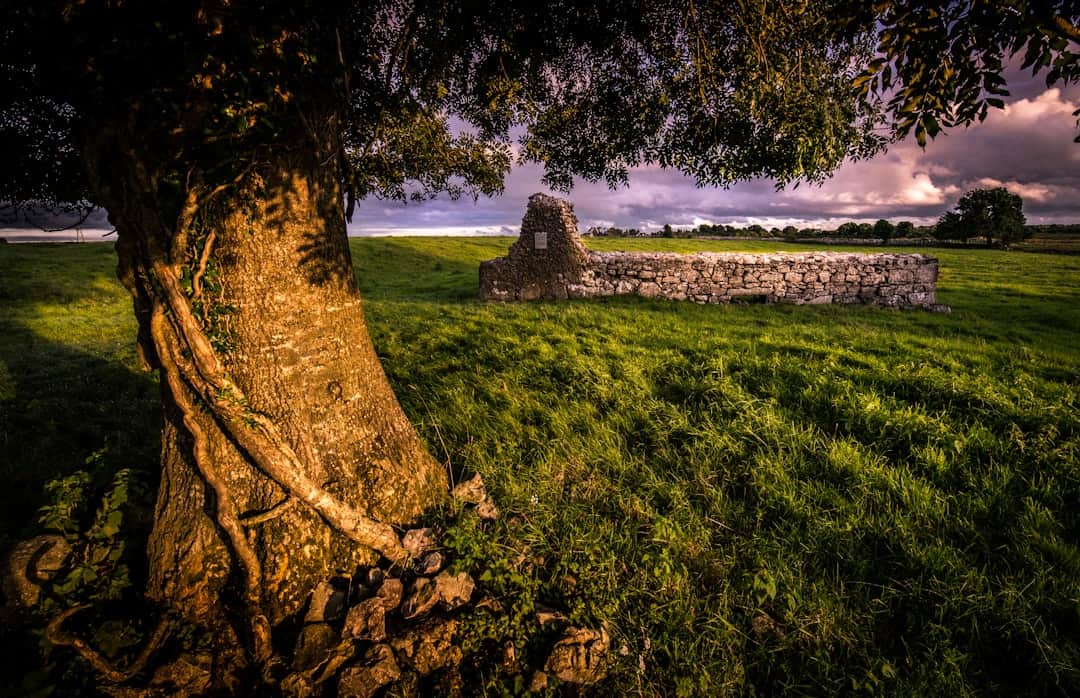
The Hessdalen Lights have transformed a quiet Norwegian valley into one of the world’s most studied paranormal hotspots. Since the 1930s, these mysterious luminous phenomena have appeared in the 12-kilometer stretch of Hessdalen valley in rural central Norway. The lights defy conventional explanation, displaying behaviors that challenge our understanding of physics and atmospheric science.
These aren’t ordinary lights. Witnesses describe brilliant white, yellow, and red orbs that float through the valley with seemingly intelligent movement patterns. Some hover motionless for over an hour. Others streak across the sky at speeds reaching 18,000 miles per hour. The lights appear both day and night, above and below the horizon, creating a spectacle that has drawn researchers from around the globe.
The phenomenon reached its peak intensity between December 1981 and mid-1984. During this period, the lights appeared 15 to 20 times per week. Overnight tourists flocked to the remote valley, hoping to witness the unexplained display. Local residents reported encounters that left them questioning reality itself.
The Most Disturbing Hessdalen Lights Encounters
The Christmas Day 2024 incident stands as one of the most unsettling recent sightings. Research cameras captured a mysterious light slowly ascending the mountainside before vanishing without trace. A full year of continuous recordings revealed no similar observations. Even seasoned researchers remain baffled by this particular event.
Local witnesses have shared accounts that chill investigators to the bone. Some describe the lights responding to human presence in ways that suggest awareness or intelligence. During laser interaction experiments, researchers pointed a laser beam at a flashing phenomenon. The light immediately doubled its flashing frequency. When they lowered the beam, it returned to normal. This response occurred in eight out of nine attempts.
The lights’ power output adds another layer of mystery. Measurements show radiant power reaching 19 kilowatts – more than ten times brighter than a helicopter searchlight. No known natural phenomenon can explain such intense luminosity combined with the observed movement patterns.
Witnesses report feeling watched when the lights appear. Some describe an overwhelming sense of presence, as if the phenomena possess consciousness. These psychological effects occur consistently across different observers, suggesting they’re not mere hallucinations or misperceptions.
Scientific Investigation of the Hessdalen Lights Phenomenon
For more strange history, see: The Great Molasses Flood: A Disaster of Epic Proportions
Project Hessdalen began in 1983 when UFO-Norge and UFO-Sverige launched formal investigations. Professor Erling P. Strand, an expert in electronics and telecommunications, became one of the leading researchers. His team established the first systematic study of the phenomena using scientific methodology.
The project evolved dramatically over four decades. In 1998, researchers installed the Hessdalen Automatic Measurement Station (AMS) for continuous monitoring. The station operates four automated cameras with 24/7 multispectral recording capabilities. Additional equipment includes VLF/ELF receivers, magnetometers, and weather sensors.
Modern technology reveals disturbing details about the lights’ behavior. High-resolution spectra show consistent oxygen and nitrogen emission lines, suggesting plasma formation. However, occasional metal ion traces appear that shouldn’t exist in natural atmospheric plasma. Drone footage captures some orbs emerging directly from ground level or ridge lines before rising into the sky.
The Hessdalen lights phenomenon has attracted international scientific attention. The Italian National Research Council joined the investigation, bringing additional expertise and resources. Despite advanced equipment and decades of study, the core mystery remains unsolved.
Theories Behind the Hessdalen Lights Mystery
Scientists have proposed several theories to explain the phenomena, but none account for all observed behaviors. The dust plasma theory suggests ionization of airborne particles creates the luminous effects. Radon decay in the atmosphere might produce alpha particles that ionize dust and air molecules, forming plasma structures.
The piezoelectric theory focuses on the valley’s unique geology. Hessdalen contains large deposits of scandium and quartz-rich crystal rocks. Geological stress might generate electrical charges that create luminous phenomena. Computer simulations show that dust in ionized gas can organize into double helix structures, matching some light formations.
However, these theories fail to explain the lights’ apparent intelligence and responsiveness. Natural plasma formations don’t typically react to laser beams or display coordinated movement patterns. The Christmas 2024 incident showed behavior that defies current scientific models entirely.
Some researchers privately admit the phenomena might represent unknown physics or even non-terrestrial intelligence. The stigma surrounding UFO research has limited open discussion of these possibilities. Historical archives document similar unexplained aerial phenomena worldwide, suggesting Hessdalen isn’t unique.
The Ongoing Enigma and Future Research
Current activity correlates with solar cycle 25’s geomagnetic disturbances. As solar maximum approaches, sightings increase during periods of high geomagnetic activity. This connection suggests the phenomena respond to external electromagnetic influences, but the mechanism remains unknown.
Project Hessdalen faces funding challenges despite its scientific importance. Østfold University College reduced support over the years, forcing organizational changes. The project now operates as an independent research initiative under new leadership. Fred Pallesen took over management in 2023, while Professor Strand serves as chairman of the board.
A citizen-science app launched in 2024 has logged over 150 verified sightings. Users submit spectra and motion tracks, expanding the database of observations. Every day, the monitoring stations store 90 gigabytes of data from continuous recording. This massive dataset represents one of the most comprehensive studies of unexplained phenomena ever conducted.
The mystery deepens with each passing year. Advanced technology reveals new details about the lights’ behavior, but explanations remain elusive. The Hessdalen Lights continue to challenge our understanding of reality, representing one of science’s most persistent unsolved puzzles. Whether natural phenomenon or something more extraordinary, these enigmatic lights ensure that Hessdalen valley remains one of the world’s most intriguing paranormal hotspots.