
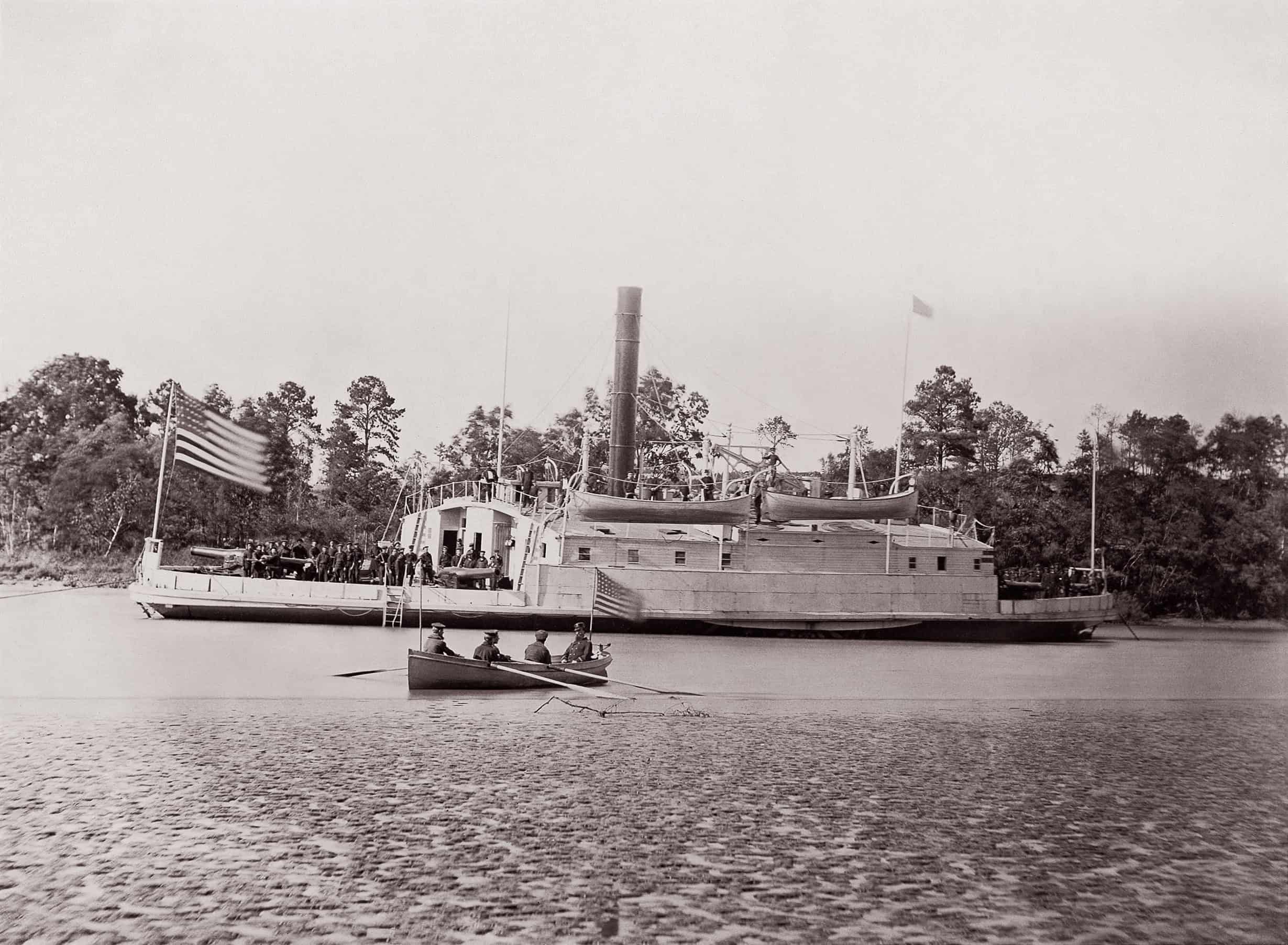
The SS Commodore met its mysterious fate in the dark waters off Florida’s coast on January 2, 1897, carrying secrets that would never be fully revealed. This American steamboat’s final voyage was shrouded in fog, sabotage rumors, and death,creating one of maritime history’s most haunting tales. Among the survivors was author Stephen Crane, whose terrifying experience in the wreck’s aftermath would birth his masterpiece “The Open Boat.”
The 178-ton vessel had departed Jacksonville on New Year’s Eve 1896, loaded with ammunition and supplies for Cuban rebels. But something went terribly wrong almost immediately. Within two miles of Jacksonville, the ship struck a sandbar in dense fog that seemed to swallow the vessel whole. Even after being towed free, the Commodore was plagued by mechanical failures that defied explanation.
The SS Commodore’s Cursed Final Hours
What happened next reads like a nightmare. The ship’s water pumps mysteriously malfunctioned, and a leak opened in the boiler room. Stephen Crane described the engine room as resembling “a scene taken from the middle kitchen of Hades.” The imagery wasn’t mere literary flourish,crew members reported an almost supernatural sense of dread as the vessel began its death throes.
Panic gripped the 27 men aboard as water rushed into the hull. One crew member emerged from below deck clutching dynamite, screaming they’d have to blow up the ship. Captain Edward Murphy snatched the explosive and struck the man down, shouting, “Lie there, you cowardly dog!” Another sailor fell to his knees before the captain, begging to be thrown overboard rather than face the approaching doom.
The SS Commodore finally surrendered to the sea at 7 a.m., sixteen miles from what is now Ponce de León Inlet. But the vessel’s torment had only begun.
Sabotage Theories Surrounding the SS Commodore Wreck
For more strange history, see: Poniatowski Gems: The Greatest Art Forgery Scandal of the 19th Century
From the moment news of the disaster spread, whispers of sabotage followed the SS Commodore’s story like a curse. The timing seemed too convenient,a ship carrying weapons to Cuban rebels, struck by multiple mechanical failures just as tensions with Spain reached a boiling point. The broken pumps, the mysterious leak, the fog that appeared from nowhere,it all pointed to human interference.
Newspapers across the country ran headlines suggesting foul play. The political nature of the mission made sabotage seem not just possible, but probable. Someone wanted this shipment to never reach Cuba, and they may have succeeded through deadly subterfuge. Yet despite extensive investigations, no concrete evidence ever emerged. The truth died with the ship, leaving only speculation and an unsettling sense that darker forces were at work.
Modern researchers studying the wreck have noted the unusual pattern of failures. Ships don’t typically experience simultaneous pump malfunctions and hull breaches without external cause. The sabotage theory persists because the alternative,that the Commodore was simply unlucky,seems almost impossible to believe.
Stephen Crane’s Terrifying Survival Story
Stephen Crane found himself in a ten-foot dinghy with three other men, including Captain Murphy, as the SS Commodore disappeared beneath the waves. For thirty-six hours, they battled mountainous seas that seemed determined to claim them. Crane later wrote that the ocean appeared almost alive, malevolent in its pursuit of the survivors.
When they finally attempted to land at Daytona Beach, the surf overturned their small boat. The exhausted men were forced to swim through pounding waves. Billie Higgins, the ship’s oiler, didn’t make it to shore. His death haunted Crane for the rest of his life, appearing in his feverish final dreams years later.
Crane’s common-law wife, Cora, recorded his dying words: “My husband’s brain is never at rest. He lives over everything in dreams and talks aloud constantly. It is too awful to hear him try to change places in the ‘open boat’!” The trauma of that January morning never left him.
Archaeological Mysteries of the Wreck Site
When divers finally located the Commodore’s remains in the 1980s, they discovered more questions than answers. The wreck lay twelve miles offshore in seventy-five feet of water, its engine slowly collapsing into the sandy bottom. Over 180 artifacts were recovered, including rifles, ammunition, and mysterious ceramic pieces that defied easy explanation.
The ship’s engine measurements perfectly matched 1882 specifications, confirming the wreck’s identity. But archaeologists noted something unsettling,the vessel appeared to be sinking into itself, as if the sea floor was actively consuming the remains. Seasonal scouring uncovers different sections each year, revealing new artifacts and hull pieces like a maritime time capsule opening in stages.
The site continues to deteriorate in ways that puzzle researchers. Natural currents don’t fully explain the ongoing collapse and shifting of debris. Some divers report an eerie atmosphere around the wreck, as if the Commodore’s final moments of terror somehow imprinted themselves on the surrounding waters.
Today, artifacts from the SS Commodore rest in the Ponce Inlet Lighthouse Museum, silent witnesses to a disaster that spawned both literary genius and enduring mystery. The ship’s true fate,accident or sabotage,remains hidden beneath Florida’s waves, along with the souls of those who went down with her. Stephen Crane’s haunting tale ensures that the Commodore’s ghost story will never be forgotten, a reminder that some maritime mysteries are destined to remain forever unsolved.
Related Posts
 USS Ericsson (TB-2): The Cursed Torpedo Boat That Saved Its Enemies
 Spook Hill: Florida’s Mysterious Gravity-Defying Road That Captivated America
 May-Stringer House: A Victorian Jewel in Florida’s Historic Brooksville
 Chocochatti: The Lost Seminole Village Where Spirits Still Roam Florida’s Haunted Prairie