
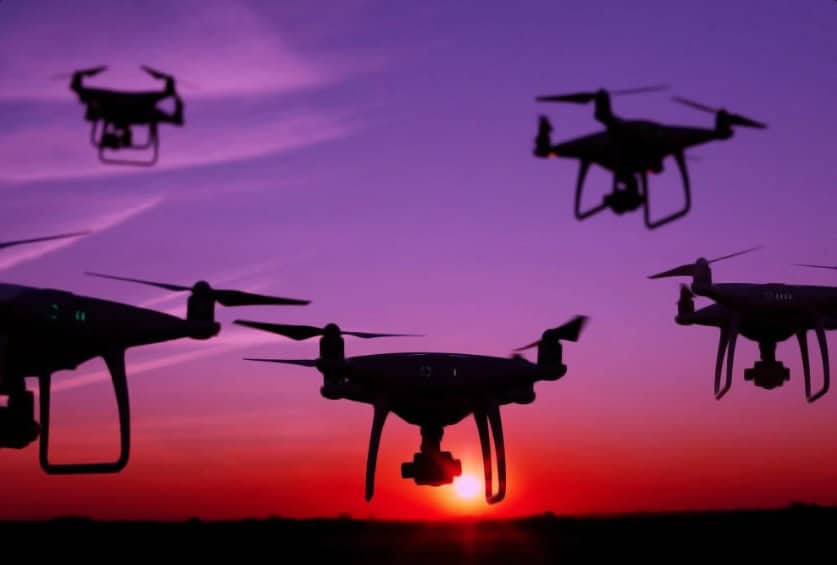
The Mysterious Drone Incursions at Belgian Military Bases and Nuclear Facilities began like something from a spy thriller. Silent aircraft appeared without warning over the nation’s most sensitive installations. These weren’t hobbyist toys or lost commercial drones. They moved with purpose, evading sophisticated detection systems and ignoring all attempts to bring them down.
Between September and November 2025, Belgium’s federal prosecutor opened eight investigations following 17 incidents. The targets were chilling in their strategic importance: nuclear power plants, military airbases, and classified facilities. Local residents reported seeing formations of mysterious craft hovering in the darkness. The objects seemed to study their targets with an intelligence that defied explanation.
What made these sightings particularly unsettling was their coordinated nature. This wasn’t random activity. Someone or something was systematically mapping Belgium’s most critical defense infrastructure. The question that haunted military officials was simple yet terrifying: who was watching, and why?
The Mysterious Drone Incursions at Belgian Military Bases Begin
The first wave struck Kleine-Brogel Air Base with surgical precision. For three consecutive nights in early November, between three and five unidentified aircraft circled the facility. This wasn’t just any military installation. Intelligence sources widely believe Kleine-Brogel hosts U.S. nuclear weapons under NATO’s nuclear sharing arrangements.
Witnesses described the craft as small but highly maneuverable. They flew at night, making them nearly impossible to track visually. Local residents in Peer and surrounding areas were encouraged to photograph any suspicious aircraft they spotted. The images that emerged showed dark silhouettes against the night sky, moving in patterns that suggested advanced autonomous control.
What terrified defense officials most was the drones’ apparent immunity to countermeasures. Jamming attempts failed repeatedly. The craft seemed to anticipate electronic warfare tactics, adapting their flight patterns to avoid interference. General Frederik Vansina, Belgium’s Chief of Defense, made an unprecedented decision. He authorized troops to shoot down any unidentified drones over military bases.
The authorization came with a chilling caveat. Soldiers could only fire if they could do so “without causing collateral damage.” Given the drones’ small size, nighttime operations, and extreme maneuverability, this proved nearly impossible. The phantom aircraft continued their surveillance missions with impunity.
Nuclear Facilities Under Mysterious Surveillance
For more strange history, see: Fv Gaul: The Arctic Trawler That Vanished Without a Trace in 1974
The Doel nuclear power station became the next target of these enigmatic visitors. On November 9th, between three and five drones appeared above the facility near Antwerp. Three days later, five more craft returned, hovering ominously over the four pressurized water reactors below.
The timing couldn’t have been more unsettling. These incursions occurred during a period of heightened international tensions. The systematic targeting of nuclear infrastructure suggested intelligence gathering on a massive scale. But by whom? And for what purpose?
Eyewitness accounts from Doel described the craft as moving with deliberate purpose. They didn’t dart randomly like recreational drones. Instead, they followed methodical flight patterns, as if mapping the facility’s layout and security responses. Belgium’s nuclear facilities represent critical infrastructure, making these overflights a matter of national security.
The drones’ behavior suggested sophisticated intelligence behind their operations. They appeared to test radio frequencies used by Belgian security services during initial reconnaissance flights. Later missions involved larger, more capable aircraft designed to “destabilize the area and people,” according to official reports.
Phantom Aircraft Evade All Countermeasures
What made these Mysterious Drone Incursions at Belgian Military Bases and Nuclear Facilities so disturbing was their apparent invulnerability. Traditional air defense systems proved useless against these small, agile intruders. The craft operated with a level of sophistication that suggested state-level backing.
Military experts noted the drones’ ability to gather critical intelligence even during brief overflights. They could measure radar coverage, assess response times, and test radio resilience within minutes. This capability suggested advanced electronic warfare systems far beyond civilian technology.
The incidents weren’t limited to Belgium. Similar mysterious overflights occurred across Europe during the same period. Denmark, Norway, and Germany all reported coordinated drone activities over sensitive installations. The pattern suggested a continent-wide intelligence operation of unprecedented scope.
Belgium’s Defense Minister Theo Francken admitted the nation was “four years behind” in anti-drone capabilities. He described the incidents as resembling espionage operations, though attribution remained elusive. Historical military intelligence operations rarely left such obvious calling cards, making these brazen overflights all the more mysterious.
The Shadow Behind the Surveillance
The question of attribution haunted investigators throughout the crisis. Russia denied involvement, with their Brussels embassy stating they had “neither interest nor motive” in such activities. Yet the sophisticated coordination and advanced technology suggested state-level resources.
European officials struggled to differentiate between local rule-breaking and foreign state activity. The Dutch newspaper Trouw reported that many drone alerts proved to be false alarms, revealing little hard evidence of Russian involvement. This lack of concrete proof only deepened the mystery.
Some experts suggested the operations might be testing European responses to aerial intrusion. By 2025, there had been at least 59 sightings of unidentified aerial objects near critical infrastructure across Europe. The systematic nature of these incidents suggested a coordinated campaign to probe defensive capabilities.
The psychological impact was undeniable. Military personnel reported feeling constantly watched, never knowing when the phantom aircraft might return. Local residents lived under a cloud of uncertainty, photographing every unusual object in the sky. The mysterious visitors had achieved something perhaps more valuable than intelligence gathering: they had sown fear and doubt across Belgium’s defense establishment.
The Mysterious Drone Incursions at Belgian Military Bases and Nuclear Facilities remain largely unexplained. Despite extensive investigations and military countermeasures, the identity and motives of the operators remain shrouded in mystery. What’s certain is that these incidents exposed critical vulnerabilities in European air defense systems. The phantom aircraft vanished as suddenly as they appeared, leaving behind only questions and the unsettling knowledge that someone had been watching from the shadows above.
Related Posts
 January 2026 Solar Storm: The Celestial Event That Defied Scientific Predictions
 2025 Pn7 Quasi Moon: Earth’s Mysterious Shadow Companion That Shouldn’t Exist
 Bigfoot/Sasquatch on the Olympic Peninsula: The Nest Discovery That Changed Everything
 Biblical Conspiracy Theory: The Hidden Truth About Sacred Texts and Secret Societies