
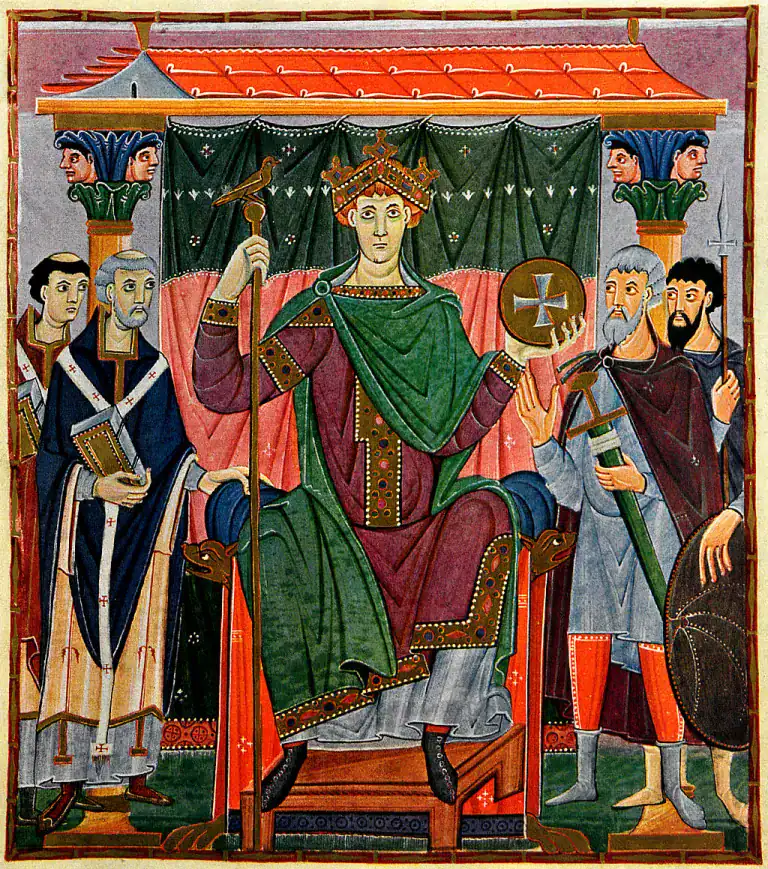
The Phantom Time Conspiracy Theory stands as one of history’s most audacious claims about our past. According to this controversial hypothesis, nearly three centuries of medieval history never actually happened. German historian Heribert Illig shocked the academic world in 1991 when he proposed that the years 614 to 911 AD were completely fabricated. This means legendary figures like Charlemagne never existed. Instead, they were elaborate fictional creations designed to legitimize political power.
Illig’s theory suggests a massive conspiracy involving Holy Roman Emperor Otto III and Pope Sylvester II. These powerful men allegedly rewrote history itself to place themselves at the mystical year 1000 AD. They forged documents, altered artifacts, and created an entire phantom period of time. The implications are staggering. If true, our understanding of the Dark Ages is built on lies.
The theory emerged from Illig’s background in catastrophism and historical revisionism. He had previously questioned conventional chronologies of ancient Egypt and prehistory. His work appeared in German journals dedicated to alternative history. The Smithsonian Magazine has documented how his ideas gained significant media attention in the 1990s.
The Phantom Time Conspiracy Theory’s Core Claims
Illig built his Phantom Time Conspiracy Theory on several troubling observations about medieval history. He pointed to a suspicious lack of archaeological evidence from the period 614-911 AD. Where were the artifacts, buildings, and remains from these supposed centuries? The scarcity seemed impossible for such a long timespan.
The German researcher also questioned dating methods like radiocarbon testing and dendrochronology. He argued these techniques were unreliable for recent periods. Medieval historians, he claimed, relied too heavily on written documents that could be forged. Physical evidence should take precedence over suspicious manuscripts.
Romanesque architecture presented another puzzle. These buildings appeared in tenth-century Europe with remarkable sophistication. Illig suggested this style indicated the Roman era wasn’t as distant as historians claimed. The architectural skills seemed too advanced for the supposed timeline.
The calendar discrepancy provided Illig’s strongest evidence. When Pope Gregory XIII introduced the Gregorian calendar in 1582, astronomers found a ten-day difference from the Julian calendar. However, Illig calculated there should have been thirteen days of drift. Those missing three days represented approximately 300 years of phantom time.
Fabricating Charlemagne and the Phantom Time Conspiracy Theory
This event shares similarities with: Charlie Charlie challenge
The most shocking aspect of the Phantom Time Conspiracy Theory involves Charlemagne himself. This legendary emperor supposedly ruled from 768 to 814 AD, right in the middle of the phantom period. Illig claimed Charlemagne was a complete fabrication, created to fill the invented centuries with a suitable hero.
According to the theory, Otto III needed legitimacy for his Holy Roman Empire. Creating a glorious predecessor like Charlemagne served this purpose perfectly. The fictional emperor’s conquests and achievements justified Otto’s own claims to power. Monks and scribes allegedly worked tirelessly to create convincing historical documents.
The conspiracy required incredible coordination across medieval Europe. Countless manuscripts had to be forged or altered. Physical evidence needed to be planted or misdated. The scale of deception would have involved hundreds of people across multiple countries. Yet somehow, the secret remained hidden for a thousand years.
Illig pointed to inconsistencies in Charlemagne’s historical record. Some documents seemed anachronistic or contained suspicious details. The emperor’s achievements appeared too perfect, too conveniently timed. These red flags suggested deliberate fabrication rather than genuine historical records.
Scientific Evidence Against the Missing Centuries
Astronomers quickly dismantled the Phantom Time Conspiracy Theory using celestial observations. Ancient eclipse records from before 600 AD align perfectly with modern calculations. If 297 years were missing, these astronomical events wouldn’t match their recorded dates. Chinese astronomers during the Tang dynasty also recorded observations that contradict phantom time.
Halley’s Comet provides particularly damning evidence. This celestial visitor follows a predictable 76-year orbit that astronomers can calculate precisely. Historical records of the comet’s appearances match perfectly with current chronology. Adding phantom time would throw off these calculations completely.
Archaeological dating methods also refute Illig’s claims. Dendrochronology uses tree ring patterns to date wooden artifacts with remarkable precision. These measurements consistently support conventional medieval chronology. Radiocarbon dating, despite Illig’s criticisms, shows no gap in the historical record.
The widespread rejection by historians reflects the overwhelming evidence against phantom time. Multiple independent dating methods from different continents all support the standard timeline. The conspiracy would have required impossible coordination across cultures that had no contact with each other.
The Enduring Appeal of Alternative History
Despite scientific refutation, the phantom time hypothesis continues to fascinate people worldwide. The theory taps into deep suspicions about authority and official narratives. Many find it appealing to imagine that history’s greatest experts could be completely wrong about three centuries.
The Dark Ages have always seemed mysterious and poorly documented. This apparent gap in historical knowledge makes phantom time seem plausible to some. If we know so little about this period anyway, perhaps it never existed at all. The theory offers a simple explanation for complex historical puzzles.
Illig continued publishing about phantom time until at least 2013, despite academic rejection. His ideas spread through popular media and internet forums. Alternative history enthusiasts embraced the theory as evidence that mainstream scholarship couldn’t be trusted. The conspiracy mindset found fertile ground in the digital age.
Modern conspiracy theories often follow similar patterns to the Phantom Time Conspiracy Theory. They identify genuine puzzles or inconsistencies in official accounts. Then they propose elaborate explanations involving powerful groups manipulating evidence. The theories persist because they offer certainty in place of historical ambiguity.
The phantom time hypothesis ultimately reveals more about human psychology than medieval history. People want to believe they possess secret knowledge that experts lack. The idea that centuries of history could be fabricated appeals to our desire for hidden truths. Even when evidence overwhelmingly contradicts such theories, their emotional appeal ensures they survive.
Whether we’re discussing missing centuries or other historical mysteries, critical thinking remains essential. The Phantom Time Conspiracy Theory serves as a reminder that extraordinary claims require extraordinary evidence. In this case, the evidence firmly supports conventional chronology over phantom time.