The haunting sound of scraping echoes through empty train stations across Japan. It’s the dreaded “teke teke” noise that gives this vengeful spirit her name. Teke Teke represents one of Japan’s most chilling urban legends – a tale of a schoolgirl whose body was severed in half by a train. Now she roams the night, dragging her mutilated torso across concrete platforms. Her mission is simple yet terrifying: to slice others in half, just as she was cut down in her moment of agony.
This isn’t just another ghost story whispered among teenagers. The legend of Teke Teke has spread throughout Japan for decades. It taps into primal fears of railway accidents and vengeful spirits seeking justice. The story varies in its details, but the core remains the same. A young woman dies horribly on train tracks. Station staff ignore her pleas for help. She dies in excruciating pain, and her rage transforms her into an onryō – a vengeful ghost that cannot rest.
The Tragic Origins of the Teke Teke Legend
The most common version tells of a schoolgirl in Northern Japan who fell onto railway tracks. A train sliced her body in half at the waist. She didn’t die immediately. Instead, she lay there in agony, her lower body severed completely. Station workers discovered her but offered no help. They watched as she bled out on the cold metal rails. Her final moments were filled with unbearable pain and the bitter taste of abandonment.
Some versions identify her as Kashima Reiko, a name that predates the Teke Teke legend itself. According to NPR’s exploration of global ghost stories, Kashima died when her legs were severed by a train after falling on the tracks. The two legends influenced each other over time, creating variations that haunt different locations.
The girl’s death wasn’t just tragic – it was preventable. This element of negligence and abandonment fuels her supernatural rage. She didn’t have to die alone on those tracks. The indifference of those who could have saved her transformed her spirit into something far more dangerous than a typical ghost.
How Teke Teke Hunts Her Victims
This event shares similarities with: The Anguished Man: The Blood-Painted Canvas That Haunts Its Owner
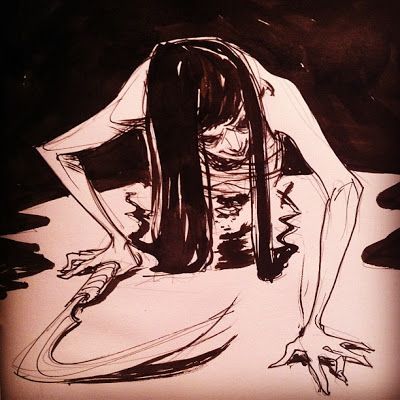
Without legs to carry her, the spirit moves in the most disturbing way possible. She drags herself forward using her hands and elbows. The scraping sound of her mutilated body against concrete creates the distinctive “teke teke” noise. This sound serves as both her calling card and final warning to potential victims.
She appears primarily at train stations and urban areas at night. The spirit specifically targets lone individuals walking through these spaces. When she spots someone, the hunt begins immediately. Despite lacking her lower body, she moves with supernatural speed. Her victims rarely escape once she begins her pursuit.
The method of killing mirrors her own death exactly. She uses a scythe or simply her supernatural strength to slice people in half at the waist. This isn’t random violence – it’s calculated revenge. Each victim experiences the same horror she endured. The same helplessness. The same excruciating pain of being cut in two.
Witnesses describe her appearance as both pitiful and terrifying. She retains the look of a young schoolgirl from the waist up. Her uniform remains intact, a haunting reminder of her former life. But below the waist, there’s nothing but torn flesh and trailing entrails. The contrast between innocence and horror makes encounters even more disturbing.
The Bathroom Haunting and Survival Methods
The Kashima Reiko version adds another layer of terror to the legend. She doesn’t just hunt at train stations. This spirit also haunts bathroom stalls, appearing to people using the facilities. She asks a simple but loaded question: “Where are my legs?”
Most answers result in immediate death. The spirit rips victims apart if their response doesn’t satisfy her. But there are ways to survive this supernatural encounter. Some say answering “on the Meishin Expressway” will spare your life. Others claim the phrase “kamen shinin ma” (mask death demon) works as protection.
Japanese urban legends often include these survival elements, giving people hope they can outsmart supernatural threats. The specific phrases act like magical passwords. They acknowledge the spirit’s existence while deflecting her murderous intent.
There’s also the viral aspect of the legend. Learning about Kashima Reiko supposedly guarantees she’ll visit you within a month. The only way to prevent this is spreading the story to others. This creates a supernatural chain letter effect. Knowledge becomes both curse and potential salvation.
Cultural Impact and Modern Interpretations
The legend has evolved beyond simple ghost stories. A children’s song called “Satchan” became connected to the myth through internet rumors. The lyrics mention loving bananas but only eating half, which people linked to the spirit’s missing lower body. One disturbing version claims a student created a fourth verse about the legend, only to be found dead without his legs soon after.
Modern technology hasn’t diminished the legend’s power. Online forums and social media have spread new versions of the story. Video games and movies have adapted the concept. The 2009 film “Teketeke” brought the legend to theaters, introducing it to new audiences worldwide.
The story resonates because it combines multiple fears. Railway accidents happen regularly in Japan’s busy transit system. The idea of dying alone and ignored taps into modern urban isolation. The vengeful spirit seeking to share her suffering reflects ancient concepts of justice and retribution.
School bathrooms and train stations – everyday locations – become spaces of potential terror. The legend transforms mundane activities into moments of vulnerability. This psychological impact explains why Teke Teke remains one of Japan’s most enduring urban legends.
The scratching sound of the Teke Teke continues to haunt Japan’s collective imagination. Her story serves as both entertainment and warning. It reminds us that some wounds never heal, and some spirits never rest. In a world of constant motion and urban anonymity, she represents the consequence of our indifference to others’ suffering. The next time you hear scraping sounds in an empty station, remember – it might not be construction work or maintenance. It could be something far more sinister dragging itself toward you through the darkness.