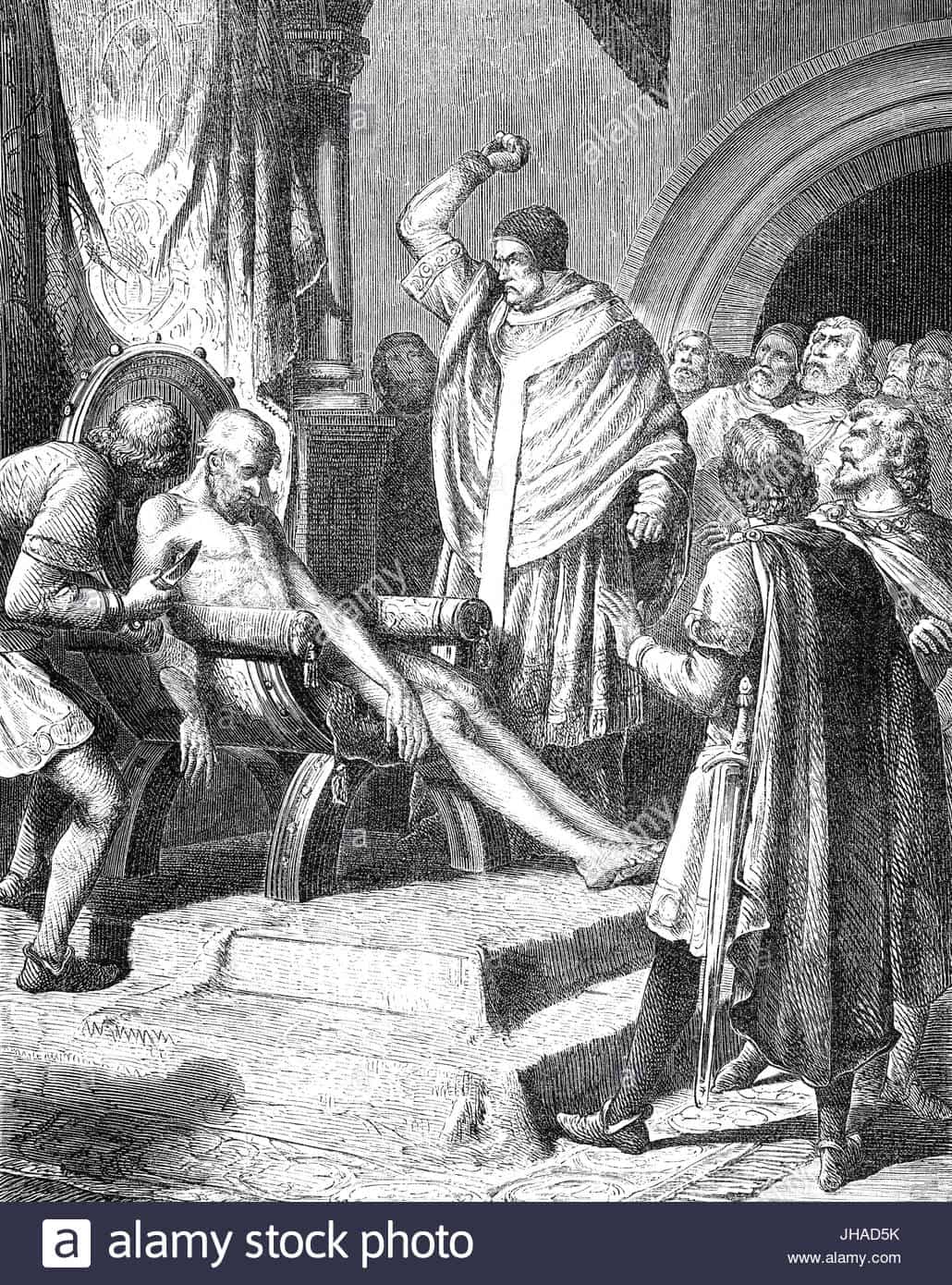
The Cadaver Synod stands as one of history’s most macabre legal proceedings. In January 897 AD, Pope Stephen VI ordered the exhumed corpse of his predecessor, Pope Formosus, to be dressed in papal robes and propped up in a chair for trial. The rotting body had been dead for nine months. What followed was a grotesque spectacle that would haunt the Catholic Church for centuries.
The trial took place in Rome’s Basilica of St. John Lateran. Stephen VI accused the decomposing pontiff of perjury and illegally ascending to the papal throne. A terrified teenage deacon stood behind the corpse, tasked with speaking for the silent defendant. Witnesses described the overwhelming stench of decay that filled the sacred space. The dead pope’s jaw had fallen open, creating an eerie grin that seemed to mock the proceedings.
Contemporary accounts suggest supernatural events surrounded the trial. Strange sounds echoed through the basilica during testimony. Candles flickered without wind. Some claimed they heard whispers coming from Formosus’s rotting mouth. The atmosphere grew so unsettling that several attendees fled in terror.
The Cadaver Synod’s Horrifying Spectacle
The sight of Pope Formosus’s decaying body sitting in judgment shocked even medieval sensibilities. His flesh had turned black and begun to slough off his bones. The papal vestments hung loosely on his skeletal frame. Maggots had consumed much of his face, leaving hollow eye sockets that seemed to stare accusingly at his accusers.
Stephen VI conducted the questioning with theatrical fury. He screamed accusations at the silent corpse while pacing around the chair. “Why did you usurp the universal Roman See?” he demanded of the rotting remains. The only response was the occasional creak of bones settling in the chair. Observers noted that Stephen appeared increasingly unhinged as the trial progressed, talking to the corpse as if expecting answers.
The teenage deacon assigned to defend Formosus trembled throughout the proceedings. Historical records from contemporary chroniclers describe him as barely able to speak. His voice cracked with fear as he attempted to offer weak defenses for crimes committed by a man who could no longer defend himself. The boy’s terror was palpable to all present.
Political Motivations Behind The Cadaver Synod
Related article: Jameson Affair: The Horrific Cannibalism Scandal That Shocked Victorian Society
Recent scholarship reveals the trial’s true purpose wasn’t simple revenge. Historian William S. Monroe’s groundbreaking research suggests Stephen VI feared Formosus was developing a saint cult among Roman citizens. By desecrating the body and staging this public humiliation, Stephen hoped to destroy any veneration of his predecessor.
The political landscape of 9th-century Rome was chaotic and violent. Between 896 and 904, a new pope ascended the throne almost every year. Most met violent ends through poisoning, strangulation, or imprisonment. The rapid succession created an atmosphere of paranoia and desperation among church leaders.
Stephen VI’s own position was precarious. He had aligned himself with various political factions but found himself increasingly isolated. The trial of Formosus’s corpse was likely a desperate attempt to signal loyalty to powerful Roman families who had opposed the dead pope. By publicly degrading Formosus, Stephen hoped to secure his own survival in the brutal papal politics of the era.
Supernatural Events and The Cadaver Synod’s Aftermath
After pronouncing Formosus guilty, Stephen VI ordered the corpse’s papal vestments stripped away. The three blessing fingers of the right hand were severed with an ax. The mutilated body was then dragged through Rome’s streets by a mob before being thrown into the Tiber River. But the story doesn’t end there.
According to multiple contemporary sources, Formosus’s waterlogged corpse washed ashore days later. Rumors spread that the decomposing remains were performing miracles. Sick pilgrims claimed healing after touching the rotting flesh. Strange lights were reported hovering over the body at night. These supernatural claims terrified Stephen VI, confirming his worst fears about a developing saint cult.
The bizarre trial ultimately backfired spectacularly. Public revulsion at the desecration grew into open revolt. Romans began viewing Stephen VI as a madman who had violated sacred traditions. The supernatural events surrounding Formosus’s corpse only strengthened opposition to Stephen’s rule.
The Violent End of a Mad Pope
Stephen VI’s reign ended in violence just months after the trial. A Roman mob stormed the papal palace in July 897. They dragged the terrified pope from his chambers and threw him into a dungeon. There, he was strangled to death with his own papal vestments. His body was left to rot in the same cell where he had imprisoned his enemies.
The new pope, Theodore II, immediately moved to undo the damage. He annulled all proceedings of the trial and ordered Formosus’s remains recovered from the Tiber. The decomposed body was reburied with full papal honors in St. Peter’s Basilica. A subsequent synod in 898 definitively overturned the conviction and restored Formosus’s papal legitimacy.
The Cadaver Synod became a cautionary tale about the dangers of mixing politics with sacred authority. Medieval chroniclers described it as evidence of divine judgment against those who would desecrate the dead. The trial’s legacy haunted the papacy for generations, serving as a reminder of how far church leaders could fall when consumed by political ambition and supernatural fears.