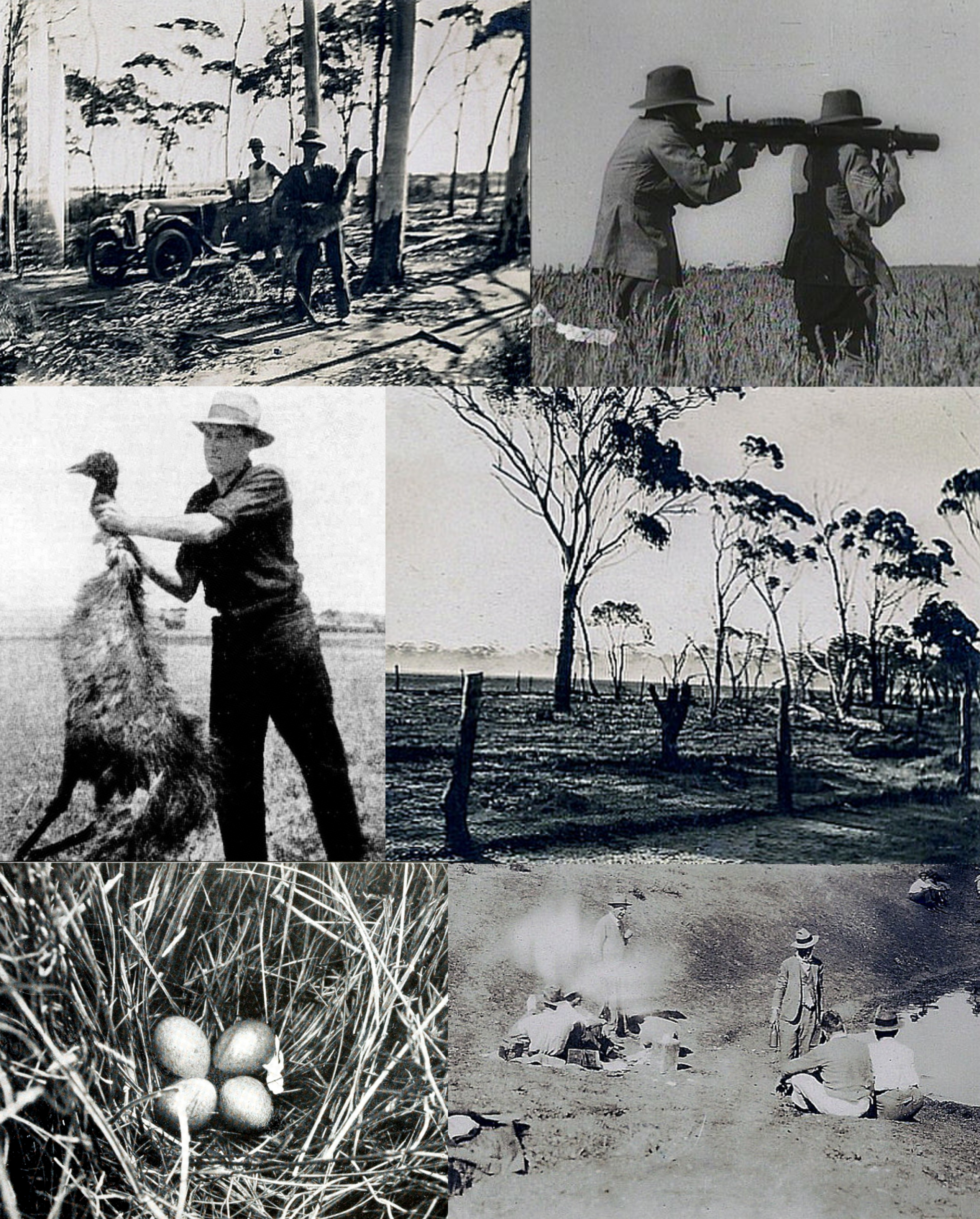
The Great Emu War stands as one of history’s most bizarre military campaigns. In 1932, the Australian government deployed soldiers armed with machine guns against 20,000 emus terrorizing farmers in Western Australia. What followed was a month-long conflict that would become a legendary tale of military incompetence and avian intelligence.
The emus weren’t just random birds causing trouble. They moved with uncanny organization and tactical awareness. Soldiers reported that the massive flightless birds seemed to understand military strategy better than the humans hunting them. Each flock had a designated leader who posted lookouts and coordinated escape routes. When machine gun fire erupted, the emus scattered in perfect formation, regrouping miles away to continue their crop destruction.
The Strange Origins of The Great Emu War
The conflict began when World War I veterans turned farmers faced economic disaster. The government had promised subsidies for wheat crops that never materialized. Then came the emus. Approximately 20,000 of these six-foot-tall birds migrated from inland Australia to the coast, discovering that cleared farmland made perfect habitat.
But these weren’t ordinary pest birds. Farmers reported eerie behavior that defied explanation. The emus moved in coordinated groups, posting sentries while others fed. They seemed to communicate through subtle signals, warning each other of approaching humans. Most disturbing of all, they appeared to learn from each encounter with farmers, adapting their tactics to avoid traps and weapons.
The desperate farmers, many of them war veterans, knew the devastating power of machine guns. They petitioned Defence Minister Sir George Pearce for military intervention. Pearce agreed, viewing the operation as both pest control and target practice. He assigned Major Gwynydd Purves Wynne-Aubrey Meredith to lead the campaign with Lewis machine guns and 10,000 rounds of ammunition.
When The Great Emu War Turned Supernatural
This event shares similarities with: Jato Rocket Car: The Urban Legend That Fooled America
What happened next defied military logic. The emus demonstrated intelligence that bordered on supernatural. Major Meredith later compared them to Zulu warriors, noting their incredible resilience under fire. Even when hit multiple times, the birds often continued running for miles before collapsing.
The first major engagement occurred on November 2, 1932. Soldiers positioned their machine guns and waited for the emu flocks to approach. But the birds seemed to sense the ambush. The lead emu stopped the entire group just outside effective range, as if it could smell the metal and gunpowder. When the soldiers finally opened fire, the emus didn’t panic like normal animals. Instead, they executed what could only be described as tactical maneuvers.
Contemporary accounts describe scenes that sound more like military fiction than reality. Newspaper reports from the period documented the emus’ seemingly impossible ability to dodge machine gun fire, splitting into smaller groups and reuniting behind cover. Soldiers reported that wounded emus would continue fighting, using their powerful legs as weapons against anyone who approached.
The Emus’ Impossible Victory in The Great Emu War
The military’s failure became increasingly embarrassing. After firing 2,500 rounds in the first week, soldiers had killed fewer than 50 emus. The birds seemed to develop immunity to the humans’ tactics. They learned to recognize the sound of approaching vehicles and would scatter before soldiers could set up their weapons.
Major Meredith’s reports read like dispatches from a war against an intelligent enemy. He noted that the emus could “face machine guns with the invulnerability of tanks.” The birds’ thick feathers and tough skin made them remarkably resistant to bullets. Even direct hits often failed to bring them down immediately, allowing wounded emus to escape and warn others.
The strangest aspect was the emus’ apparent ability to communicate across vast distances. Flocks separated by miles seemed to coordinate their movements. When soldiers attacked one group, emus dozens of miles away would simultaneously change their behavior patterns. This suggested either an impossible level of intelligence or something beyond normal animal behavior.
The Lasting Mystery of Australia’s Strangest Conflict
The operation officially ended in December 1932 with claims of 986 confirmed kills. However, modern historians dispute these numbers as grossly inflated propaganda. The true kill count was likely closer to 200-300 emus, achieved with nearly 10,000 rounds of ammunition. The emu population remained largely intact and continued destroying crops for years afterward.
The aftermath raised more questions than answers. How did flightless birds outmaneuver trained soldiers with machine guns? Why did the emus display tactical awareness that seemed to surpass their natural intelligence? Some researchers suggest the birds’ behavior indicated a collective consciousness or hive mind that science couldn’t explain.
The official military records remain classified in some areas, fueling speculation about what really happened during those strange weeks in 1932. Veterans of the campaign rarely spoke about their experiences, and when they did, their accounts often contradicted each other in impossible ways.
Today, Western Australia still battles emu invasions using massive barrier fences. But the memory of The Great Emu War serves as a reminder that nature sometimes defies human understanding in ways that border on the supernatural. The emus’ victory wasn’t just about superior numbers or terrain advantage. It was about an intelligence that shouldn’t have existed, displayed by creatures that modern science still struggles to fully comprehend.