
The Great Molasses Flood sounds like a joke. It isn’t. On a mild January afternoon in 1919, a giant tank in Boston’s North End split open. A wall of syrup surged into the streets at roughly 35 miles per hour. Within minutes, 21 people were dead and about 150 were hurt.
Witnesses described a sound they never forgot. Some heard a deep growl. Others said it was a thunderclap. A few swore it sounded like machine-gun fire, which was the rivets shooting out of the tank like bullets.
Then came the wave. It was 25 feet high at its peak. It carried tons of steel, wood, and wreckage. And it smelled sickly sweet, even as it killed.
Strange doesn’t begin to cover it. People were crushed, drowned, and trapped in a substance that wouldn’t let go. The Great Molasses Flood remains one of the oddest industrial tragedies in American history. And Bostonians say its ghost never quite left.
The Great Molasses Flood: A Ticking Time Bomb on Commercial Street
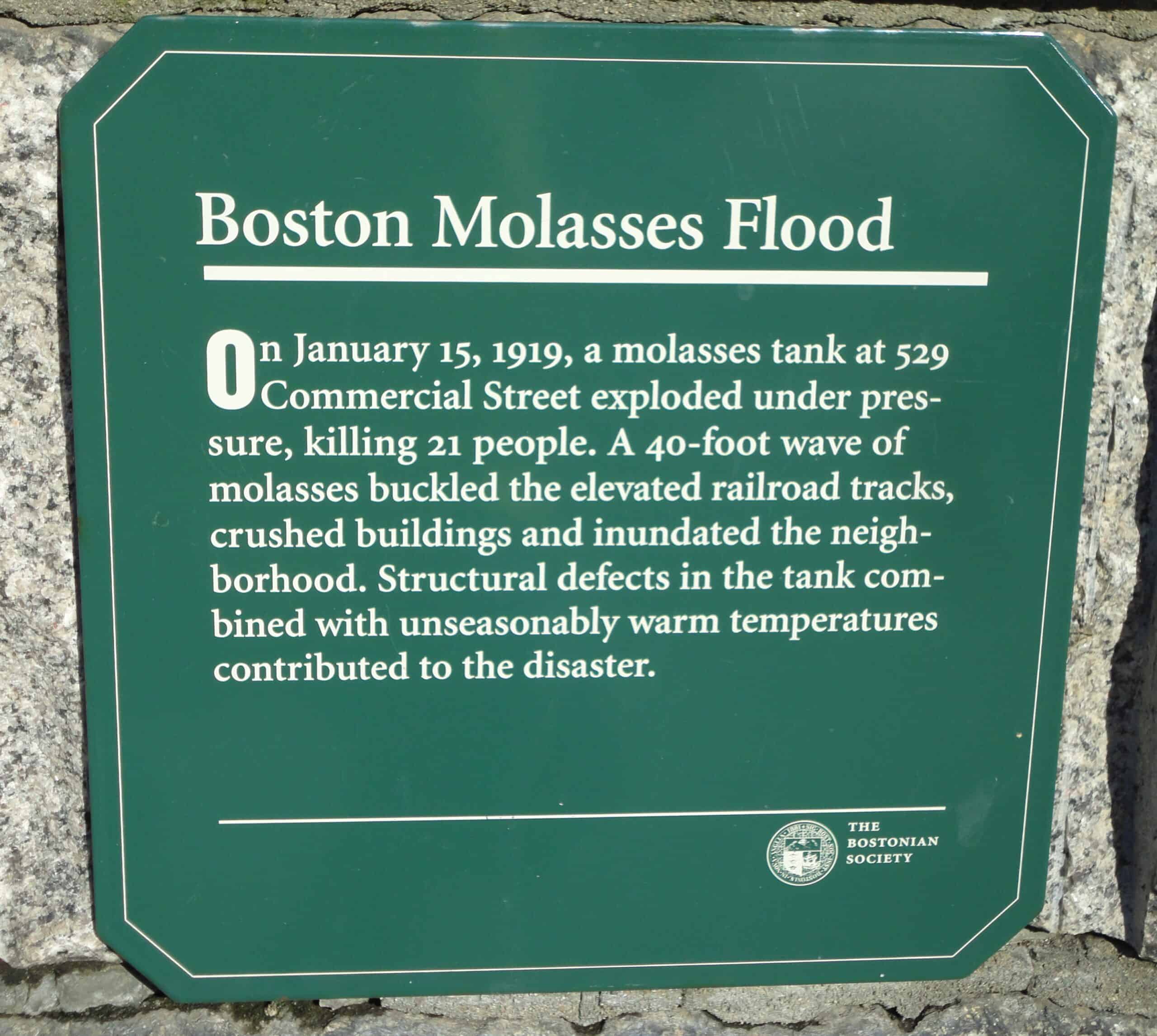
The tank stood at 529 Commercial Street, near Boston Harbor. It belonged to the Purity Distilling Company. The structure was 50 feet tall and 90 feet wide. It held up to 2.3 million gallons of molasses.
Why so much syrup? Molasses can be fermented into ethanol. Ethanol was a key ingredient in munitions. The company shipped molasses in, stored it, and piped it to a plant in nearby Cambridge.
The tank had a problem. It leaked. Badly. Neighborhood kids reportedly collected the dark goo that oozed from its seams. The company’s reported fix was cosmetic. They painted the tank brown to hide the leaks.
Think about that. A leaking giant stood over a crowded neighborhood. Nearby sat homes, a firehouse, and a busy waterfront. Workers heard groaning sounds from the steel. Residents complained. No one acted.
The tank was filled to the brim, and it had never been properly tested. Nobody checked whether the walls could handle the load. Molasses is about 40 percent denser than water. That’s a lot of crushing weight pressing on thin steel.
On January 14, a fresh shipment arrived. The syrup was warm, which makes it flow better. It went into a tank already holding older, colder molasses. Then Boston’s weather did something odd.
The Moment the Tank Burst
For more strange history, see: Darien Scheme: Scotland’s Doomed Colony That Vanished Into Panama’s Deadly Jungle
On January 15, the temperature climbed above 40 degrees. The days before had been brutally cold. That sudden swing may have stressed the steel and expanded the liquid inside.
At about 12:30 p.m., the tank gave way.
People near the scene felt the ground shake. Then came the roar. Rivets blasted loose. Steel plates tore apart. A torrent of molasses poured out.
The wave slammed into everything. It shoved steel panels against the girders of the Boston Elevated Railway. It knocked a streetcar off its tracks. Buildings were swept from their foundations. Whole structures simply folded.
A newspaper account captured the horror. The Boston Post reported that molasses, waist deep, covered the street. It swirled and bubbled around the wreckage. Here and there, a form struggled. Reporters couldn’t tell if it was a person or an animal.
That detail still chills. Victims became unrecognizable shapes in the brown tide. Rescuers couldn’t tell the living from the dead at first glance.
Within seconds, several blocks lay under two to three feet of syrup. And the cold made it worse.
Trapped in the Sticky Tide
Molasses behaves strangely. It’s thick, but it flows. In warm weather it moves fast. As the temperature dropped that afternoon, it thickened and clung.
Survivors told harrowing stories. People were stuck fast, unable to pull free. The more they struggled, the deeper they sank. Some drowned in the syrup. Others were crushed by debris carried inside the wave.
Rescuers faced a nightmare. Sailors from the USS Nantucket, a training ship docked nearby, rushed in. So did police, Red Cross workers, and Boston Army personnel. They waded into the mess to find survivors.
Even getting around was hard. Every step stuck. Every rescue took twice the effort. Doctors treated victims on the spot. Makeshift hospitals filled with the injured.
Horses were also caught in the flood. Many of the animals died in agony. The scene was part disaster and part surreal nightmare. Imagine sweet-smelling syrup coating a battlefield of broken bodies.
The final count was grim. Twenty-one people died. About 150 were injured. Among the dead were children, a few workers, and a firefighter. The sweetest of substances had turned murderous.
For more on how the disaster unfolded, the Library of Congress hosts archives of period newspapers covering the aftermath.
Hauntings and the Lingering Smell of the Great Molasses Flood
Here’s where the story turns eerie. After the cleanup, Bostonians noticed something odd. The smell wouldn’t go away.
Crews worked for weeks to wash the syrup off streets and buildings. They used salt water from the harbor. They scattered sand and sawdust. The harbor itself turned brown, stained for months.
But the scent lingered. For decades, residents claimed the area still smelled of molasses on hot summer days. The heat seemed to wake something up. A sweet, heavy odor would drift through the North End, as if the ground itself remembered.
Local folklore holds that the smell was a kind of memory. Some people said it was the lingering presence of those who died there. Skeptics say it’s just old syrup soaked into the soil and pavement. But the stories persisted.
Some neighbors told tales of strange sensations near the site. They described a feeling of heaviness in the air. A few claimed to hear a faint rumbling on quiet nights. No one could prove a thing.
Still, the legend of the Great Molasses Flood grew. It became a haunting little piece of Boston lore. A reminder that horror can arrive in the strangest forms.
The investigation that followed was a landmark case. Residents sued the company. After years of testimony, the court held the company responsible. The tank’s builders had cut corners. The case helped push for stricter engineering standards and safety rules. Reform came too late for the victims.
Today, a small plaque marks the spot. It’s easy to walk past. But those who know the story often pause there. Some say they can still catch a faint sweet whiff on a hot day.
The Great Molasses Flood is a tragedy wrapped in absurdity. It reminds us that disaster doesn’t always look dangerous. Sometimes it looks like dessert. A neglected tank, a warm afternoon, and a rush of sweetness turned a Boston neighborhood into a graveyard. And on summer days, locals say the air still remembers.
For de
More strange stories
 1967 USS Forrestal Fire: The Hellish Inferno That Changed the Navy Forever
 USS Craven (TB-10): The Cursed Torpedo Boat That Met a Fiery End
 Dublin Whiskey Fire: The Night Rivers of Burning Alcohol Flowed Through Irish Streets
 White River Monster: Arkansas’s Terrifying River Beast That Got Its Own Sanctuary