
The London Beer Flood is one of history’s strangest disasters. On October 17, 1814, a monstrous wooden vat at the Horse Shoe Brewery in London exploded without warning. It unleashed over 100,000 gallons of dark, fermenting porter into the streets below. The wave crashed through walls, swept away homes, and killed eight people. Five of those victims were mourners at a child’s funeral wake. It sounds like something from a dark fever dream. But it happened. And the details are far more disturbing than most history books let on.
The London Beer Flood Begins With a Fatal Mistake
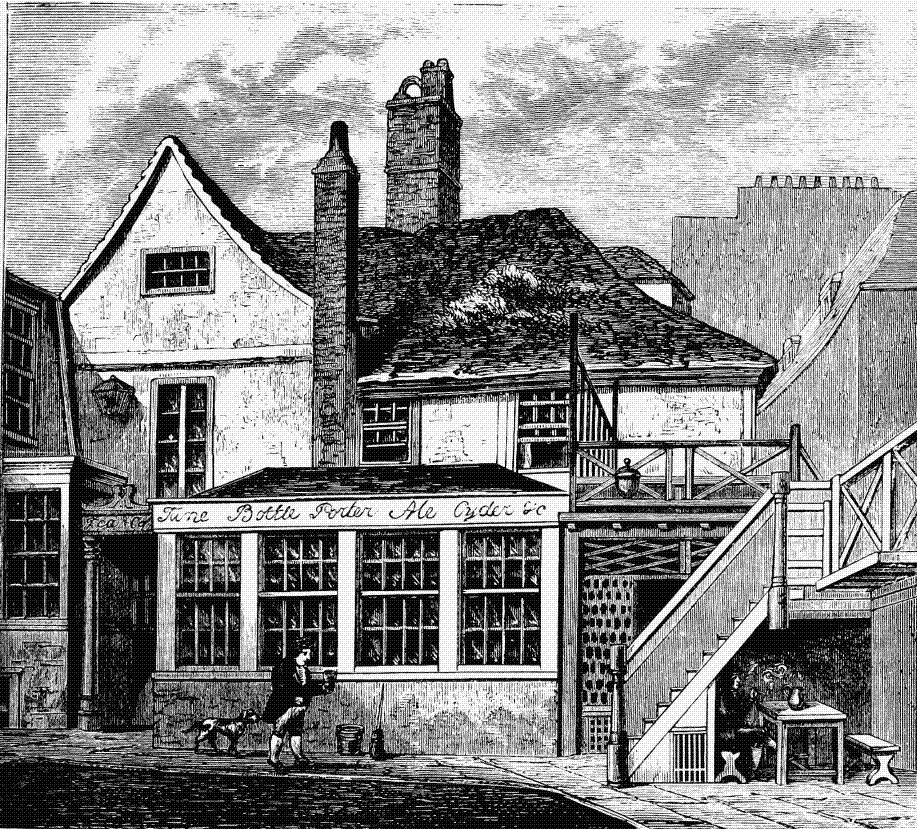
The Horse Shoe Brewery stood at the corner of Tottenham Court Road and Oxford Street. It was one of the two largest breweries in London at the time. Owner Sir Henry Meux had built a truly enormous wooden vat. It stood 22 feet tall. It held 18,000 imperial barrels of porter. Eighty long tons of iron hoops kept the whole thing together.
At around 4:30 in the afternoon, a storehouse clerk named George Crick noticed something wrong. One of the 700-pound iron bands around the vat had slipped. This wasn’t unusual. The bands slipped off two or three times a year. Crick told his supervisor. The supervisor shrugged it off. He told Crick “that no harm whatever would ensue.” Crick was simply told to write a note to a business partner, Mr. Young, to get it fixed later.
An hour passed. Crick stood on a platform thirty feet away, note still in hand. Then the vat exploded.
There was no warning sound. No creak. No groan. The vessel simply burst. The force knocked the stopcock clean off a neighboring vat. That vat began to fail too. Then more barrels collapsed. Between 128,000 and 323,000 imperial gallons of beer surged outward in a single, catastrophic wave. The back wall of the brewery crumbled like paper. The dark flood roared into the streets.
The full historical record of the disaster shows just how fast everything unraveled. One slipped hoop. One dismissed warning. Eight people dead.
The London Beer Flood Hits the St Giles Rookery
This event shares similarities with: Capsizing: A Maritime Disaster That Changed Naval History Forever
The flood didn’t hit a prosperous neighborhood. It hit one of London’s most desperate slums. Behind the brewery ran New Street, a dead-end lane feeding into the St Giles rookery. This eight-acre slum was described by one writer as “a rendezvous of the scum of society.” It was a place of crumbling buildings, extreme poverty, and crushing overcrowding. William Hogarth had used it as inspiration for his infamous 1751 print Gin Lane. The people who lived there had nowhere else to go.
When the wave hit, it didn’t discriminate. Basement dwellings flooded instantly. Walls collapsed under the pressure. People were swept off their feet by a torrent of thick, dark beer.
The cruelest detail of the entire disaster involves one Irish family. They were holding a wake for their two-year-old son. The child had died just days before. Friends and neighbors had gathered in their basement room to mourn. The beer flood hit that room directly. Five mourners at that wake were killed. They drowned, or were crushed by collapsing debris, while gathered around a dead child’s body.
In total, eight people died. The victims included a young girl and a pub worker. The coroner’s inquest returned a verdict that they had all perished “casually, accidentally and by misfortune.” No one was charged. No one was held responsible. The brewery nearly went bankrupt from the loss of beer alone.
The London Beer Flood’s Darkest Aftermath
What happened next is deeply unsettling. Word spread fast through London’s streets. Crowds flooded into St Giles. Some came to help. Many came to drink. The surviving beer pooled in basements and flooded gutters. Locals scooped it up with pots, pans, and anything they could find. Some people reportedly drank until they collapsed. Contemporary accounts from the period describe scenes of chaos and opportunistic drinking in the disaster’s immediate aftermath.
The bodies of the dead were laid out in one of the ruined houses. Then something truly grim happened. The family, desperate and destitute, began charging admission to view the corpses. So many people paid to see the dead that the floor gave way. More people were injured in the collapse.
The brewery faced financial ruin. The Meux company had paid excise taxes on all that beer. They petitioned the government for a refund on the lost product. Remarkably, HM Excise granted the rebate. That money saved the brewery from total collapse. The disaster did lead to one lasting change. The brewing industry gradually abandoned enormous wooden vats after 1814. The risk was simply too great.
A Disaster Swallowed by History
The Horse Shoe Brewery eventually moved in 1921. Today, the Dominion Theatre stands on the exact spot where the vat exploded. Audiences watch musicals on the ground where a wave of dark beer once killed eight people. Meux & Co finally went into liquidation in 1961, nearly 150 years after the disaster.
The St Giles rookery is long gone. The slum was cleared in the Victorian era. The streets were widened. The crumbling buildings were torn down. No memorial marks the spot. No plaque remembers the five mourners who drowned at a child’s wake. The victims of that October afternoon were poor, Irish, and forgotten almost immediately.
That’s what makes this story so haunting. The London Beer Flood killed real people in real homes. It struck during a moment of grief. And then the city simply moved on. The brewery got its tax rebate. The owners faced no consequences. The dead were buried. History nearly forgot them entirely.
Some disasters leave monuments. This one left nothing but a theatre and a very strange footnote. Next time you walk past the Dominion Theatre on Tottenham Court Road, remember what the ground beneath it once swallowed.
Related Posts
 Delhi Purple Sapphire: The Cursed Amethyst That Terrorized Victorian London
 Souvenir Hunting on the Battlefield of Waterloo: The Macabre Trade That Shocked Europe
 Enfield Poltergeist: The Terrifying True Story That Haunted London for 18 Months
 Shadwell Forgeries: The Victorian Mudlarks Who Fooled London’s Elite with Crude Medieval Fakes