
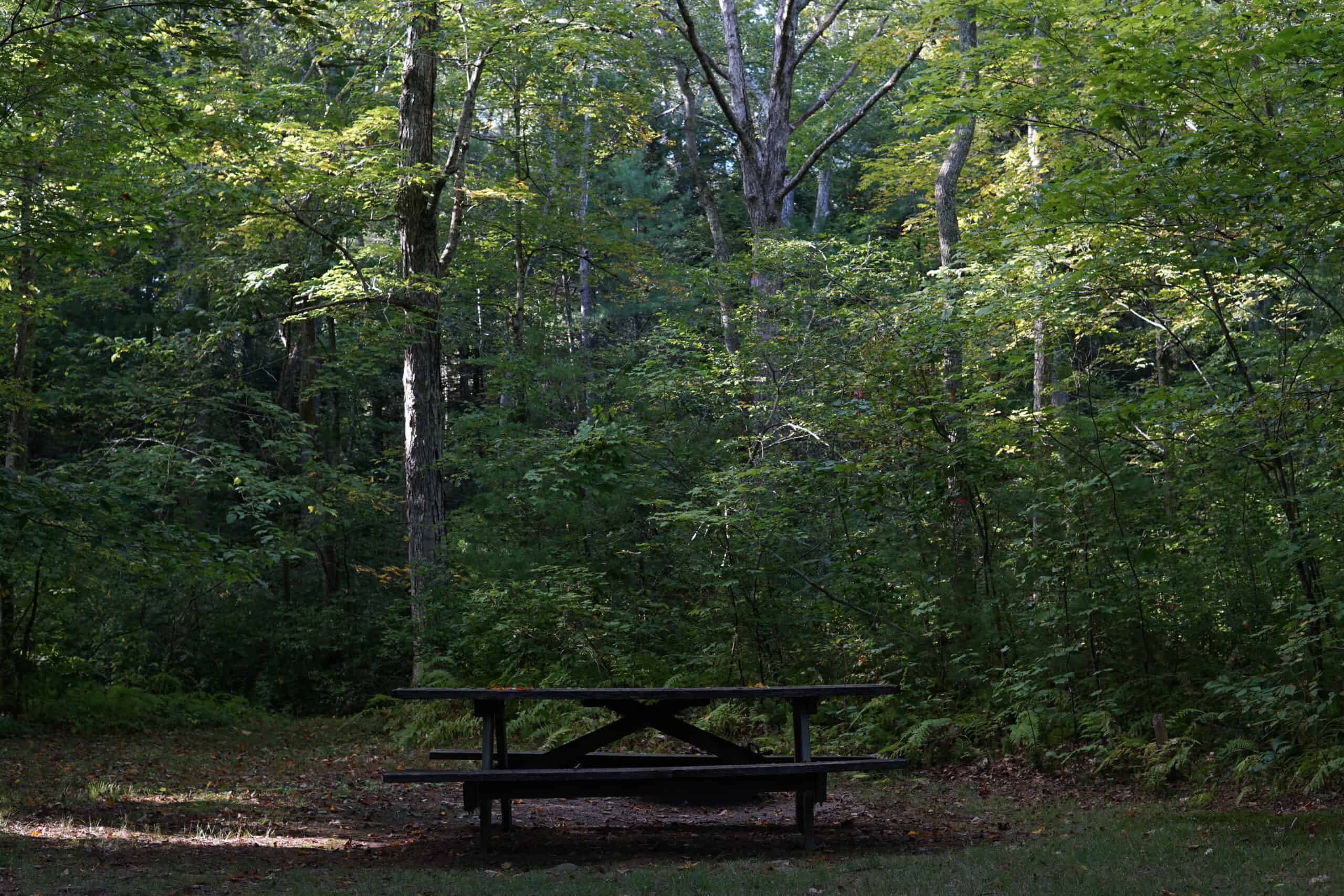
Deep in the southeastern corner of Connecticut, Pachaug State Forest holds secrets that most hiking guides won’t mention. Covering over 27,000 acres, it is the largest forest in Connecticut’s state system. But beyond the trails and rhododendrons, something stranger lurks here. Locals have whispered for generations about unexplained lights, vanishing hikers, and the eerie silence that falls without warning in certain parts of the woods. The forest sits on land that was once sacred Mohegan and Narragansett territory. Their history soaked into this soil long before European settlers arrived. And some say that history never really left.
The Dark History Behind Pachaug State Forest
The land that became Pachaug State Forest was established in 1928. But most of its acreage was purchased during the Great Depression, when desperate families sold off land they could no longer afford to keep. Think about that for a moment. Thousands of acres of farmland, homesteads, and family plots were essentially abandoned. Foundations still exist beneath the undergrowth. Stone walls cut through the trees, marking boundaries of fields that haven’t seen sunlight in nearly a century. Hikers stumble across these remnants all the time. A crumbling chimney here. A collapsed root cellar there.
The forest is named after the Pachaug River, which winds through its center. The Pachaug people, a subtribe of the Mohegan nation, lived and died on this land for centuries. Their conflicts with colonial settlers were brutal and bloody. King Philip’s War in the 1670s devastated Indigenous communities throughout this region. The echoes of that violence are impossible to ignore when you’re standing alone in these woods at dusk.
King Philip’s War left scars across New England that went far deeper than the historical record suggests. Many believe the trauma of those years left something behind in places like this forest. Something that doesn’t rest easily.
Pachaug State Forest’s Great Meadow Swamp: A Place That Feels Wrong
For more strange history, see: May-Stringer House: A Victorian Jewel in Florida’s Historic Brooksville
The Pachaug-Great Meadow Swamp was declared a National Natural Landmark in 1973. It’s famous for its Atlantic white cedar swamp. Scientists love it. But visitors often describe a deeply unsettling feeling when they enter this area. The swamp is unnaturally quiet. Birds stop singing. The air feels thick and heavy. People report losing their sense of direction even with a compass in hand.
Atlantic white cedar swamps are ancient ecosystems. The trees grow in twisted, dense formations. Light barely penetrates the canopy. The ground is soft and unstable beneath your feet. One wrong step and you sink. The swamp has claimed animals over the years. Some say it has claimed more than animals.
Local legends describe a figure seen standing motionless among the cedar trunks. Witnesses describe it as tall and pale. It doesn’t move. It just watches. Reports like these are impossible to verify. But they keep coming. Hikers post accounts online with unsettling regularity. The descriptions are remarkably consistent. A still figure. White or gray. Gone when you look directly at it.
The swamp’s ecosystem is also at risk of being overtaken by hemlock. There’s something almost poetic about that. A dark, shade-casting tree slowly consuming a place already associated with dread.
Vanishing Trails and Strange Phenomena in Pachaug State Forest
The trail system here is extensive. The Pachaug Trail alone runs about 30 miles. The Narragansett Trail crosses the Connecticut-Rhode Island border. Dozens of unmarked side trails branch off in every direction. Getting lost is genuinely easy. And getting lost here feels different than getting lost elsewhere.
Search and rescue teams have operated in this forest on multiple occasions. Hikers have gone missing for days before being found. Some have described waking up in locations they have no memory of reaching. Disorientation is common. But the accounts that stand out involve people who claim they weren’t simply lost. They claim they were followed.
One account from the early 2000s describes a group of mountain bikers who heard footsteps matching their pace through the trees. They stopped. The footsteps stopped. They moved again. The footsteps resumed. They eventually rode out of the forest at full speed and refused to return.
The Enduro motorcycle trail winds 58 miles through the forest. Riders use it regularly. But even seasoned off-road riders have reported their engines cutting out in specific sections of the trail for no mechanical reason. The bikes restart immediately once they’ve moved past the spot. No explanation has ever been offered.
Historical records from the region document unusual activity going back to the colonial period. Strange lights over the swampland were recorded by early settlers who had no framework to explain what they were seeing.
What Still Waits in the Woods
The forest draws thousands of visitors every year. Most leave with nothing more than muddy boots and good memories. But a significant number come back with something harder to explain. A feeling. A photograph with an inexplicable shape in the treeline. A recording with sounds that don’t match any known animal.
The Rhododendron Sanctuary Trail blooms spectacularly in June and July. It’s beautiful. It’s also one of the areas where visitors most frequently report feeling watched. The dense flowering shrubs create walls of vegetation on either side of the boardwalk. Anything could be standing just a few feet away, completely hidden.
Paranormal investigators have visited this forest. Their findings are mixed, as they always are. But the consistency of witness reports over many decades is harder to dismiss. Different people, different decades, different parts of the forest. Same descriptions. Same feelings. Same inexplicable experiences.
Connecticut’s largest forest keeps its secrets well. The stone walls of vanished homesteads hold their silence. The swamp holds its stillness. And whatever moves through the trees at dusk keeps moving, just beyond the edge of what you can clearly see.
Whether you believe in ghosts or not, Pachaug State Forest is a place that demands respect. The land has a long memory. And it isn’t finished telling its story.
Related Posts
 Chocochatti: The Lost Seminole Village Where Spirits Still Roam Florida’s Haunted Prairie
 The Conjuring House Legal Battle and Mental Competency Controversy: When Spirits Allegedly Guide Real Estate Decisions
 Trans-allegheny Lunatic Asylum: America’s Most Haunted Psychiatric Hospital
 Abandoned Village Secrets: The Ghostly Settlements History Left Behind