
The Saguenay flood struck Quebec’s Saguenay-Lac-Saint-Jean region on July 19-20, 1996, unleashing a torrent of destruction that would forever change this northern Canadian landscape. What began as persistent rainfall transformed into a catastrophic deluge that claimed lives, destroyed communities, and became etched in Canadian disaster history as the worst overland flood of the 20th century.
The region had endured two weeks of relentless precipitation leading up to the disaster, saturating soils and overwhelming rivers and reservoirs throughout the area. The Saguenay region’s unique geological structure as a graben,a depressed block of land bordered by parallel faults,amplified the devastating effects when the heavens truly opened on that fateful July weekend. In just 48 hours, the skies dumped rainfall equivalent to the volume of water that cascades over Niagara Falls in four weeks, creating an unprecedented hydrological nightmare.
The Day the Saguenay Flood Unleashed Its Fury
July 19, 1996, dawned with ominous clouds gathering over the Saguenay region, but few residents could have anticipated the biblical proportions of what was about to unfold. The meteorological conditions aligned in the worst possible way, creating a perfect storm scenario that would test every flood defense system in the region. As the rain intensified throughout the day, emergency officials watched helplessly as water levels rose at alarming rates across multiple waterways simultaneously.
The cities of Chicoutimi and La Baie bore the brunt of nature’s assault, with floodwaters reaching depths of over 8 feet in some areas. Entire neighborhoods vanished beneath the surging torrents, their foundations literally swept away by the incredible force of the water. The timing couldn’t have been worse,the disaster struck during peak tourist season, when the region was filled with visitors who found themselves trapped in an unfolding catastrophe.
Post-disaster investigations revealed critical failures in the region’s flood protection infrastructure. The network of dikes and dams designed to protect Chicoutimi had been poorly maintained, creating vulnerabilities that the unprecedented rainfall exploited with devastating efficiency. These engineering failures transformed what might have been a manageable flood into a community-destroying disaster that would require years to overcome.
Human Cost and Immediate Devastation
Related article: Cleveland sports curse
The human toll of the disaster painted a stark picture of nature’s destructive power. Ten people lost their lives directly to the floodwaters, while two additional fatalities resulted from mudslides triggered by the extraordinary rainfall. These weren’t just statistics,they represented families torn apart, communities mourning, and lives forever altered by circumstances beyond anyone’s control.
The evacuation effort became a massive undertaking as 16,000 residents fled their homes, many with nothing more than the clothes on their backs. Emergency shelters overflowed with displaced families, while rescue workers navigated treacherous conditions to reach stranded survivors. The scale of displacement overwhelmed local resources, requiring provincial and federal assistance to manage the humanitarian crisis.
Property destruction reached staggering proportions, with 488 homes completely destroyed and another 1,230 suffering significant damage. The economic impact extended far beyond residential losses, as businesses, infrastructure, and tourism facilities sustained heavy damage during what should have been the region’s most profitable season. The final damage assessment reached CA$1.5 billion, making it one of Canada’s costliest natural disasters.
The Little White House: An Unlikely Symbol of Survival
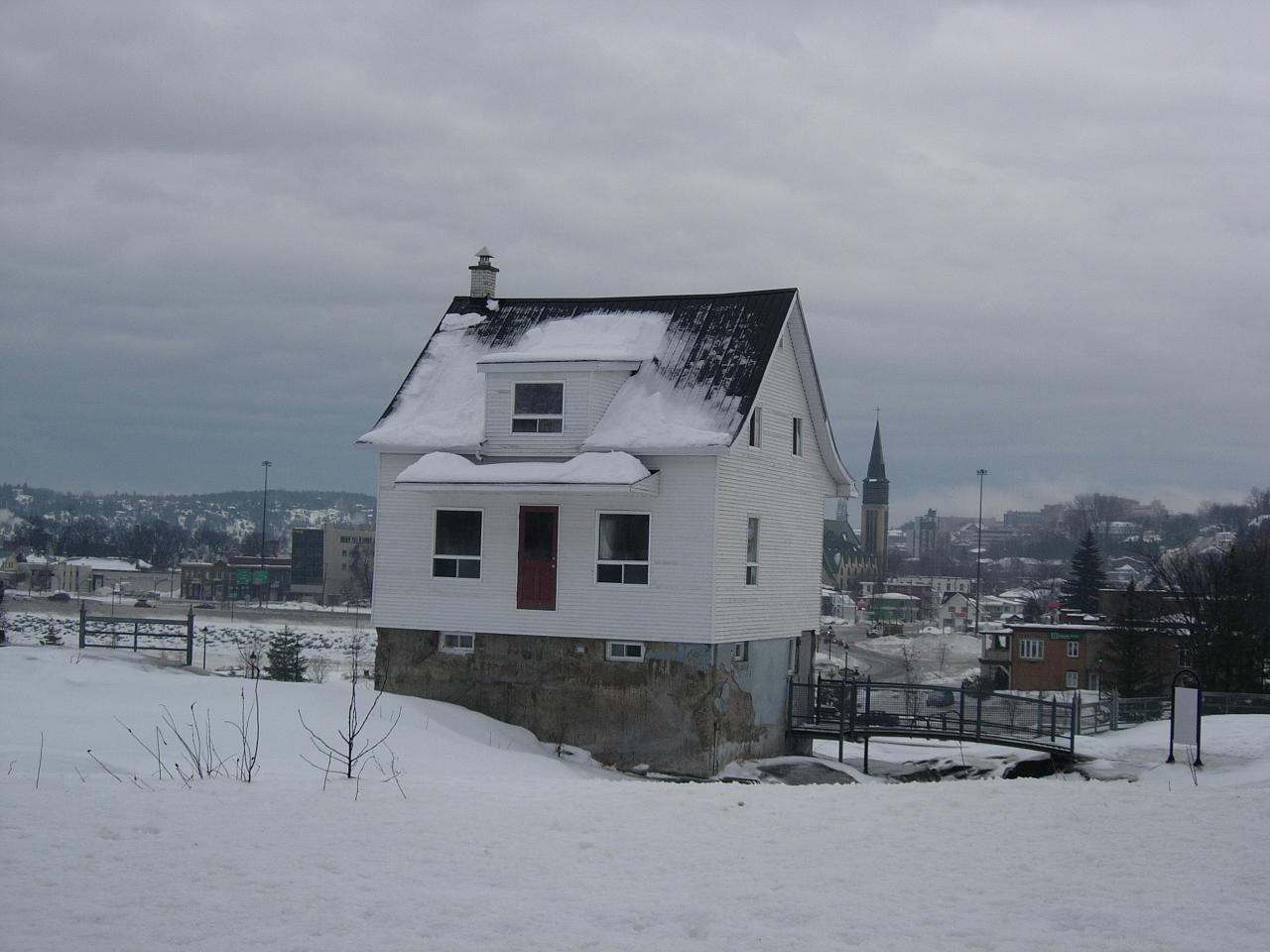
Amid the widespread destruction, one small structure captured the imagination of a nation and became an enduring symbol of resilience. Jeanne d’Arc Lavoie-Genest’s modest white house stood virtually unscathed while torrents of floodwater raged around it, creating an almost surreal image of survival against impossible odds. The house, which locals dubbed “La petite maison blanche,” defied all logical expectations as the flood stripped away everything around it.
The remarkable survival of this humble dwelling provided a powerful metaphor for the human spirit’s ability to endure catastrophe. Photographs of the isolated house, surrounded by devastation but still standing proud, circulated worldwide and became synonymous with the Quebec region’s determination to rebuild and recover. The image offered hope to survivors who had lost everything, proving that sometimes, against all odds, something precious can survive even the worst disasters.
Today, the little white house serves as the centerpiece of a historical park and museum in Saguenay, its foundation still exposed as a reminder of the flood’s power. Visitors can explore this unique memorial, which preserves not just the physical structure but the story of community resilience that it represents. The museum provides educational exhibits about flood preparedness and the importance of infrastructure maintenance, ensuring that future generations learn from this costly lesson.
Environmental Legacy and Unexpected Consequences
While the Saguenay flood brought tremendous destruction, it also produced some surprising environmental benefits that scientists didn’t discover until years later. The massive sediment displacement during the flood covered heavily contaminated deposits at the bottom of the Saguenay and Ha! Ha! Rivers with 10 to 50 centimeters of relatively clean material. This natural “capping” effect essentially buried decades of industrial pollution beneath a protective layer of fresh sediment.
Research conducted in the flood’s aftermath revealed that this accidental environmental remediation eliminated the need for expensive dredging operations that would have been required to address the contaminated river bottoms. The old polluted sediments were no longer accessible to the ecosystem, effectively neutralizing their environmental threat without human intervention. This unexpected positive outcome demonstrated how natural disasters, despite their destructive power, can sometimes produce beneficial long-term changes.
The Ha! Ha! Pyramid, constructed as a memorial to the flood, stands as both a tribute to those who suffered and a reminder of the region’s geological vulnerability. This unique monument helps visitors understand the complex relationship between human settlement and natural forces, emphasizing the importance of respecting environmental limitations when planning community development.
The lessons learned from the Saguenay flood extended far beyond the immediate region, influencing flood management strategies across Canada. The disaster highlighted critical gaps in infrastructure maintenance, emergency preparedness, and land-use planning that had made the catastrophe far worse than it needed to be. These insights led to improved building codes, better flood prediction systems, and more robust emergency response protocols that have helped protect other communities from similar devastation.
The 1996 deluge remains a defining moment in Quebec’s modern history, serving as both a cautionary tale about the power of nature and an inspiring example of community resilience. The region’s recovery demonstrated the strength of human determination, while the preservation of symbols like the little white house ensures that future generations will remember both the tragedy and the triumph of that terrible weekend when the skies opened and changed everything.
Related Posts
 Tailings Dam Failure: A Century of Environmental Disasters and Mining Industry Negligence
 Circle of Death: The Terrifying Maritime Phenomenon That Traps Victims in Deadly Spinning Nightmares
 Villa Epecuén: Argentina’s Lost Tourist Town Swallowed by Salt Water
 Coffin Ship (insurance): When Greed Turned Vessels Into Floating Death Traps