
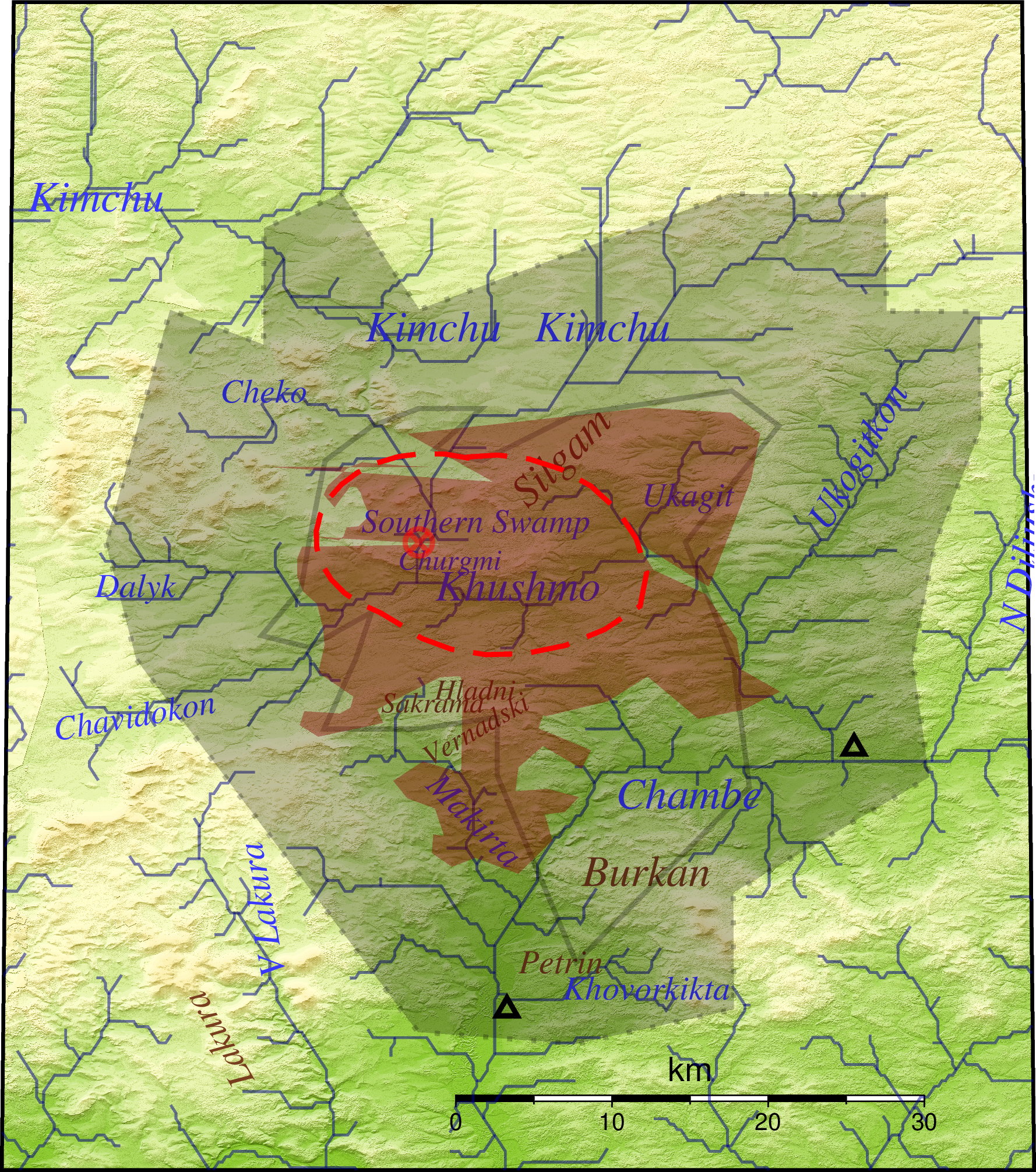
The Tunguska Event remains one of history’s most baffling mysteries. On June 30, 1908, a massive explosion rocked the remote Siberian wilderness near the Podkamennaya Tunguska River. The blast flattened over 80 million trees across 830 square miles of forest. Yet no crater was ever found. No meteorite fragments were recovered. What really happened in that desolate corner of Russia continues to haunt researchers more than a century later.
Eyewitnesses described a fireball brighter than the sun streaking across the morning sky. The explosion was heard 600 miles away. Seismic stations across Europe registered the blast. Windows shattered in towns hundreds of miles from the impact zone. For days afterward, strange atmospheric phenomena lit up night skies across Asia and Europe. People could read newspapers by the eerie glow at midnight in London.
The remote location meant the first scientific expedition didn’t reach the site until 1927. What they found defied explanation. Trees lay flattened in a radial pattern, all pointing away from a central point. But at ground zero, charred tree trunks stood upright like ghostly sentinels. The official scientific consensus attributes the event to an asteroid airburst. Yet disturbing evidence suggests something far stranger occurred.
The Tunguska Event’s Impossible Physical Evidence
Recent research has uncovered physical evidence that challenges conventional explanations. In 2025, scientists discovered shock-metamorphosed grains at the blast site. These materials show signs of extreme temperatures exceeding 1,700°C and pressures of 5-10 GPa. Such conditions shouldn’t exist in a simple airburst explosion.
The discovery gets stranger. Quartz grains exhibit high-temperature melting and shock features typically found only in meteorite impacts. Yet there’s no crater. Glass microspherules and melted minerals litter the ground. Carbon spherules and glass-like carbon fragments suggest temperatures hot enough to vaporize organic matter instantly.
Even more puzzling is the discovery made in 1972. The explosion’s epicenter sits directly above an ancient volcanic crater called the Kulikovskii paleovolcano. At an altitude of six kilometers, the region of maximum luminescence aligns perfectly with the volcano’s central vent. This can’t be coincidence.
Local magnetic surveys using unmanned aircraft have revealed previously unknown anomalies. These magnetic disturbances follow the object’s presumed flight path. Something left a permanent electromagnetic signature in the Earth itself.
Eyewitness Accounts of the Tunguska Event That Chill the Blood
For more strange history, see: Phantom Time Conspiracy Theory: The Missing 297 Years That Never Existed
The human testimony surrounding this catastrophe contains details that don’t fit neat scientific explanations. At least three indigenous Evenki people died from the blast. Survivors described injuries that sound almost supernatural in nature.
A 1926 ethnographic expedition recorded chilling testimonials. One man was thrown against a tree with such force that infection set in, leading to his death. Others suffered burns from thermal radiation miles from the explosion site. The Evenki oral traditions speak of a “fiery god” that descended from the heavens, burning forests and scaring away wildlife for years.
One particularly disturbing account comes from a witness named Aksenov. He described seeing “the devil flying there… The devil himself was like a chock, light in color, two eyes in front, fire behind.” This testimony has puzzled Tunguska researchers for decades. What was this strange object that flew after the main explosion?
The psychological impact on survivors was profound. Many Evenki refused to return to the blast area for years. They spoke of cursed ground where animals wouldn’t venture. Hunters reported that reindeer herds avoided the region completely. The forest itself seemed different – wrong somehow.
According to local testimony, Suzdalevo Lake didn’t exist before 1908. The Evenki insist this body of water appeared after the explosion. While scientists can’t confirm this claim, the oral tradition remains consistent across multiple tribal accounts.
Scientific Expeditions Uncover More Tunguska Event Mysteries
Leonid Kulik led the first scientific expedition to the site in 1927. What his team discovered challenged everything they expected to find. The devastation was far more extensive and bizarre than initial reports suggested.
Trees at ground zero stood upright but stripped of branches and bark. They looked like telephone poles planted in perfect rows. The radial pattern of fallen trees extended for miles in every direction. Yet the standing trees created an eerie “telegraph pole forest” that defied explanation.
Kulik’s team searched desperately for meteorite fragments. They found none. They drained swamps looking for impact craters. They discovered nothing. The absence of physical evidence became more mysterious than the explosion itself.
Subsequent expeditions have only deepened the mystery. Over a thousand researchers have devoted years to studying this phenomenon. Yet no theory has gained universal acceptance. The historical records show that each new discovery raises more questions than answers.
Modern plasma physics research suggests mechanisms absent from current models. Non-equilibrium heating effects, electromagnetic energy coupling, and electrical discharge phenomena could account for the observed evidence. But these theories push the boundaries of known science.
Recent UAV magnetic surveys have identified anomalies that align with the presumed impact trajectory. These electromagnetic signatures suggest the object interacted with Earth’s magnetic field in ways that conventional meteors don’t.
Theories That Challenge Our Understanding of Reality
The official explanation – a stony asteroid exploding in the atmosphere – fails to account for much of the physical evidence. The extreme temperatures and pressures found at the site exceed what atmospheric explosions should produce. The magnetic anomalies suggest electromagnetic phenomena beyond current models.
Some researchers propose antimatter annihilation as the cause. Others suggest a small black hole passed through Earth. The most exotic theories involve mirror matter – a hypothetical form of matter that interacts weakly with ordinary matter. These ideas sound like science fiction, yet they attempt to explain the unexplainable.
The volcanic connection adds another layer of mystery. How did an aerial explosion activate geological processes six kilometers below? The precise alignment of the blast’s luminescence with the ancient volcano’s vent suggests a connection that mainstream science can’t explain.
Plasma physics offers intriguing possibilities. Electrical discharge phenomena in the upper atmosphere could create the observed heating effects. Electromagnetic energy coupling might explain the magnetic anomalies. But these mechanisms exist at the edge of scientific understanding.
The lack of radioactivity at the site rules out nuclear explosions. Yet the physical evidence suggests energies comparable to nuclear weapons. Something released 3-50 megatons of TNT equivalent without leaving conventional traces.
More than a century has passed since the Tunguska Event shook the Siberian wilderness. Despite intensive investigation by hundreds of scientists, the mystery remains unsolved. The physical evidence grows more puzzling with each new discovery. The eyewitness accounts describe phenomena that challenge our understanding of natural processes. Whatever exploded over the Podkamennaya Tunguska River that June morning left behind questions that may never be answered. The forest has regrown, but the enigma endures – a reminder that our universe still holds secrets beyond human comprehension.
Related Posts
 Salinella Salve: The Vanishing Creature That Defied Science for Over a Century
 Havana Syndrome: The Mysterious Illness Targeting American Officials Worldwide
 January 2026 Solar Storm: The Celestial Event That Defied Scientific Predictions
 2025 Pn7 Quasi Moon: Earth’s Mysterious Shadow Companion That Shouldn’t Exist