When uncontrolled decompression strikes an aircraft, passengers find themselves in a nightmare scenario that unfolds in mere seconds. The sudden loss of cabin pressure transforms a routine flight into a battle for survival against physics itself. Bodies become projectiles. Windows explode outward. And in the most terrifying cases, human beings are literally sucked from their seats into the void.
The phenomenon occurs when a pressurized vessel fails catastrophically. Aircraft cabins maintain artificial pressure to keep passengers alive at high altitudes. When that seal breaks, the results can be explosive, rapid, or gradual – each carrying its own unique horrors. The speed of decompression determines whether passengers live or die, and sometimes the difference is measured in fractions of a second.
Modern aviation has witnessed several spine-chilling incidents where uncontrolled decompression turned ordinary flights into scenes from a horror movie. The most disturbing cases involve passengers being torn from their seats and ejected through aircraft windows – a fate so terrifying that it seems impossible, yet has been documented multiple times.
The Aloha Airlines Horror: When Uncontrolled Decompression Peeled Away Reality
On April 28, 1988, Aloha Airlines Flight 243 experienced one of the most visually shocking cases of uncontrolled decompression ever recorded. At 24,000 feet above the Pacific Ocean, the Boeing 737’s fuselage suddenly peeled away like a sardine can. The explosive decompression ripped off an 18-foot section of the aircraft’s roof, transforming the passenger cabin into an open-air convertible hurtling through the sky.
Flight attendant Clarabelle Lansing was standing in the aisle when the metal skin tore away. In an instant, she vanished – sucked out of the aircraft and into the blue void below. Her body was never recovered. Passengers later described the horrifying moment when Lansing simply disappeared, as if she had been erased from existence.
The surviving passengers found themselves clinging to their seats as hurricane-force winds tore through the cabin. Debris became deadly projectiles. Oxygen masks dangled uselessly in the chaos. Captain Robert Schornstheimer and First Officer Madeline Tompkins somehow managed to land the mutilated aircraft on Maui, saving 94 lives. The investigation revealed metal fatigue had weakened the fuselage beyond its breaking point.
British Airways Flight 5390: The Captain’s Nightmare of Explosive Decompression
This event shares similarities with: The Oak Island Mystery: Unveiling the Enigmatic Treasure Hunt
Perhaps no incident illustrates the terror of explosive uncontrolled decompression more dramatically than British Airways Flight 5390 on June 10, 1990. At 17,300 feet, a cockpit window blew out with such violence that it partially ejected Captain Tim Lancaster from the aircraft. His body was sucked halfway through the window opening, held inside only by his legs caught on the flight controls.
For 20 terrifying minutes, Lancaster hung outside the aircraft at 17,000 feet. Flight attendant Nigel Ogden grabbed the captain’s legs and held on desperately as 400-mph winds tried to tear Lancaster away. The scene was surreal – a commercial pilot’s torso and head exposed to the deadly atmosphere while his crew fought to keep him from being lost forever.
First Officer Alastair Atchison took control and executed an emergency descent while Ogden and other crew members struggled to pull Lancaster back inside. Miraculously, Lancaster survived with only frostbite and fractures. The cause was later traced to incorrectly installed windscreen bolts – a maintenance error that nearly cost a man his life in the most horrific way imaginable.
Alaska Airlines 1282: Modern Uncontrolled Decompression Mystery
The most recent major incident occurred on January 5, 2024, when Alaska Airlines Flight 1282 suffered explosive decompression at 14,830 feet. A door plug blew out of the Boeing 737 MAX 9, creating a gaping hole in the fuselage. The violent decompression ripped clothing from passengers’ bodies and turned the cabin into chaos.
What makes this case particularly unsettling is the mystery surrounding it. Four critical bolts were missing from the door plug, but investigators still cannot determine who removed them or why they weren’t reinstalled. The aircraft had experienced pressure warnings on three previous flights, yet the warnings were ignored. Flight attendants initially believed passengers had been sucked out of the aircraft.
A teenage passenger had his shirt completely torn off and blown out of the plane. His mother had to physically restrain him to prevent him from being pulled through the opening. The NTSB investigation revealed the door plug had been gradually moving upward over 154 flights before finally failing catastrophically.
The Physiological Horror of Pressure Loss
The human body’s response to sudden decompression creates its own catalog of horrors. When pressure drops instantly, the air in passengers’ lungs expands violently. Without proper exhalation, lungs can rupture like balloons. Blood begins to boil at altitudes above 63,000 feet – a phenomenon called ebullism that causes the body to swell grotesquely.
Hypoxia sets in within seconds at high altitudes. Passengers become confused, euphoric, then unconscious. Their skin turns blue as oxygen levels plummet. In cases of gradual decompression, passengers may not even realize they’re dying until it’s too late. The 2005 Helios Airways Flight 522 crash demonstrated this silent killer – everyone aboard lost consciousness from oxygen starvation, and the aircraft continued flying on autopilot until it ran out of fuel.
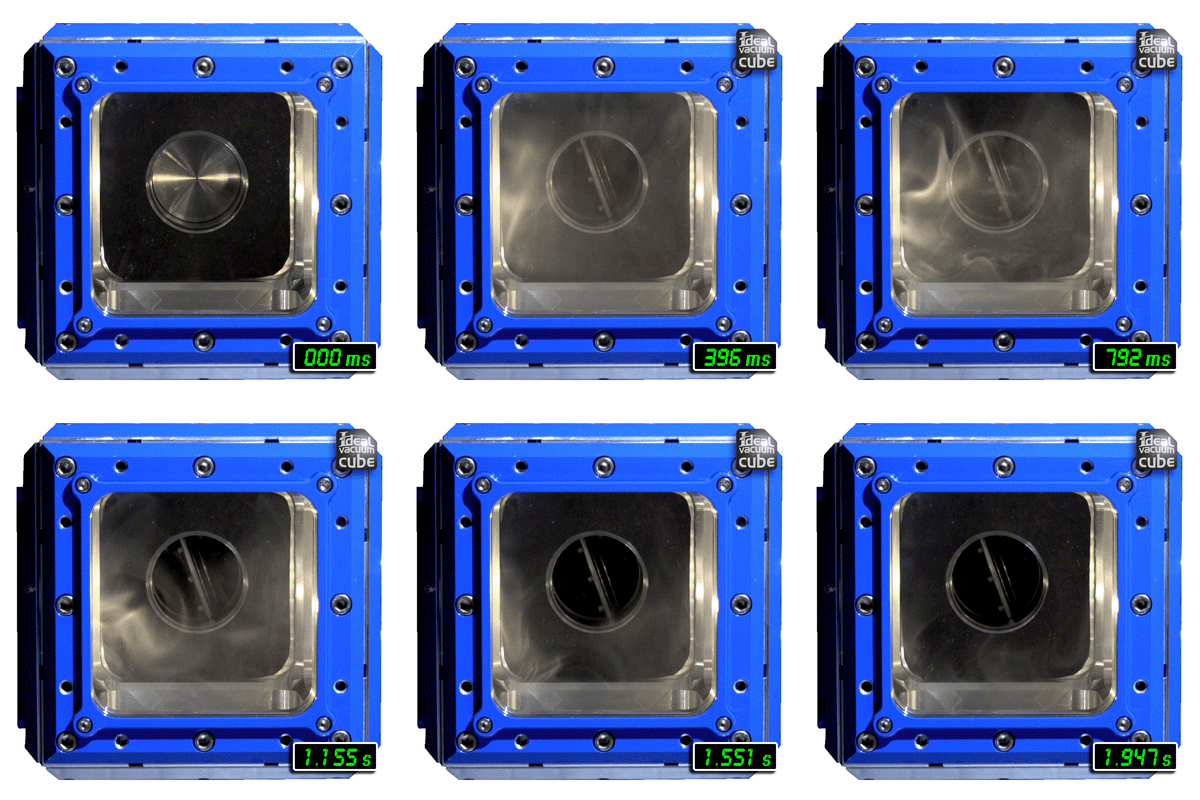
The temperature inside a decompressed cabin can drop to minus 70 degrees Fahrenheit. Moisture in the air instantly condenses into fog, creating an eerie, cloud-filled environment. Objects not secured become missiles traveling at hundreds of miles per hour. The combination of explosive force, freezing temperatures, and oxygen deprivation creates a perfect storm of physiological terror.
Uncontrolled decompression remains one of aviation’s most feared emergencies because it strikes without warning and leaves little time for human response. Modern aircraft include multiple safety systems to prevent such incidents, but when they fail, the results can be catastrophic. The cases documented here serve as chilling reminders that above 30,000 feet, we exist only within a fragile bubble of artificial atmosphere – and when that bubble bursts, survival depends on seconds, luck, and the heroic actions of trained professionals who refuse to surrender to the void.