
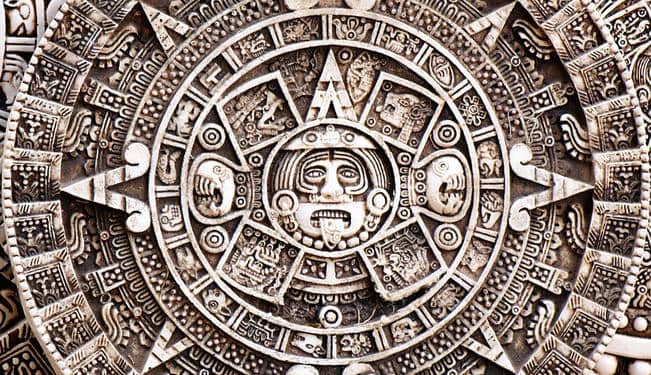
The 2012 Phenomenon became one of the most widespread doomsday scares in modern history. Millions of people worldwide believed December 21, 2012 would bring catastrophic events or the end of civilization itself. This mass hysteria stemmed from misinterpreted Maya calendar systems and New Age conspiracy theories that spread like wildfire across the internet.
The panic reached such heights that NASA received over 5,000 questions from terrified citizens. Some asked if they should kill themselves and their families before the supposed apocalypse. Children as young as 11 contemplated suicide rather than face the imagined horrors. David Morrison, a NASA scientist, coined the term “cosmophobia” to describe this fear of the cosmos that gripped so many minds.
What made this phenomenon particularly strange was how it twisted ancient Maya astronomy into modern apocalyptic fantasies. The Maya never predicted doomsday for 2012. Their sophisticated calendar system simply marked the end of one cycle and the beginning of another. Yet millions ignored scholarly evidence and embraced wild theories about galactic alignments, rogue planets, and solar catastrophes.
The 2012 Phenomenon Origins in Maya Calendar Confusion
The Maya Long Count calendar formed the foundation of the 2012 Phenomenon hysteria. This ancient timekeeping system tracked days in cycles called bʼakʼtuns, each lasting approximately 394 years. December 21, 2012 marked the completion of the 13th bʼakʼtun since the Maya creation date.
Modern doomsday theorists claimed this date represented the “end” of the Maya calendar. They argued the ancient Maya predicted global catastrophe when their calendar “stopped.” This interpretation was completely false. Maya scholars repeatedly explained that the calendar didn’t end in 2012. It simply rolled over to a new cycle, like an odometer resetting to zero.
Archaeological discoveries in 2012 proved the Maya expected time to continue far beyond 2012. Researchers found Maya astronomical tables at Xultún, Guatemala that calculated dates thousands of years into the future. These 9th-century calculations demolished claims about Maya doomsday prophecies.
The Maya civilization never conceived of linear time ending abruptly. Their worldview embraced cyclical time that renewed itself eternally. Mark Van Stone, a leading Maya scholar, stated bluntly: “There is nothing in the Maya prophecy to suggest they prophesied a sudden or major change of any sort in 2012.”
Wild 2012 Phenomenon Theories and Pseudoscience Claims
Another fascinating historical case is: The Great Molasses Flood: A Disaster of Epic Proportions
Conspiracy theorists proposed numerous catastrophic scenarios for December 21, 2012. These ranged from astronomical impossibilities to complete fabrications that preyed on scientific illiteracy.
The “galactic alignment” theory claimed Earth would align with the center of the Milky Way galaxy. Proponents argued this alignment would trigger gravitational chaos, pole shifts, or consciousness transformations. Astronomers quickly debunked this nonsense. Earth aligns with the galactic center twice yearly with no effects whatsoever.
Another popular theory involved “Planet Nibiru” or “Planet X” colliding with Earth. This mythical planet supposedly approached from behind the sun, invisible until the final moment. NASA scientists patiently explained that any planet-sized object approaching Earth would be visible to amateur astronomers worldwide for years in advance.
Solar maximum fears also gripped believers. They claimed increased solar activity in 2012 would fry Earth’s electronics and atmosphere. While solar cycles do peak every 11 years, the 2012 maximum was actually weaker than previous cycles. The sun posed no unusual threat.
Some theories grew even more bizarre. Believers claimed Earth’s magnetic poles would suddenly flip, causing global destruction. Others insisted the planet’s rotation would reverse or stop entirely. These scenarios violated basic physics and had no scientific foundation whatsoever.
How the 2012 Phenomenon Spread Through Popular Culture
Hollywood and the internet transformed fringe theories into global panic. The 2009 disaster film “2012” depicted spectacular global destruction based on Maya calendar fears. The movie’s viral marketing campaign deliberately created fake scientific websites to promote doomsday theories.
John Major Jenkins, a New Age author, became the primary promoter of 2012 apocalypse ideas. His books claimed ancient Maya possessed secret knowledge about cosmic consciousness shifts. Jenkins died in 2017, five years after his predicted transformation failed to materialize.
Internet forums and social media amplified every wild theory. YouTube videos with millions of views promoted pseudoscientific claims about planetary alignments and ancient prophecies. Documentaries on cable channels gave credibility to fringe theorists while ignoring actual Maya scholars.
The phenomenon revealed how easily misinformation spreads in the digital age. NASA launched an unprecedented public education campaign to combat the hysteria. Scientists created websites, videos, and articles explaining why doomsday scenarios were impossible.
Book publishers cashed in on the panic. Over 1,000 books about 2012 appeared in print, with only three representing legitimate scholarly research. The rest promoted various conspiracy theories and New Age beliefs to anxious readers seeking answers.
Psychological Impact and Lasting Effects of Mass Hysteria
The psychological toll of the 2012 panic shocked researchers studying mass hysteria. An Ipsos poll found 8% of adults in 21 countries experienced genuine fear about the world ending. Children suffered disproportionately from these unfounded fears.
NASA’s David Morrison received heartbreaking letters from terrified youngsters. “I get 1-2 a month from a person who self-identifies as 11-12 years old, who is contemplating suicide,” he reported. The thought of children ending their lives over internet hoaxes disturbed scientists and educators worldwide.
The phenomenon highlighted dangerous gaps in scientific literacy. Many believers couldn’t distinguish between legitimate astronomy and pseudoscientific claims. They trusted YouTube videos over professional astronomers and Maya archaeologists.
When December 21, 2012 passed without incident, most believers quietly abandoned their fears. Some claimed the date was miscalculated or that subtle changes had occurred. Others moved on to new conspiracy theories and doomsday dates.
The 2012 Phenomenon serves as a cautionary tale about misinformation in the internet age. It demonstrates how ancient wisdom can be twisted into modern fears when people lack critical thinking skills. The Maya created sophisticated calendars to track celestial cycles, not to predict humanity’s doom. Their legacy deserved better than transformation into a global panic that terrorized children and exploited human anxieties about an uncertain future.
Related Posts
 Coles Mills, Ohio: The Lost Ghost Town of Delaware County
 Dancing Plague of 1518: When Hundreds Danced Themselves to Death in Medieval Strasbourg
 Folkton Drums: The Mysterious Neolithic Objects That May Have Measured Ancient Britain
 Disappearance of Owen Parfitt: The 1760s Mystery That Defied All Logic