On June 3, 1978, Anatoli Bugorski did something no human being had ever done before , and somehow lived to tell about it. He accidentally put his head directly into the path of a high-energy proton beam at a Soviet particle accelerator. The beam passed clean through his skull. Doctors expected him to be dead within days. Instead, he finished his PhD, went back to work, and is still alive today. His story sits at a strange crossroads between science, Cold War secrecy, and something that feels almost supernatural. How does a man survive a radiation dose ten times what should kill him? Nobody has a completely satisfying answer. That mystery is exactly what makes this story so deeply unsettling.
How Anatoli Bugorski Walked Into a Beam of Pure Energy
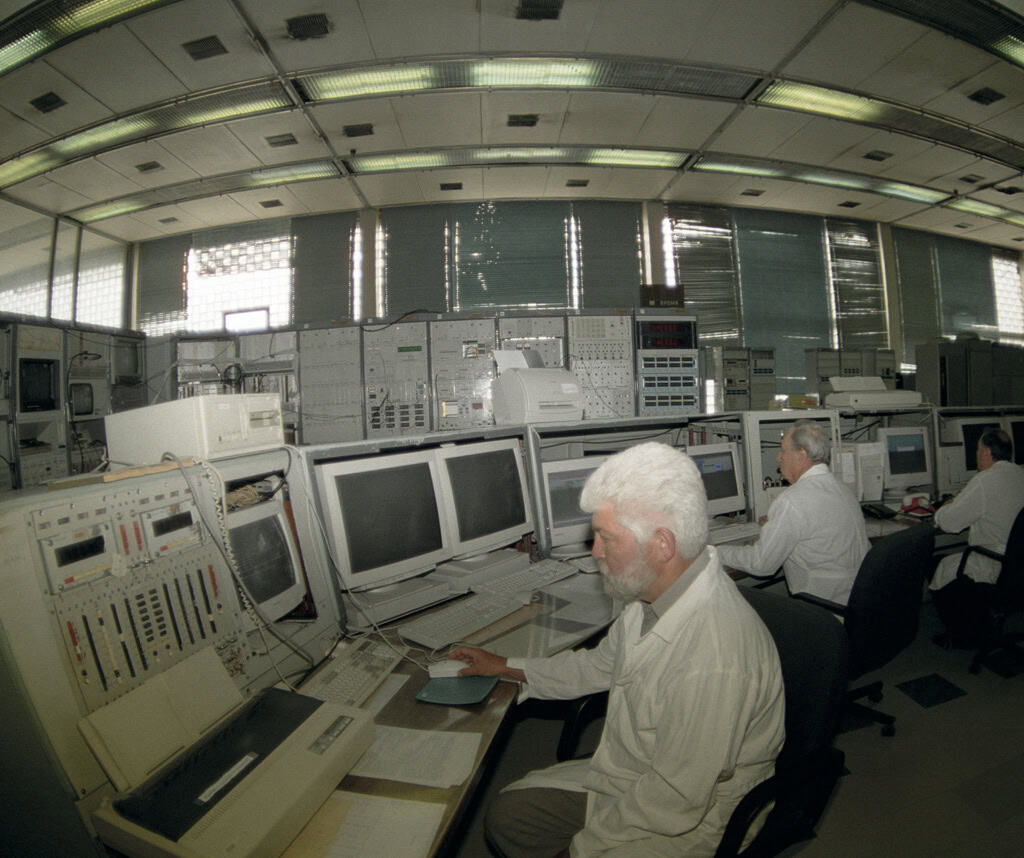
The U-70 synchrotron in Protvino was the largest particle accelerator in the Soviet Union. It was a massive, complex machine. Bugorski was a researcher at the Institute for High Energy Physics, tasked with keeping this beast running.
On that June afternoon, a piece of equipment malfunctioned. Bugorski leaned over to check it. The safety mechanisms failed silently. Without any warning, a 76 GeV proton beam fired straight through the back of his head.
He saw a flash he later described as “brighter than a thousand suns.” He felt no pain at all.
That detail alone is chilling. No pain. Just a blinding white light, and then nothing.
The beam entered through the back of his skull. It traveled through his occipital lobe, his temporal lobe, his left middle ear, and exited through the left side of his nose. The tissue along that path absorbed somewhere between 200,000 and 300,000 roentgens. To put that in perspective, 500 roentgens is typically considered a lethal dose. Bugorski absorbed roughly 600 times that amount in a narrow corridor through his brain.
Here’s the truly strange part: he understood immediately what had happened. And he said nothing. He kept working on the broken equipment. He chose not to tell anyone. He walked away from the machine and went about his day.
What Happened to Anatoli Bugorski’s Body Afterward
Another fascinating historical case is: Himalayan Fossil Hoax: The Greatest Paleontological Fraud That Fooled Science for Decades
The aftermath was grotesque and almost impossible to believe.
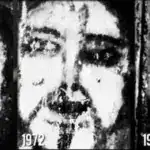
The left side of his face swelled to a horrifying size. His features became unrecognizable. Over the following days, his skin began to peel away. It didn’t peel randomly. It peeled in a precise line , tracing the exact path the beam had burned through his face, his bone, and the brain tissue beneath.
His body was literally revealing the wound from the inside out.
Soviet doctors rushed him to a clinic in Moscow. They expected to observe and document his death. That was essentially the plan. He had received a dose so far beyond survivable limits that his survival wasn’t considered a real possibility. They wanted to study what happened to a human body in its final days after such exposure.
He didn’t die.
His face remained permanently altered. The left side became paralyzed due to destroyed nerves. That paralyzed half never aged the same way. It has no wrinkles. Even today, one half of his face looks decades younger than the other. His left ear lost all hearing, replaced by a constant internal noise , a phantom sound that never stops. He developed epilepsy, experiencing occasional complex partial seizures throughout his life.
Yet his intellect remained almost entirely intact. He went on to complete his PhD. He returned to work as a physicist. He eventually became the experiment coordinator for the very accelerator that nearly killed him.
That detail feels like something out of a dark fairy tale.
The Soviet Silence Around the Anatoli Bugorski Accident
For over a decade, almost nobody outside a small circle of Soviet scientists and doctors knew this had happened.
The Soviet Union had strict policies around nuclear and radiation incidents. Secrecy wasn’t just encouraged , it was mandatory. Bugorski continued visiting a Moscow radiation clinic twice a year for examinations. He met regularly with other survivors of nuclear accidents. But he couldn’t speak publicly about what had happened to him.
The accident occurred just three years before the Chernobyl disaster would expose the Soviet Union’s pattern of hiding radiation events from the world. Bugorski’s case fit neatly into that same culture of enforced silence.
When the story finally became public in the 1990s, it landed like a thunderclap. A 1997 article in Wired magazine brought his story to Western audiences for the first time. Writer Masha Gessen described him as “a poster boy for Soviet and Russian radiation medicine.” Western researchers were fascinated. They wanted to study him. They wanted to understand how his brain had survived what should have destroyed it.
Bugorski was willing. He was genuinely interested in contributing to science. But he couldn’t afford to travel. He was living in Protvino on a modest salary. In 1996, he applied for disability status to help cover the cost of his epilepsy medication. His application was rejected.
The man who survived the impossible couldn’t get basic medical assistance from his own government.
The Question Science Still Can’t Fully Answer
Decades later, the medical and scientific community still doesn’t have a complete explanation for his survival.
Radiation damages cells by disrupting DNA. A high enough dose kills cells faster than the body can repair them. The doses Bugorski absorbed should have caused catastrophic, fatal damage throughout his brain. The fact that the beam was so narrow , essentially a pencil-thin line of destruction rather than a diffuse wave , likely played a role. The surrounding tissue wasn’t exposed. Only the specific corridor the beam traveled through was destroyed.
But that still doesn’t fully explain why his cognitive function remained. Why his personality stayed intact. Why the damage, though severe, didn’t cascade outward and shut down everything.
Some researchers have speculated that his brain’s plasticity , its ability to rewire around damaged areas , played a crucial role. Others point to the unique physics of a proton beam versus other forms of radiation. The truth is probably a combination of factors that we still don’t entirely understand.
His case remains genuinely unique in human history. No one else has ever survived a high-energy particle beam passing through their brain. There’s no comparison group. No established medical playbook.
He is, in the most literal sense, a category of one.
Bugorski is still alive as of this writing, in his eighties, living quietly in Russia. His story deserves far more attention than it gets. It raises questions about the limits of the human body, the nature of consciousness, and what happens when physics and biology collide in the most violent and unexpected way possible. Whatever the explanation, the fact that he survived feels less like science and more like something stranger , something that sits just outside the edges of what we think we understand.