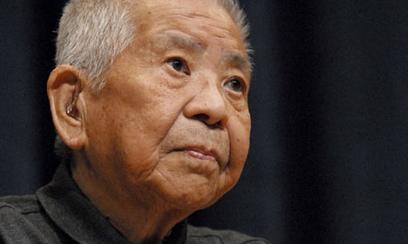
Tsutomu Yamaguchi survived not one, but two atomic bomb blasts. His story is one of the most extraordinary , and deeply unsettling , tales of human survival ever recorded. What are the odds that one man could be standing just 3 kilometers from ground zero in Hiroshima, drag himself home to Nagasaki, and then find himself 3 kilometers from a second atomic detonation just three days later? The mathematics of that survival border on the supernatural. Historians, scientists, and ordinary people have wrestled with this question for decades. Was it luck? Fate? Something stranger? Whatever the answer, his story refuses to be forgotten. It sits at the intersection of history, trauma, and the kind of coincidence that makes you question the very nature of reality.
Tsutomu Yamaguchi and the Flash Over Hiroshima
On the morning of August 6, 1945, Tsutomu Yamaguchi was walking toward the docks in Hiroshima. He was there on a business trip for Mitsubishi Heavy Industries. He had been in the city for nearly three months, designing oil tankers. That morning, he was finally heading home.
Then he remembered his hanko , a personal identification stamp. He turned back to retrieve it.
That small, mundane decision may have saved his life. Or it may have placed him directly in the path of history’s most destructive single moment.
At 8:15 a.m., the American B-29 bomber Enola Gay dropped the “Little Boy” atomic bomb. Yamaguchi was just 3 kilometers from the blast’s center. He later recalled seeing the bomber, then two small parachutes drifting down. Then came what he described as “a great flash in the sky.”
The explosion ruptured both his eardrums. It temporarily blinded him. It left severe burns across the left side of the upper half of his body. He crawled to a shelter. He found his two colleagues, Akira Iwanaga and Kuniyoshi Sato, who had also survived. The three men spent the night in an air-raid shelter surrounded by a city that had essentially ceased to exist.
The scene they walked through the next morning defied description. Tens of thousands were dead. The city was ash and ruin. Yet Yamaguchi and his colleagues made their way to the train station. They traveled back to Nagasaki. He arrived home heavily bandaged, partially deaf, and burned , but alive.
The atomic bombings of Hiroshima and Nagasaki killed an estimated 129,000 to 226,000 people. Yamaguchi had somehow walked away from the first one.
Tsutomu Yamaguchi Returns to Work , and the Second Bomb Falls
This event shares similarities with: Souvenir Hunting on the Battlefield of Waterloo: The Macabre Trade That Shocked Europe
Here is where the story crosses from remarkable into something almost cosmically strange.
Despite his horrific injuries, Yamaguchi reported back to work on August 9. He was heavily bandaged. He was in pain. But he went.
That morning, he sat before his supervisor and described what he had witnessed in Hiroshima. He explained how a single bomb had obliterated an entire city. His supervisor looked at him like he was insane. The man reportedly told Yamaguchi he was “crazy” , that no single bomb could do such a thing.
At that exact moment, at 11:00 a.m., the American bomber Bockscar dropped the “Fat Man” plutonium bomb over Nagasaki.
Once again, Yamaguchi was approximately 3 kilometers from ground zero. Once again, the windows exploded inward. Once again, a blinding white flash swallowed the world. This time, miraculously, the blast left him physically unharmed. His existing bandages, however, were completely destroyed. He suffered a raging fever and relentless vomiting for over a week. His hair reportedly fell out. The radiation was working through his body in ways that wouldn’t fully reveal themselves for decades.
The statistical improbability of this moment is staggering. At least 160 people are known to have experienced both bombings. But Yamaguchi is the only person the Japanese government officially recognized as a survivor of both explosions. That recognition didn’t come fully until March 24, 2009 , more than 60 years after the events.
The Haunted Life of Tsutomu Yamaguchi After the Bombs
Surviving two atomic blasts doesn’t mean the story ends cleanly. For Yamaguchi, the aftermath was its own kind of haunting.
During the Allied occupation of Japan, he worked as a translator for occupying forces. He returned to Mitsubishi and resumed designing oil tankers. On the surface, life continued. But the bombs never truly left him.
His wife was also a survivor of the Nagasaki bombing. She suffered for years from the effects of radiation exposure. Two of their children were born in the early 1950s. Both daughters reportedly experienced health complications linked to their parents’ radiation exposure. One of his sons died of cancer. The physical legacy of the bombs stretched across generations.
For years, Yamaguchi stayed quiet about his experiences. When Japan officially recognized hibakusha , “explosion-affected persons” , in 1957, his documents listed only Nagasaki. He accepted this. He tried to move on.
But as he aged, something shifted. The silence became impossible to maintain. In his eighties, he wrote a memoir called Ikasareteiru inochi (A Life Well-Lived). He wrote poetry. He appeared in a 2006 documentary about the 165 known nijū hibakusha , double atomic bomb survivors. He began speaking publicly about nuclear disarmament with increasing urgency.
He described his survival not as a gift but as an obligation. He felt compelled to speak for those who couldn’t. The dead of Hiroshima and Nagasaki numbered in the hundreds of thousands. He was still breathing. That demanded something from him.
The Atomic Heritage Foundation documents his testimony as one of the most significant first-person accounts of nuclear warfare ever recorded.
What His Impossible Survival Means for History
Tsutomu Yamaguchi died on January 4, 2010. He was 93 years old. The cause of death was stomach cancer , a disease with well-documented links to radiation exposure. He died in Nagasaki, the city where he was born, the city where the second bomb fell.
His story raises questions that history alone can’t answer. How does one body absorb two nuclear blasts and keep functioning for 65 more years? How does one mind carry those two white flashes , two moments when the world ended and somehow didn’t , without shattering completely?
Some survivors describe a strange detachment from the self during extreme trauma. Others speak of a profound sense of unreality that never fully lifts. Yamaguchi himself said he sometimes felt he was living a life that should have ended twice. That kind of psychological weight is its own form of haunting.
His case remains unique in all of recorded history. No other person has been officially documented as surviving two separate nuclear detonations. Whether you frame that as luck, fate, or something stranger , it sits in the mind like a splinter. Impossible. And yet undeniably, stubbornly real.