
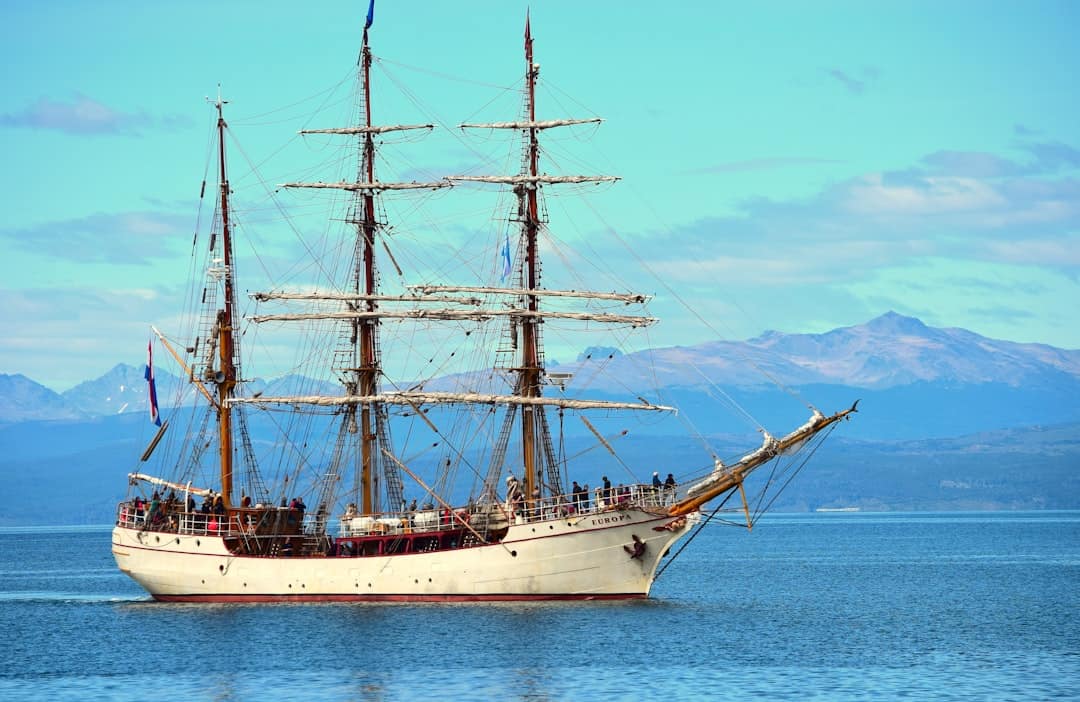
The Asterix (shipwreck) is one of the most chilling maritime discoveries of the modern era. A Gallo-Roman merchant vessel that caught fire and sank around AD 280, it lay undisturbed on the seabed off Guernsey for nearly 1,700 years. Nobody knew it was there. Nobody was looking. And when it finally surfaced from the deep, the story it told was stranger than anyone expected. Fire. Cargo. Silence. And a harbor that had been sailing over a ghost ship for centuries without knowing it.
This wasn’t just any wreck. It became the largest and most complete sea-going Roman shipwreck ever found outside the Mediterranean. And it was discovered on Christmas Day, by accident, by a single diver who simply noticed something odd poking out of the mud.
How the Asterix (shipwreck) Was Lost , and Eerily Preserved
The vessel was a Romano-Celtic merchant ship. It was built entirely of oak. It measured between 22 and 25 meters long, with a flat bottom designed for beaching in tidal waters where no proper harbor existed. It carried a single mast with a square sail. It was, in short, a working ship , unremarkable in its time.
Around AD 280, something went terribly wrong.
The ship caught fire while sitting at anchor in the mouth of what is now St Peter Port harbour. Nobody survived to write down what happened. Was it an accident? A raid? A cooking fire gone wrong? Nobody knows. The crew vanished from history. The ship burned and sank.
Here’s where the story turns genuinely strange. The fire that destroyed the vessel also saved it. The ship was carrying a cargo of pitch , a thick, tar-like substance used for waterproofing. When the flames hit, the pitch melted. It poured through the hull. It settled into a solid, preserving mass around the lower timbers. It basically mummified the ship from the inside.
For nearly 1,700 years, that pitch held the wreck together on the seabed. Without the fire, the wood would have rotted away to nothing. The very thing that killed the ship is what kept it alive.
Romano-Celtic vessels like this one were the workhorses of the Roman trade network. They carried goods across the English Channel and along the Atlantic coast. But almost none of them survived. This one did , because it burned.
The Asterix (shipwreck) Discovery That Stunned the Diving World
Related article: Capsizing: A Maritime Disaster That Changed Naval History Forever
It was Christmas Day, 1982. Diver Richard Keen was in the water near St Peter Port harbour in Guernsey. He wasn’t hunting treasure. He wasn’t on a mission. He just noticed something strange. Large, dark timbers were poking out of the seabed, recently exposed by the churning propeller wash of modern car ferries.
He had found a Roman ship.
The irony is brutal. The same modern ferries that revealed the wreck were also destroying it. Their powerful propellers were actively eroding the site every single day. The timbers had been sitting there, hidden in the silt, for over a millennium and a half. Then the 20th century arrived with its engines and its ferry routes, and started tearing the ancient wood apart.
It gets stranger. Before anyone realized what the timbers were, harbor maintenance workers had already collected some of them. They used the ancient Roman oak for firewood.
Nobody knew. Nobody could have known. But the thought of 1,700-year-old ship timbers going up in a harbor worker’s fireplace is genuinely haunting.
The ship got its nickname from a child. A boy visiting the site asked if it was Asterix’s ship , a reference to the beloved French comic book character. The name stuck. It became the Asterix (shipwreck), named after a fictional Gaul by a kid who thought Roman history was a cartoon.
Excavating the Asterix (shipwreck): A Race Against Destruction
Once the wreck was identified, the clock was ticking. The propeller wash from the car ferries wasn’t stopping. Every sailing eroded the site further. Archaeologists had to move fast.
The excavation was a delicate, painstaking operation. The pitch-preserved timbers were fragile. They had survived underwater for nearly two thousand years. But exposure to air and the modern world threatened to undo all of that in months.
After excavation, the timbers were sent to the Mary Rose Trust in Portsmouth , the same organization that had handled the conservation of Henry VIII’s famous warship. The process took twelve years. Twelve years of careful chemical treatment, controlled drying, and painstaking preservation work.
The timbers finally returned to Guernsey in 2015. They are now managed by Guernsey Museums and on public display. You can go see them. You can stand in front of wood that a Roman sailor touched in AD 280. Wood that burned. Wood that sank. Wood that pitch preserved in the dark for seventeen centuries.
The frame-first construction of the hull told archaeologists something important. This wasn’t a simple river barge. It was built for open sea. It was a proper merchant vessel, crossing real water, carrying real cargo, connecting the Roman Empire’s Atlantic edges to each other.
What was it carrying beyond the pitch? Where was it going? Who owned it? Those questions don’t have answers. The fire took the crew. The sea took the records. Only the wood survived.
The Ghost Ship Beneath the Ferry Route
There’s something deeply unsettling about the full picture here. For nearly 1,700 years, people sailed directly over this wreck without knowing. Medieval fishermen. Tudor traders. Georgian sailors. Victorian steamships. And then, for decades before the discovery, modern car ferries thundered over it twice a day, their propellers slowly eating away at the hull.
The harbor at St Peter Port has been in continuous use since Roman times. Sailors have anchored in those waters for millennia. And the whole time, a burned Roman ship was sitting in the mud beneath them.
The Asterix (shipwreck) is a reminder that history doesn’t always announce itself. Sometimes it just sits there, in the dark, waiting. Sometimes it takes a diver on Christmas morning to notice the bones.
The pitch that preserved it is still there. The oak that Roman hands shaped is still there. And the questions , who were they, where were they going, what really started that fire , will probably never be answered.
The full archaeological record of the vessel continues to inform our understanding of Roman maritime trade in the Atlantic. But for those of us drawn to the strange and the unexplained, the most powerful thing about this wreck isn’t the archaeology. It’s the silence. Nearly two thousand years of silence, broken by a diver who happened to look down on Christmas Day.
Related Posts
 Phaistos Disc: The Mysterious Clay Artifact That Defies All Attempts at Translation
 Tristan Da Cunha Lifeboat Disaster: 15 Men Vanished Without a Trace in 1885
 Biblical Conspiracy Theory: The Hidden Truth About Sacred Texts and Secret Societies
 Sanxingdui Culture: Ancient Chinese Mystery of Ritual Destruction and Alien Theories