
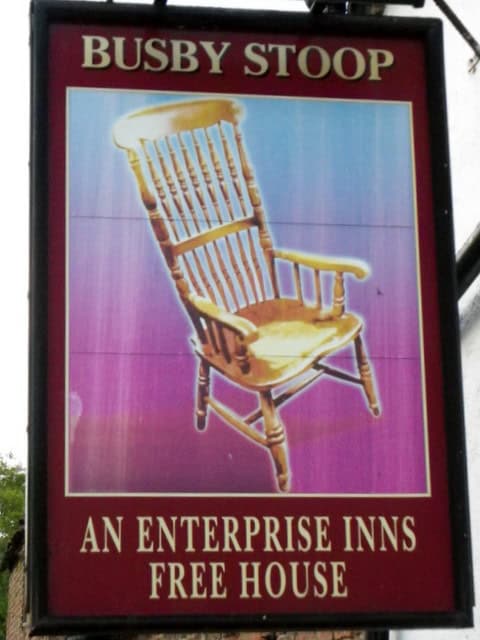
Busby’s Stoop Chair looks like an ordinary wooden pub chair. But this unassuming piece of furniture has been linked to death after death for over three centuries. The legend began with a murderer’s dying curse. It grew through a trail of bodies that stretches from a Yorkshire pub all the way to World War II bomber crews. Some call it superstition. Others aren’t so sure. Whatever you believe, the story of this chair is one of the darkest and strangest in English folklore.
The year was 1702. A violent criminal named Thomas Busby sat in his favorite chair at a North Yorkshire inn. He’d just murdered his own father-in-law, Daniel Auty, in a drunken rage. Authorities arrested him quickly. He was condemned to hang. But before they dragged him away, legend says he cursed that chair with his final breath.
The Dark Origins of Busby’s Stoop Chair
Thomas Busby was not a good man. Records describe him as a coiner , someone who forged counterfeit currency , and a notorious drunkard. His father-in-law, Daniel Auty, was no saint either. The two men shared a criminal enterprise and a mutual hatred. That hatred finally exploded in 1702. Busby beat Auty to death. The crime was brutal and undeniable.
Busby was convicted and sentenced to death by hanging. His corpse was then suspended in chains from a gibbet at a local crossroads. This was standard practice at the time. It served as a public warning. The gibbet stood near the inn where Busby had spent so many hours drinking. That inn eventually became known as the Busby Stoop Inn.
But before his execution, Busby allegedly demanded one final drink at his beloved inn. Authorities granted the request. Busby sat in his favorite chair one last time. Then, according to legend, he rose and issued his curse. “May sudden death come to anyone who dare sit in my chair.” Those words , whether real or invented , would echo through the centuries.
Historians note that many details of Busby’s life come from local legend rather than firm primary records. But the deaths that followed? Those are much harder to dismiss.
Busby’s Stoop Chair and Its Trail of Victims
This event shares similarities with: The Anguished Man: The Blood-Painted Canvas That Haunts Its Owner
The curse didn’t stay quiet for long. Stories of strange deaths connected to the chair began piling up over the years. Each account is more chilling than the last.
In 1894, a chimney sweep reportedly sat in the chair during a visit to the inn. The following morning, his body was found hanging near Busby’s old gibbet post. The location felt deliberate. Eerily symbolic. Nobody could explain how he ended up there.
World War II brought a new wave of victims. Canadian airmen from No. 433 Squadron RCAF were stationed near Thirsk from 1943. They flew dangerous night bombing missions over France and Germany in Halifax and Lancaster bombers. The pub became a favorite spot for the airmen to unwind. Many of them sat in Busby’s chair on a dare. Many of them never came home. Whether the chair was responsible or simply the brutal mathematics of wartime, the deaths fed the legend powerfully.
The postwar years brought more stories. In 1967, two Royal Air Force pilots sat in the chair together. They drove home from the pub that same night and crashed their car into a tree. Both died. A builder was dared to sit in the chair not long after. Hours later, he fell from a roof to his death. Even a cleaner got caught up in the curse. She accidentally stumbled into the chair while mopping the floor. She didn’t sit intentionally. It didn’t matter. She died shortly afterward in unexplained circumstances.
The pattern was impossible to ignore. Sit in the chair. Die soon after.
How Busby’s Stoop Chair Was Finally Stopped
By the 1970s, the chair had become a genuine problem. The pub’s landlord, Tony Earnshaw, had watched too many people tempt fate. He’d heard too many stories. He decided enough was enough.
Earnshaw refused to let anyone sit in the chair anymore. He mounted it high on a wall, out of reach. But even that didn’t feel safe enough. In 1978, he donated the chair to the Thirsk Museum. He wanted it somewhere controlled. Somewhere it couldn’t hurt anyone else.
The museum accepted it. But they weren’t taking any chances either. They hung the chair from the ceiling. No one could sit in it. No one could easily touch it. A warning label was attached explaining its history. Visitors could look but not touch.
The Thirsk Museum still holds the chair today. Staff members treat it with a kind of careful respect. Whether they believe in the curse or not, nobody at the museum has been willing to test it personally. That says something.
Psychologists offer a rational explanation. Confirmation bias makes humans see patterns in random events. Each death near the chair reinforced the legend. Fear grew. The superstition became self-fulfilling in a way. People who believed they were cursed may have acted recklessly. Or simply unluckily.
But confirmation bias doesn’t explain the chimney sweep found hanging at the gibbet. It doesn’t explain why the deaths clustered so specifically around people who sat in that particular chair.
What Happens When Nobody Sits Down Anymore
Here’s the strangest part of the whole story. Since the chair was suspended from the museum ceiling in 1978, no deaths have been attributed to it. Not one. The curse appears to require physical contact. Or perhaps the chair simply needs a victim willing to sit.
The Thirsk Museum has become a quiet pilgrimage site for people fascinated by dark history. Visitors stand beneath the chair and stare up at it. Some feel uneasy. Some feel nothing at all. A few report a strange heaviness in the room. Whether that’s atmosphere or something else is impossible to say.
Thomas Busby died over three hundred years ago. His gibbet post is long gone. His inn still stands, renamed and repurposed. But his chair endures. Suspended. Waiting.
The death toll linked to Busby’s Stoop Chair remains disputed. Folklore has a way of absorbing coincidence and turning it into prophecy. But the sheer number of accounts , spanning centuries and crossing from peacetime into wartime and back , makes this more than just a campfire story. It’s a genuine historical mystery. One that a Yorkshire museum takes seriously enough to keep a chair nailed to its ceiling.
Don’t sit down. Just in case.
Related Posts
 Delhi Purple Sapphire: The Cursed Amethyst That Terrorized Victorian London
 The Busby Stoop Chair: England’s Most Deadly Cursed Seat
 Trans-allegheny Lunatic Asylum: America’s Most Haunted Psychiatric Hospital
 The Brown Hand: Arthur Conan Doyle’s Haunting Tale of Colonial Guilt and Supernatural Justice