
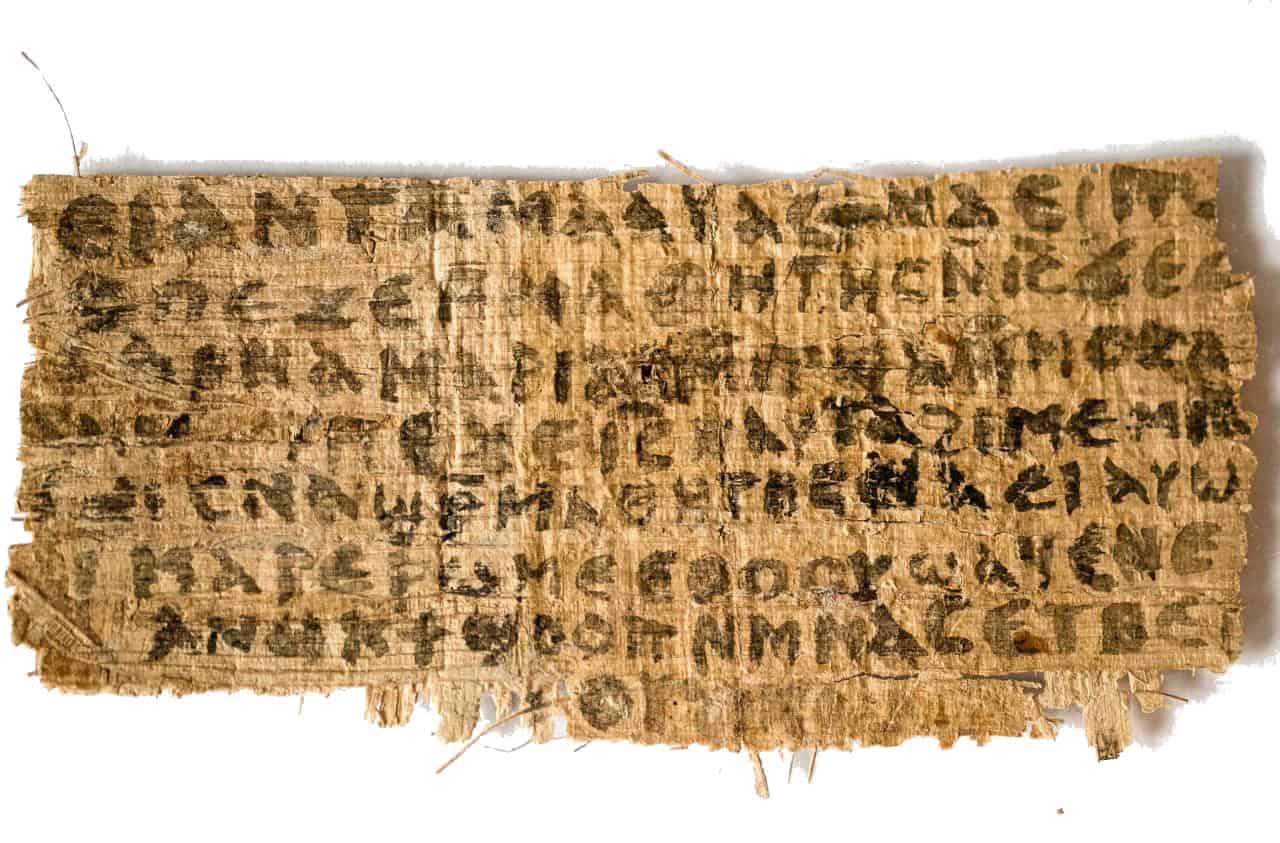
The Gospel of Jesus’ Wife burst onto the world stage in 2012 like a theological bombshell. Harvard professor Karen King announced she’d discovered an ancient papyrus fragment containing the explosive words: “Jesus said to them, ‘my wife…'” The tiny scrap of ancient paper seemed to rewrite Christian history. But this wasn’t just any scholarly discovery – it was the beginning of one of the most bizarre academic hoaxes ever uncovered.
What started as groundbreaking religious scholarship quickly spiraled into a tale involving academic fraud, pornographic websites, and a mysterious German immigrant with a dark past. The fragment’s journey from supposed ancient treasure to exposed modern forgery reads like a conspiracy thriller that would make Dan Brown jealous.
The initial announcement sent shockwaves through religious communities worldwide. Here was potential proof that early Christians believed Jesus had a wife. Media outlets exploded with coverage. The Vatican issued statements. Scholars debated furiously. But beneath the academic excitement, something far stranger was brewing.
The Gospel of Jesus’ Wife Announcement That Stunned the World
Professor Karen King unveiled the Gospel of Jesus’ Wife fragment at the International Congress of Coptic Studies in Rome on September 18, 2012. The timing couldn’t have been more dramatic. Standing before hundreds of scholars, King presented what she believed was a fourth-century Coptic translation of an even older Greek gospel.
The fragment measured just 4 by 8 centimeters – smaller than a business card. Despite its tiny size, the implications were enormous. The text contained eight incomplete lines on one side, with the controversial phrase about Jesus’s wife clearly visible. King suggested this proved some early Christian communities believed Jesus was married.
The academic world erupted. Some scholars immediately questioned the fragment’s authenticity. Others defended King’s findings. The Harvard Theological Review delayed publication pending further testing. Something about the papyrus felt off to many experts, but no one could yet prove why.
Strange details emerged almost immediately. The anonymous owner refused to reveal how he’d acquired the fragment. The provenance story kept changing. Red flags multiplied, but King pressed forward with her research, convinced she’d made the discovery of a lifetime.
Walter Fritz: The Gospel of Jesus’ Wife Forger’s Twisted Background
This event shares similarities with: Coffin Ship (insurance): When Greed Turned Vessels Into Floating Death Traps
In June 2016, investigative journalist Ariel Sabar dropped a bombshell. After years of detective work, he’d identified the papyrus owner as Walter Fritz – a German immigrant living in Florida with a deeply disturbing background. Fritz wasn’t just any amateur collector. He was a former Egyptology student who’d been accused of plagiarism and dropped out of the Free University of Berlin.
But Fritz’s academic failures were just the beginning of his bizarre story. Sabar discovered Fritz operated multiple pornographic websites featuring his wife in explicit group encounters. The man who’d provided Christianity’s most controversial “ancient” text was running an online adult entertainment empire from his Florida home.
Even more disturbing were Fritz’s childhood trauma claims. He alleged he’d been sexually abused by a Catholic priest while growing up in southern Germany. This revelation added a sinister psychological dimension to the forgery. Had Fritz created the fake gospel as revenge against the Catholic Church that had allegedly wronged him?
The connections grew stranger. Fritz’s wife, Anitra Williams-Fritz, authored books on “automatic writing” – allowing spirits to guide her pen. Their “Nefer Art” website displayed other suspicious antiquities. The couple seemed to exist in a twilight world of mysticism, pornography, and fake archaeology.
The Forgery Method Behind the Gospel of Jesus’ Wife Hoax
Andrew Bernhard, an independent researcher, cracked the forgery’s secret in late 2012. Using digital analysis, he proved Fritz had created the Gospel of Jesus’ Wife text by copying from a 2002 PDF of the Coptic Gospel of Thomas found online. The forger had literally cut and pasted ancient phrases to create his modern fake.
The method was surprisingly crude. Fritz had taken a genuine piece of medieval papyrus and written fake Coptic text using ancient phrases as templates. He’d aged the ink using techniques any amateur could learn online. The “ancient” gospel was actually a patchwork of real ancient texts reassembled in a modern workshop.
Scientific testing revealed more problems. The papyrus itself dated to the seventh-ninth centuries – much later than King’s proposed fourth-century date. Two scientists King commissioned to authenticate the fragment had undisclosed conflicts of interest. One was King’s childhood friend. The other was related to the only senior scholar who initially supported authenticity.
Fritz had even forged his own credentials. Sabar discovered Fritz had submitted a fake master’s degree in Egyptology when applying for jobs in 2013. The man was a serial fabricator who’d fooled one of America’s most prestigious universities with his elaborate deception.
The Aftermath and Lingering Questions
By 2016, King finally conceded the evidence “pressed in the direction of forgery.” The Gospel of Jesus’ Wife was officially debunked, but questions remained. How had such an obvious fake fooled Harvard scholars for years? Why had peer review failed so spectacularly? What drove Fritz to create such an elaborate hoax?
The scandal damaged reputations across academia. Harvard’s credibility suffered. The Harvard Theological Review refused to retract King’s original article, calling their decision editorial independence. Critics labeled this “a cop-out of Biblical proportions.” The institution that had championed the discovery now distanced itself from the embarrassing affair.
Fritz himself remained largely silent after his exposure. He’d achieved something remarkable – creating a fake ancient text that convinced some of the world’s leading biblical scholars. Whether motivated by money, revenge, or psychological trauma, he’d pulled off one of archaeology’s most audacious cons.
The Gospel of Jesus’ Wife saga serves as a chilling reminder that even experts can be deceived. In an age of sophisticated forgeries and academic pressure, the line between genuine discovery and elaborate hoax grows ever thinner. Fritz may have been exposed, but his creation will forever remain a testament to human gullibility and the dangerous allure of rewriting history.
The fragment now sits in Harvard’s collection, a permanent reminder of how easily the past can be manipulated to serve present obsessions. Contemporary newspaper accounts from the period show how quickly the story spread globally, demonstrating the public’s hunger for religious mysteries – even fabricated ones.