
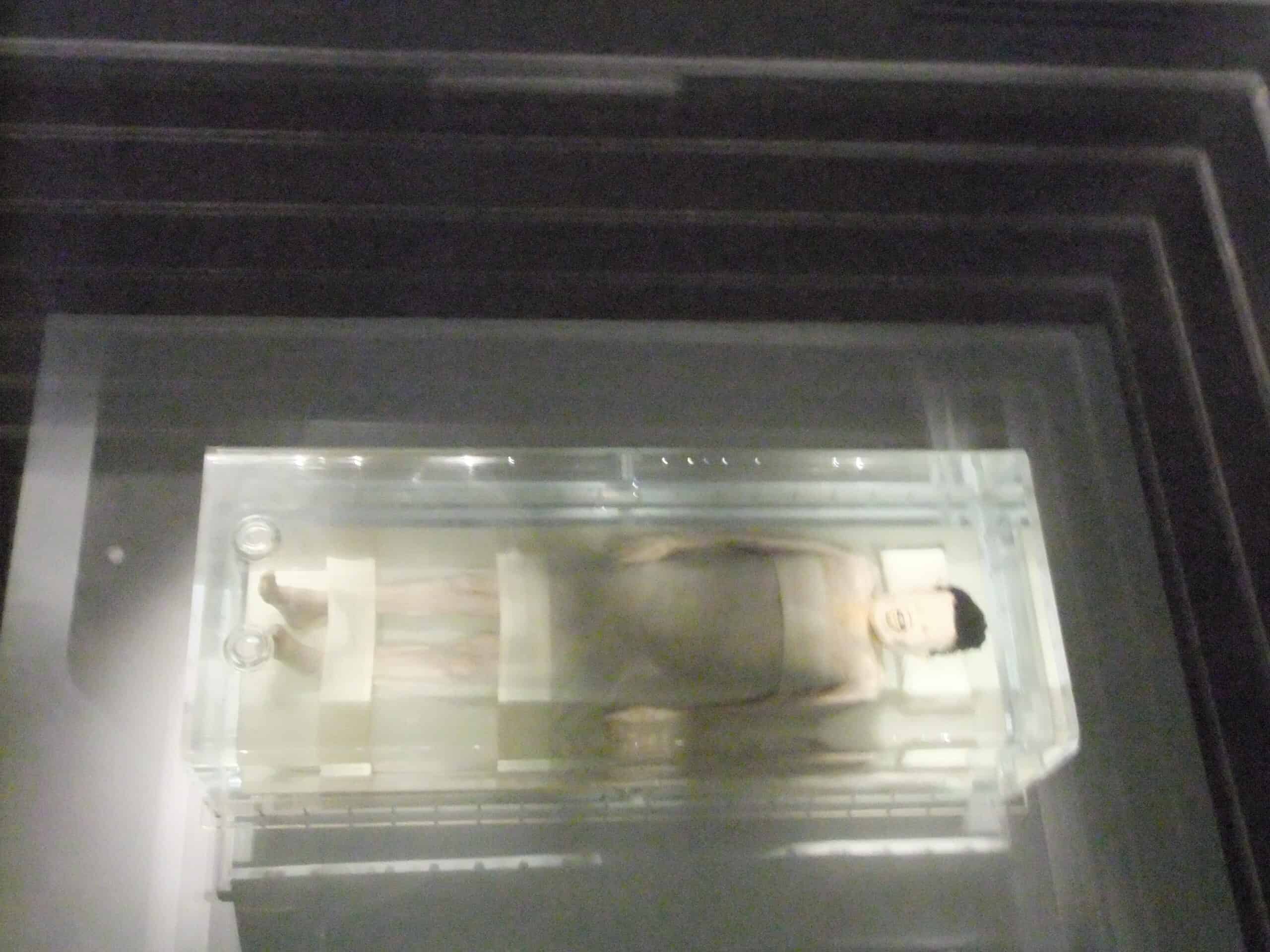
The Xin Zhui (Lady Dai) Mummy Preservation Mystery stands as one of archaeology’s most baffling enigmas. In 1971, construction workers digging an air raid shelter in Changsha, China, stumbled upon something impossible. They had uncovered the tomb of Lady Dai, a noblewoman who died over 2,000 years ago. But this wasn’t just any ancient burial. When archaeologists opened her coffin, they found a corpse so perfectly preserved that it seemed she had died yesterday, not millennia ago.
Lady Dai’s body retained flexibility in her joints. Her skin remained soft and elastic. Most shocking of all, blood still flowed through her veins. Scientists couldn’t explain how a human body could survive intact for two thousand years. The discovery challenged everything experts knew about decomposition and preservation. What they found defied the laws of nature itself.
The Xin Zhui (Lady Dai) Mummy Preservation Mystery Discovery
The tomb’s discovery sent shockwaves through the archaeological world. Workers had been digging when they noticed strange gases escaping from the ground. The smell was overwhelming and toxic. Local residents reported feeling ill from the fumes. When archaeologists arrived, they found something extraordinary waiting beneath the earth.
Lady Dai lay wrapped in twenty layers of silk. Her body rested in four nested coffins. The innermost coffin was sealed with a mysterious liquid. This reddish-brown fluid would become central to the preservation mystery. Scientists later identified traces of cinnabar, a mercury compound, in the liquid. But they couldn’t identify all the substances present.
The preservation was unprecedented. Lady Dai’s organs remained intact, including the delicate tissues in her lungs. Her muscles retained their original color and texture. Even her fingerprints were clearly visible. Pathologists could perform a complete autopsy as if she were a recent death. They discovered she had died from a heart attack, likely triggered by gallstones and diabetes.
The Mysterious Preservation Liquid and Its Deadly Effects
This event shares similarities with: Dyatlov Pass Incident: The Chilling Mystery That Haunts the Ural Mountains
The unknown liquid surrounding Lady Dai’s body posed its own mysteries. Scientists called it acidic and found it contained salt and magnesium. But other components remained unidentified. The fluid turned reddish-brown when exposed to air. Some researchers dubbed it the “Elixir of Immortality” due to its remarkable preservative properties.
The liquid proved dangerous to handle. Pathologists and surgeons examining Lady Dai developed severe rashes. These skin reactions persisted for three months after exposure. The mysterious substance seemed to attack living tissue while perfectly preserving dead flesh. This paradox added another layer to the already baffling case.
In 2003, scientists injected a new “secret compound” into Lady Dai’s remaining blood vessels. This top-secret fluid was designed to maintain her preservation for future study. The exact composition remains classified. Researchers continue studying both the original preservation liquid and their modern enhancement. Neither formula has been successfully replicated.
Modern Technology Reveals New Xin Zhui (Lady Dai) Mummy Preservation Mystery Secrets
Recent investigations have uncovered surprising details about Lady Dai’s origins. Analysis of parasites found in her body suggests she wasn’t born into nobility. Scientists discovered whipworm and schistosoma eggs in her remains. These parasites typically infected peasants who worked in rice paddies. The evidence indicates Lady Dai likely came from humble farming origins before marrying into wealth.
Digital reconstruction projects launched in 2024 created detailed 3D images of her appearance. The Hunan Museum’s digital restoration shows Lady Dai at ages 35 and 50. The reconstructions reveal visible pores and minute facial details. Plans are underway to create an AI-powered interactive version that can speak multiple languages.
However, controversy surrounds the digital reconstruction. Internet users noticed the facial features resembled the reconstruction expert rather than historical evidence. The museum denied any connection between the expert’s appearance and the final result. This debate highlights ongoing challenges in accurately depicting ancient individuals.
Scientific Theories and Unexplained Elements
Multiple theories attempt to explain Lady Dai’s impossible preservation. Some scientists point to the tomb’s unique construction. Four nested coffins created an airtight seal. Charcoal and clay layers provided additional protection. The mysterious liquid may have created a sterile environment that prevented bacterial growth.
Other researchers focus on the chemical composition of the preservation fluid. The acidic nature could have pickled the body like a natural formaldehyde solution. Mercury compounds from cinnabar might have acted as antimicrobial agents. However, no combination of known substances can replicate the preservation quality achieved in Lady Dai’s tomb.
The most puzzling aspect remains the continued presence of liquid blood. Normal decomposition breaks down blood cells within hours of death. Yet Lady Dai’s circulatory system retained functional blood after two millennia. This phenomenon has never been observed in any other mummy, regardless of preservation method. Modern science still cannot explain how blood remained viable for such an extraordinary length of time.
The Xin Zhui (Lady Dai) Mummy Preservation Mystery continues to challenge our understanding of death and decay. Despite decades of research and advanced technology, the secret of her preservation remains locked away. Lady Dai’s perfectly preserved body stands as a testament to ancient knowledge that modern science has yet to comprehend. Her tomb may have given up many secrets, but the greatest mystery of all endures.
Related Posts
 Longyou Caves: China’s 2,000-Year-Old Underground Mystery That Defies Explanation
 Tarim Basin Mummies: Ancient Secrets and Bizarre Burial Rituals in China’s Desert
 Sanxingdui Culture: Ancient Chinese Mystery of Ritual Destruction and Alien Theories
 Xin Zhui (Lady Dai) Mummification Mystery: The 2,000-Year-Old Body That Defies Science