Late on a June night in 1964, a journalist driving alone near a dark West Virginia river road came face to face with something that defied explanation. The Grafton Monster , a towering, pale, apparently headless creature , stepped out of the darkness and into American cryptid legend. It didn’t roar. It didn’t charge. It simply existed, massive and wrong, beside the road. And that was somehow worse than anything else it could have done.
West Virginia has always been fertile ground for the strange. The mountain hollows run deep. The rivers move quietly. And the darkness between small towns has a weight to it that’s hard to explain unless you’ve felt it yourself. Whatever Robert Cockrell encountered that night near Grafton has never been satisfactorily explained. Decades later, people are still asking what it was , and whether it’s still out there.
The Night the Grafton Monster Was First Seen
Robert Cockrell was a local journalist working for the Grafton Sentinel. He was driving along Route 119, near the Tygart Valley River, late on the night of June 16, 1964. What he saw stopped him cold.
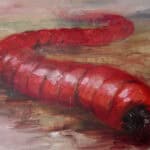
The creature stood an estimated 7 to 9 feet tall. That alone is staggering. But the details get stranger. Its skin had a smooth, almost seal-like quality. Its surface was pale , almost white in the darkness. And it appeared to have no head. Not a hidden head. Not a head tucked down. Simply no head at all.
Think about that for a moment. Something the size of a small truck, standing upright, smooth and pale as a grub, with no discernible face staring back at you. No eyes. No mouth. Just a massive, featureless column of flesh in the dark beside a river road.
Cockrell later described the encounter in detail. He was shaken enough that the story made it into his own paper. The Grafton Sentinel ran coverage on June 18, 1964. Within days, the town was in an uproar.
West Virginia’s cryptid history is rich, but few encounters carry the raw, unsettling quality of Cockrell’s report. He wasn’t a thrill-seeker. He was a working journalist driving home. That detail matters.
Some witnesses reported a strange whistling sound connected to the creature. Not a growl. Not a scream. A whistle. Something almost casual about that sound makes it deeply disturbing.
The Grafton Monster Panic of 1964
For more strange history, see: Lusca: The Half-Shark, Half-Octopus Terror Lurking in the Blue Holes of the Bahamas
Cockrell’s report lit a fuse. Within 48 hours, Grafton was buzzing. Teenagers grabbed flashlights and whatever tools they could find. Groups of young people flooded the Riverside Drive area, searching the riverbanks and tree lines for the creature.
This was both brave and spectacularly unwise. Nobody knew what it was. Nobody knew if it was dangerous. And yet dozens of people went looking for it in the dark, armed with flashlights and bravado.
The Grafton Sentinel scrambled to keep up. The June 18 edition reported on the search parties. The paper’s June 19 follow-up tried to cool things down. Editors attributed the whole episode to “spring fever” and overactive imaginations.
But that dismissal didn’t sit right with everyone. Cockrell stood by his account. And the creature’s description , consistent in its key details across multiple retellings , doesn’t read like the product of imagination. Headless, pale, enormous, and seal-smooth. That’s a weirdly specific hallucination to have.
What’s particularly chilling is what the creature didn’t do. It didn’t attack. It didn’t flee immediately. It was simply there, existing in a way that shouldn’t have been possible. Witnesses described a profound sense of wrongness. Not fear of violence, exactly. Something deeper. The feeling that the rules of the natural world had briefly stopped applying.
Rosemary Ellen Guiley’s Monsters of West Virginia (Stackpole Books, 2012) documented the Grafton case alongside other Mountain State cryptid encounters. Guiley noted the creature’s consistency across accounts and its place in a broader tradition of strange sightings in the region.
What the Grafton Monster Might Actually Be
Researchers and cryptid enthusiasts have floated several theories over the decades. None of them are fully satisfying. That’s part of what keeps the legend alive.
The most mundane explanation involves misidentification. A large bear standing upright can look shockingly humanoid in poor light. A pale bear , albinism occurs in wildlife , might explain the coloring. But the “no head” detail is hard to dismiss. Bears have very obvious heads when standing.
Some researchers point to the Tygart Valley River environment. The area has dense forest, deep shadows, and the kind of terrain where unusual animals might pass through undetected. Could something genuinely unknown have wandered down from the mountains?
Others have placed the creature in a broader paranormal context. West Virginia sits atop a region with unusual geological features , deep coal seams, underground voids, significant mineral deposits. Some paranormal researchers suggest these features correlate with cryptid and UFO activity, though this remains firmly in fringe territory.
There’s also the possibility that Cockrell encountered something psychological. Extreme fatigue, combined with the hypnotic effect of night driving beside a river, can produce vivid perceptual distortions. But Cockrell’s account was detailed, consistent, and reported immediately. He didn’t wait days or weeks to tell the story.
The whistling sound is perhaps the strangest detail of all. No known large animal native to West Virginia produces a sound that witnesses consistently describe as whistling. That detail has no good explanation.
From River Road Terror to Festival Icon
Sixty years after Cockrell’s encounter, Grafton leaned into its strange legacy in a big way. The town launched a Grafton Monster Festival in June 2024, timed to mark the 60th anniversary of the original sightings. Local media covered the event enthusiastically. There were pop-up displays, themed activities, and early plans for a related museum concept.
The festival returned in June 2025 with expanded programming. Entertainment, folklore events, and community activities drew visitors to the small West Virginia town. Plans for a 2026 edition were announced in January of that year, with organizers actively recruiting vendors and volunteers.
It’s a familiar arc. The thing that terrified a community becomes the thing that defines it. Grafton is a small town. The creature gave it a story that the whole world could share.
The creature also found a second life in digital form. Bethesda’s Fallout 76 (2018) featured the creature as an in-game enemy, introducing it to millions of players who’d never heard of the real 1964 encounter. For many people, the video game version was their introduction to the legend.
But the game version is tame compared to the original. A pixelated monster in a post-apocalyptic wasteland doesn’t capture what Cockrell described on that dark river road. The real thing , if it was real , had no face to render. No eyes to animate. Just smooth, pale wrongness standing in the dark.
Whatever lurked near the Tygart Valley River that June night remains unidentified. The Grafton Monster left no physical evidence. No body. No tracks confirmed by experts. Just a journalist’s account, a town’s brief panic, and sixty years of questions that nobody has managed to answer.
Some mysteries stay mysteries. This one seems determined to.