
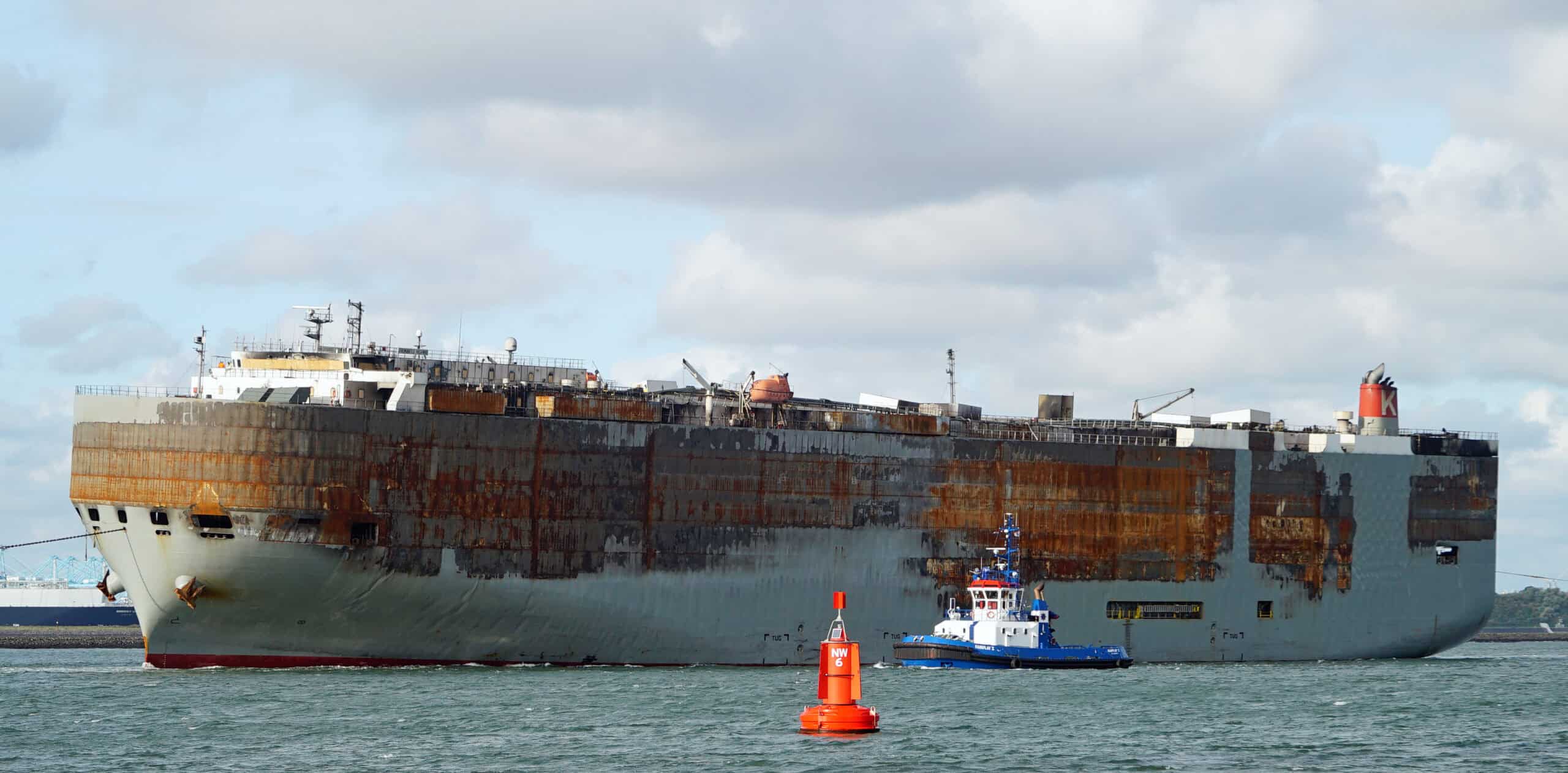
The Mv Fremantle Highway became the center of a maritime mystery when flames erupted across its decks in July 2023. This wasn’t just another ship fire. The incident unleashed a storm of conspiracy theories, tragic human drama, and questions that remain unanswered. What really caused the inferno that turned a routine cargo voyage into a nightmare?
The massive car carrier was transporting nearly 4,000 vehicles when disaster struck off the Dutch coast. Emergency calls captured eerie audio of someone claiming “the fire started in the battery of an electric car.” This single statement would spark global debates about electric vehicle safety. Yet the truth proved far stranger than the initial reports suggested.
Twenty-three crew members found themselves trapped aboard a burning ship in the middle of the night. The rescue operation that followed revealed disturbing failures in maritime emergency response. Some crew members made desperate leaps from the ship’s deck, plummeting 30 meters into the dark North Sea waters below.
The Mv Fremantle Highway’s Mysterious Fire Origin
The official investigation into what caused the Mv Fremantle Highway fire remains shrouded in mystery. Initial emergency calls blamed electric vehicle batteries, but evidence suggests a different story entirely. The ship’s four uppermost decks suffered the worst damage, yet these sections contained no electric vehicles whatsoever.
Salvage experts found cars literally fused to the deck plating on the upper levels. The intense heat had melted metal and plastic into grotesque sculptures. If electric car batteries caused the fire, why did the damage concentrate where no electric vehicles were stored? This contradiction has never been adequately explained.
The official Wikipedia entry notes that approximately 500 electric cars were aboard, far more than initially reported. However, these vehicles were stored on lower decks that escaped the worst of the inferno. The fire’s pattern defied the electric vehicle theory that dominated early news coverage.
Investigators discovered that the ship’s cargo included “high and heavy” items beyond just automobiles. The nature of this mysterious cargo has never been fully disclosed. What else was the Mv Fremantle Highway carrying that night? The shipping manifest raises more questions than it answers.
Chaos and Terror During the Mv Fremantle Highway Rescue
Related article: General Wayne Inn: Murder, Suicide, and Centuries of Haunting in Pennsylvania’s Most Notorious Tavern
The rescue operation revealed shocking failures in maritime emergency response protocols. Dutch Safety Board investigators later described the response as “confused and chaotic.” Emergency responders initially focused on fighting the fire rather than saving human lives. This decision proved nearly fatal for the trapped crew members.
No search and rescue helicopters were immediately available when the fire broke out. Desperate crew members faced an impossible choice: remain aboard the burning ship or jump into the frigid North Sea. Seven crew members chose to leap from the towering vessel, suffering serious injuries from the 30-meter fall.
One crew member died from injuries sustained during the chaotic evacuation. The victim’s identity was never publicly released, adding another layer of mystery to the tragedy. Why has this person’s story remained hidden from public view? Maritime accidents typically generate detailed victim profiles and investigations.
The remaining crew members were hospitalized with various injuries. Twenty-one were released by July 31st, but the ship’s pilot and captain required extended medical care. What injuries did they sustain that required such prolonged treatment? Medical records from the incident remain sealed.
Strange Salvage Operation of the Mv Fremantle Highway
The salvage operation itself presented unusual challenges and mysterious decisions. Tugboats couldn’t initially move the burning vessel due to “streaming conditions, tide and wind.” The ship seemed to resist human efforts to control its movement, as if possessed by some malevolent force.
Only the ship’s bow received water cooling during firefighting efforts. Salvage crews feared that flooding other sections might cause the vessel to become unstable and capsize. This created an eerie spectacle of a half-burning, half-floating ghost ship drifting through busy shipping lanes.
The Mv Fremantle Highway posed environmental threats to the UNESCO World Heritage Wadden Sea. The ship carried 1,600 tons of heavy fuel oil and 200 tons of marine diesel. An oil spill could have created an ecological disaster across three countries. Yet the ship’s tanks remained mysteriously intact despite the intense fire.
Smoke from the burning vessel created an otherworldly atmosphere across the Dutch islands. Residents reported strange odors and unusual colors in the smoke plumes. Some described the smell as unlike anything from a typical car fire. What chemicals were burning aboard the ship to create such distinctive emissions?
The Ship’s Resurrection and Unanswered Questions
Perhaps the strangest chapter in this maritime mystery involves the ship’s remarkable resurrection. Chinese shipyard Qingshan Group purchased the fire-damaged vessel for €11 million and renamed it “Floor.” The ship was transported to China aboard a semi-submersible vessel for complete reconstruction.
The decision to rebuild rather than scrap the Mv Fremantle Highway raised eyebrows in maritime circles. New car carriers cost around €100 million and require four years to build. The one-year rebuild project seemed almost too convenient given global shipping shortages. Was this purely economic, or were there other motivations?
The Safety4Sea maritime publication reported that the International Maritime Organization announced new safety standards for ships carrying electric vehicles. These regulations won’t take effect until 2027, leaving a dangerous gap in safety protocols.
The Panama Maritime Authority leads the official investigation as the flag state authority. However, their final report remains unpublished with no completion date announced. Why has this investigation taken so long? What sensitive information might the report contain?
The Mv Fremantle Highway fire exposed serious flaws in maritime safety and emergency response. Electric vehicles became convenient scapegoats while deeper systemic problems remained hidden. The ship’s phoenix-like resurrection in Chinese shipyards adds another layer of intrigue to an already mysterious incident.
This maritime disaster serves as a reminder that the ocean still holds secrets. Modern technology and safety protocols failed when they were needed most. The crew members who risked everything that night deserve answers about what really happened aboard their burning ship. Until the full truth emerges, the Mv Fremantle Highway fire remains one of the sea’s most puzzling modern mysteries.
Related Posts
 2024 Manila Bay Oil Spill: The Mysterious Sinking That Sparked Smuggling Suspicions
 Gang Stalking: The Dark Web Communities Behind Modern Paranoia and Violence
 Tawuran: Indonesia’s Deadly School Gang Wars That Terrorize Jakarta’s Streets
 Climate Lockdown: The Strange Birth of a Modern Conspiracy Theory