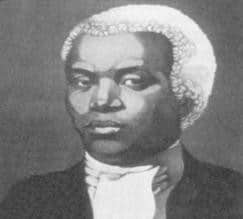
The Mythology of Benjamin Banneker is one of America’s strangest historical puzzles. Benjamin Banneker (1731–1806) was a real man. He was a self-taught mathematician, astronomer, and almanac writer. He also worked as a surveyor and farmer in Maryland. But over two centuries, his story grew into something far bigger , and far stranger , than the facts alone can support. Wild legends attached themselves to his name. Stories spread, mutated, and took on lives of their own. Some tales made him a near-supernatural figure. Others placed him at the center of events he may never have witnessed. What’s remarkable isn’t just that these myths exist. It’s how desperately people wanted them to be true , and how stubbornly they refused to die.
The Mythology of Benjamin Banneker and the Washington D.C. Ghost Story
Here’s where things get genuinely strange. One of the most persistent legends claims Banneker single-handedly saved Washington D.C. after Pierre Charles L’Enfant was fired in 1792. The story goes like this: L’Enfant stormed off and took all his city plans with him. The entire project faced collapse. Then Banneker stepped in. He allegedly reconstructed the entire city plan from memory , every street, every building placement , in just two days.
It’s a breathtaking story. It’s also almost certainly false.
Historian Silvio Bedini spent over 40 years at the Smithsonian Institution researching Banneker. He found no credible evidence supporting this tale. The city plans weren’t stolen. L’Enfant’s surveys remained accessible. Banneker had already left the surveying team months before L’Enfant’s dismissal.
Yet the legend refuses to die. It appears in school textbooks. Politicians repeat it in speeches. It shows up in documentaries. The story has a ghost-like quality , you can disprove it, but it keeps coming back.
Why does this particular myth haunt us so stubbornly? Perhaps because it’s the story people need. It places a Black man at the literal center of America’s founding. That’s a powerful image. But the hunger for that image may have distorted the historical record in ways we’re still untangling today.
The Mythology of Benjamin Banneker’s Wooden Clock , Fact or Fabrication?
Related article: Phantom Time Hypothesis: The Conspiracy Theory That Claims 300 Years Never Existed
Another legend surrounds Banneker’s famous wooden clock. According to accounts passed down through generations, Banneker carved a fully functioning clock from wood entirely from memory. He had supposedly only seen a pocket watch once. He took it apart, studied it briefly, then returned it , and built his own clock from scratch.
The clock allegedly kept perfect time for decades. It became a local wonder. People traveled to see it.
This story has more supporting evidence than the D.C. legend. Contemporary accounts do mention the clock. Historical records confirm Banneker built a striking clock around 1753. It’s considered one of the first clocks made entirely in colonial America.
But details get murky fast. How accurate was it really? Did he truly work only from memory? The pocket watch story grew more dramatic with each retelling. By the 20th century, accounts described the feat in almost superhuman terms. Some versions claimed the clock never missed a single second in over 50 years.
The clock itself was destroyed when Banneker’s cabin burned down on the day of his funeral in 1806. That timing feels almost too poetic. Too perfectly tragic. The destruction of the physical evidence on the very day of his burial left the legend with nothing to contradict it , and nothing to confirm it either. The mystery sealed itself shut at the worst possible moment.
The Mythology of Benjamin Banneker’s Journals and Lost Secrets
Banneker kept detailed journals throughout his life. He recorded astronomical observations. He tracked weather patterns. He documented his mathematical calculations. These journals were considered priceless historical documents.
Then most of them vanished.
When that fire consumed his cabin on October 9, 1806 , the same day mourners gathered for his funeral , the journals burned with everything else. What survived was fragmentary. Incomplete. Tantalizing in the worst way.
This created a vacuum. And legends rushed in to fill it.
Stories emerged claiming the lost journals contained secret knowledge. Some accounts suggested Banneker had predicted future events. Others implied he possessed astronomical insights that were decades ahead of his time. A few fringe accounts even hinted at connections to Freemasonry and coded messages hidden within his almanac calculations.
None of these claims have been verified. But they persist in certain corners of historical folklore.
What we do know is strange enough on its own. Banneker corresponded with Thomas Jefferson in 1791. He challenged Jefferson directly on the hypocrisy of slavery. Jefferson owned enslaved people while writing about freedom. Banneker called him out. That letter , and Jefferson’s cautious reply , survived. You can find historical documentation of this exchange through the Library of Congress.
The fact that this real, documented confrontation isn’t the most famous Banneker story tells you something unsettling about how history chooses what to remember.
Why These Legends Grew , and What They Cost
The myths surrounding Banneker didn’t appear randomly. They emerged with purpose. During the 1960s civil rights movement, writers and speakers sought powerful symbols. Banneker was real, accomplished, and largely forgotten. He became a canvas onto which people painted the heroes they needed.
This isn’t entirely cynical. Banneker deserved recognition. His actual achievements were remarkable. He taught himself advanced astronomy. He published almanacs from 1792 to 1797. He corresponded with one of America’s founding fathers as an intellectual equal.
But the embellishments created problems. When myths replace facts, the real person disappears. The actual Banneker , complex, self-educated, quietly revolutionary , gets buried under a superhero version that never existed.
There’s something genuinely eerie about this process. A real man gets transformed into a legend during his own lifetime. Then the legend grows after his death. The physical evidence burns in a mysterious fire on the day of his funeral. And two centuries later, we’re still arguing about what was real.
The Mythology of Benjamin Banneker ultimately reveals more about American anxieties than about Banneker himself. We created the myths we needed. The strange, stubborn persistence of these legends , even after repeated debunking , suggests they’re filling a gap that history left open. That gap is haunting in its own quiet way.