
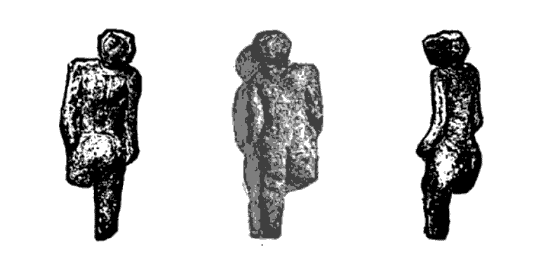
The Nampa Figurine emerged from the Idaho earth in July 1889, forever changing how we think about ancient mysteries. Mark Kurtz and his drilling crew were searching for water near Nampa when their pump brought up something impossible. From 320 feet below ground came a tiny clay doll that shouldn’t exist.
The figurine measured just 1.5 inches tall. It depicted a female figure with intricate details. Clothing and jewelry markings covered its surface. The right leg was broken off, but the craftsmanship remained clear. Scientists initially claimed it was 2 million years old. This would make it older than any known human artifact in the Americas by millions of years.
The discovery sent shockwaves through the scientific community. How could such an advanced piece of art exist before humans supposedly reached North America? The geological layers surrounding the figurine suggested an impossible age. Either human history needed complete rewriting, or something else was happening.
The Nampa Figurine Discovery That Baffled Scientists
Kurtz and his team were drilling through solid basalt when they made the find. They had penetrated 60 feet of rock before switching to a sand pump system. The pump operated at depths between 261 and 301 feet when it brought the figurine to the surface.
Kurtz later described the moment in his own words. He initially thought the object was a twig. After washing it in a nearby water barrel, he realized what he held. The small clay figure was perfectly formed despite its ancient burial.
Union Pacific Railroad president Charles Francis Adams Jr. became involved immediately. He contacted a team of archaeologists to examine the artifact. Adams wrote detailed letters endorsing the character of witnesses present during the discovery. He particularly praised George Miller Cumming, a Harvard graduate who examined the site shortly after the find.
The drilling process itself seemed to rule out modern contamination. The sand pump chamber was only 4.5 inches wide. Anything dropped from the surface would have been ground to powder by the pump’s action. The figurine somehow survived intact from its deep burial.
Scientific Analysis of the Mysterious Nampa Figurine
This event shares similarities with: Why Are Warm-water Ports Important to Russia: The Cursed Quest That Haunts Moscow’s Naval Dreams
Geologist Albert Allen Wright and chemist Frank Fanning Jewett conducted detailed studies of the artifact. They concluded that no novice craftsman could have created such work. The skill level required suggested an experienced artist.
The figurine’s red coloration puzzled researchers initially. Wright and Jewett determined that iron oxide deposition caused the color change. They successfully replicated the effect using acid staining techniques. This meant the original clay was likely a different color entirely.
The artifact contained traces of quartz mixed with the fired clay. Microscopic analysis revealed sophisticated firing techniques. Someone had heated the clay to precise temperatures to achieve the final hardness. The level of technological knowledge implied surprised scientists.
Comparison studies linked the figurine to other ancient artifacts like the Venus of Tan-Tan. However, the supposed age difference created major problems. No other artifacts from the Americas came close to matching the claimed 2-million-year timeline.
The Nampa Figurine Hoax Theory Emerges
Skepticism grew as more experts examined the evidence. Archaeologist Daniel Garrison Brinton argued the artifact was a 19th-century creation. John W. Powell supported this theory after conducting his own investigation.
Powell’s account proved particularly damaging to authenticity claims. He wrote about showing the figurine to a government geologist. The expert immediately recognized it as a toy made by local Pocatello Indians. When confronted with this identification, the person displaying it replied, “Well, now, don’t give me away!”
Members of the Pocatello tribe later confirmed the hoax theory. They examined the figurine and affirmed it matched their traditional craftsmanship. Tribal members said their children played with similar clay dolls regularly. The style and construction techniques were unmistakably Pocatello.
The archaeological community gradually reached consensus that the artifact was fraudulent. Geological explanations for how a genuine ancient artifact could reach such depths proved unconvincing. The drilling mechanism couldn’t have transported the figurine without destroying it.
Legacy of Idaho’s Most Controversial Artifact
Modern archaeologists universally reject the 2-million-year age claim. Carl Feagans from the University of Texas at Arlington definitively labeled it a hoax in 2018. The scientific consensus hasn’t wavered despite continued conspiracy theories.
The figurine currently resides in the Idaho State Historical Society Museum basement. Its fragile condition requires special storage and handling. Museum officials take extra care to preserve what remains of the controversial artifact.
Conspiracy theorists continue promoting alternative theories about the discovery. Some claim the artifact proves advanced ancient civilizations existed in North America. Others suggest government cover-ups hide the truth about human origins. These theories persist despite overwhelming evidence against authenticity.
The case highlights how religious and cultural motivations can influence scientific interpretation. Some supporters of the figurine’s genuineness were driven by desires to prove biblical timelines. This bias clouded objective analysis of the evidence.
The Nampa Figurine serves as a cautionary tale about extraordinary claims requiring extraordinary evidence. While the mystery captured imaginations for decades, careful scientific analysis revealed the truth. Sometimes the most compelling discoveries turn out to be elaborate deceptions that test our understanding of the past.