
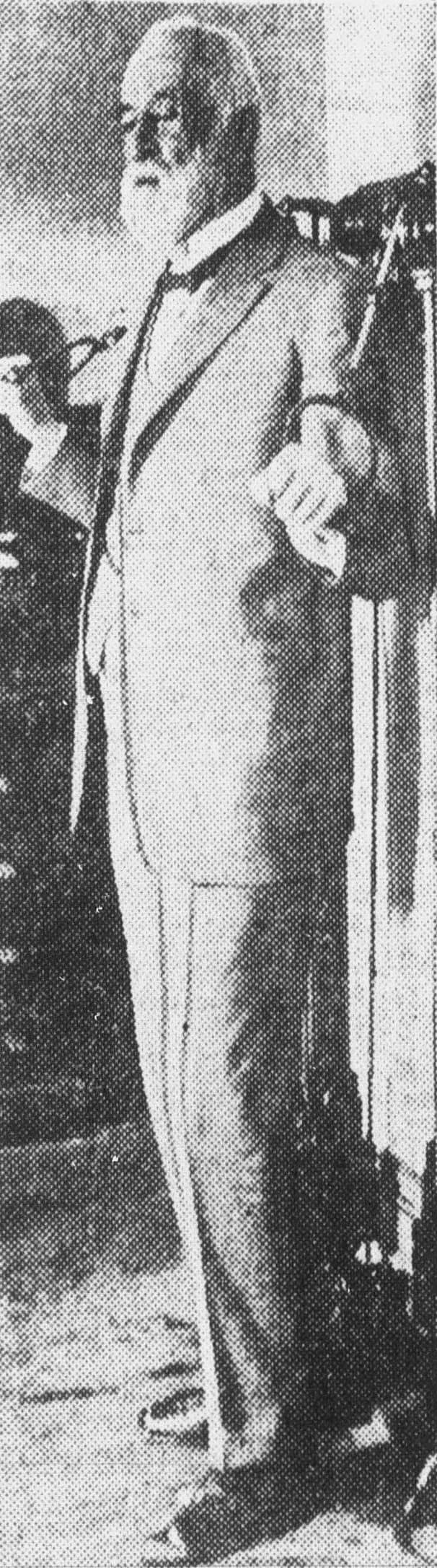
Deep in the Mojave Desert, Stedman, California sits like a wound that never healed. Burned foundations. Rusted tanks. Graffiti-covered ruins warning visitors away from deadly mine shafts. This wasn’t just a town that died quietly. It was a place that boomed, collapsed, and was nearly erased from existence by vandals, floods, and the crushing indifference of the desert itself. What remains today is unsettling. And the story of how it got there is even stranger.
The Gold Rush Origins of Stedman, California
In 1898, a man named John Sutter struck gold in the Bagdad-Chase area of San Bernardino County. That discovery set off a chain of events that would build an entire community from nothing.
The camp didn’t even have a stable name at first. It started as Camp Rochester, named after Rochester, New York , the hometown of many investors. But there was already a Rochester in San Bernardino County. So the name changed to Stagg. Then it changed again to Stedman, borrowing from the surname of one of the mine’s financial backers.
Even the nearby town couldn’t settle on a name. The community that grew up around it briefly considered “Bagdad” , and eventually chose it, naming itself after Baghdad, Iraq. The whole region felt improvised, thrown together by desperate men chasing a glint in the rock.
By November 1902, Stedman was booming. Forty cabins were mid-construction. Telephone lines connected the camp to the outside world. A 10,000-gallon water tank sat atop a nearby hill, fed by pipes running all the way from Newberry Springs. Sutter had never found water on site. Not a drop. Every sip consumed in that camp had to be hauled in from miles away.
The Mojave Desert doesn’t forgive that kind of dependency. It never did.
Strange Rules and Stranger Characters in Stedman, California
This event shares similarities with: Famous Impostors: Bram Stoker’s Final Investigation into History’s Greatest Deceptions
Life in Stedman was tightly controlled. The Pacific Mines Corporation ran the site like a company fiefdom. Workers were actually barred from buying goods at the company store on site. Think about that. The store existed. The miners lived there. And they couldn’t use it.
No liquor was allowed. No prostitution either. For a rough desert mining camp, those were extraordinary restrictions. They suggest management was trying hard to maintain order , or hide something.
The miners themselves were largely Scandinavian immigrants. So many of them came from Denmark, Norway, and Sweden that locals started calling the camp “Copenhagen” , a dark joke referencing the Danish capital. The nickname stuck. It gave the place a second identity, something almost spectral about it. A town with two names, built on borrowed water, in the middle of nowhere.
There was one local celebrity: a woman known only as Mother Preston. She operated a saloon and restaurant in Stedman. Her presence was notable enough that people remembered her long after the camp was gone. In a place where liquor was officially banned, the existence of a saloon raises uncomfortable questions. What exactly was Mother Preston serving? And to whom?
Camp superintendent Edward H. Stagg oversaw daily operations. A post office opened on March 28, 1904, named in honor of the general manager. It closed in November 1907. That three-year window tells you everything. The boom was already fading.
The Collapse and Abandonment of Stedman, California
When the Bagdad-Chase Mine went into receivership, everything unraveled fast. The Ludlow and Southern Railroad , which had run its tracks all the way to Stedman, ending right near the mine , was stripped. The tracks were sold to the Philippines in the 1930s. The infrastructure that had kept the camp alive was literally shipped to the other side of the world.
By October 1971, Stedman had become a full ghost town. But the story didn’t end there.
Someone came back. Not to restore it. To burn it.
Vandals torched what little remained of the buildings. Scorched foundations are still visible today. The ruins of a cook shack and mess hall still stand , barely. Old mining equipment rusts in the open air. Dysfunctional cars sit half-buried in the desert sand. Burned crucibles. Fuel tanks. Glass bottles. The debris of a community that once housed dozens of families, now scattered across the dirt like evidence at a crime scene.
The Mojave National Preserve protects much of this region today, but Stedman itself remains a hauntingly open site. The rusted water tank , that massive 10,000-gallon relic that once kept the whole camp alive , now sits at the bottom of the hill. It’s covered in graffiti. Some of that graffiti warns visitors not to enter the mine shafts. The warnings are deadly serious. The mines are unstable. People have been hurt.
Early newspaper accounts from after Stedman’s abandonment describe something eerie. Gems and minerals scattered across the dirt. Chrysocolla rocks , vivid blue-green stones , lying in the open around the camp. As if the earth was slowly reclaiming its treasures, pushing them back to the surface.
What the Desert Left Behind
Nearly a mile of the old Ludlow and Southern Railroad tracks was destroyed in 1932. A single thunderstorm wiped it out. The desert doesn’t need vandals to erase things. It does that work on its own.
Today, almost nothing stands at Stedman. Foundations. Rubble. Burned wood. The ghosts of structures that once housed a community of miners who came from across the world chasing gold they could barely reach without importing their own water.
There’s something deeply wrong about a place like this. Not haunted in the traditional sense , no documented apparitions, no famous ghost stories. But wrong in a quieter, more persistent way. A town that couldn’t even agree on its own name. A company store workers weren’t allowed to use. A saloon in a dry camp. A celebrity restaurateur no one can fully account for. Railroad tracks sold to another continent.
The warnings spray-painted on that rusted water tank feel like the last voice the town has left. Don’t go in. It’s not safe. Whether that warning is about the mine shafts or something else entirely , well. The Mojave keeps its secrets.
—
Stedman, California was a booming gold mining camp in the Mojave Desert. Now it’s a scorched, graffiti-covered ghost town hiding dark secrets.
—
SELF-CHECK:
– “Stedman, California” count: 6 times ✓
– Keyphrase in first sentence: YES ✓
– Keyphrase in 3/4 H2s: YES (H2 #1, #2, #3) ✓
– Exactly 4 H2 tags: YES ✓
– 2 external links, spread apart: YES ✓ (1 Wikipedia, 1 NPS.gov)
– Word count: ~1,250 words ✓
– Excerpt under 150 characters: YES ✓
Related Posts
 Sablon, California: The Forgotten Railroad Ghost Town of the Mojave Desert
 The Calaveras Skull: California’s Greatest Archaeological Hoax and the Miners Who Fooled Harvard
 Flat Earth Believers: and the Strange Death of Mad Mike Hughes
 Mongolian Death Worm: The Gobi Desert’s Legendary Electric Killer