
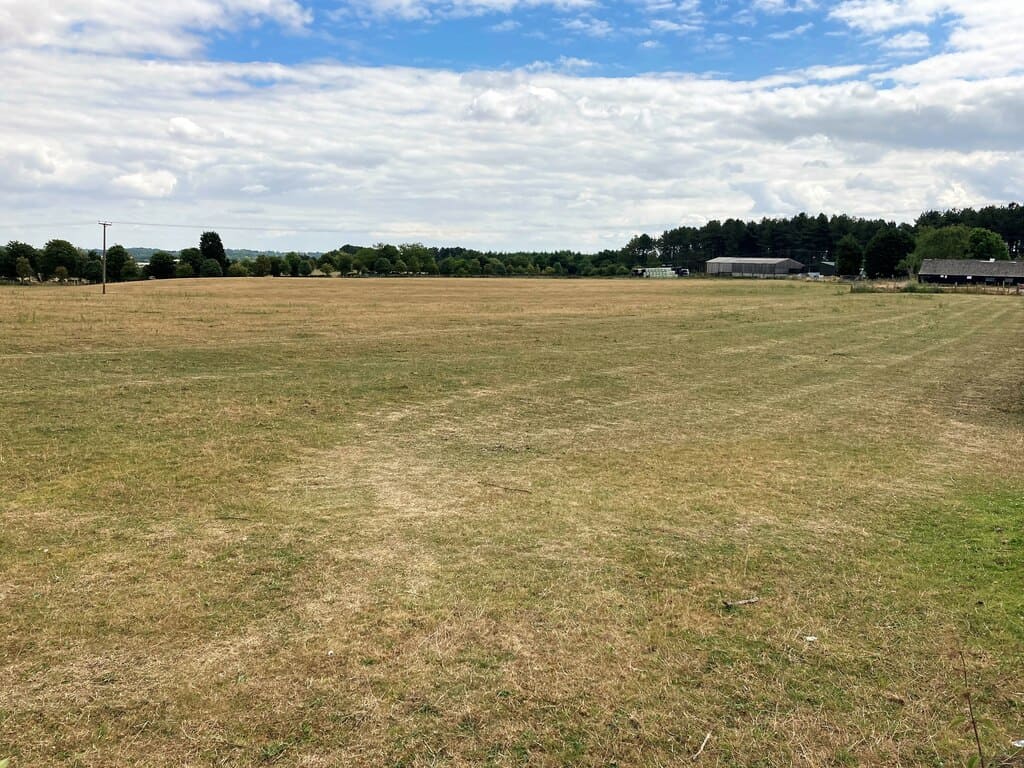
The Hollinwell Incident is one of Britain’s most disturbing and unexplained mass events. On a sunny Sunday morning in July 1980, hundreds of children gathered at a Nottinghamshire showground to march, play, and compete. Within hours, they were dropping like dominoes. Arms went limp. Eyes streamed. Children frothed at the mouth and collapsed onto the grass. Parents screamed. Ambulances flooded the scene. By the end of the day, 259 people had been rushed to four different hospitals , and nobody could explain why. More than four decades later, that explanation still hasn’t arrived. This is the story of a quiet English field that became a scene of mass horror, a government cover-up that may never be fully unraveled, and a mystery that refuses to die.
What Happened the Day of the Hollinwell Incident
Sunday, 13 July 1980 started like any other summer competition day. Around 500 children from 11 marching bands across the East Midlands had traveled up to 40 miles to reach the Hollinwell Showground near Kirkby-in-Ashfield, Nottinghamshire. Many were tired from early morning coach journeys. Most were nervous about performing. The show was scheduled to begin at 9 am.
Then, around 10:30 am, something went terribly wrong.
Band members began to fall. First one child. Then another. Then clusters of them. Witnesses described the scene as children falling “like nine pins.” One girl later described her symptoms: “My legs and arms felt as if they had no bones in them and I had a bad headache.” Others reported vomiting, sore eyes, burning throats, and dizziness. Some children were completely unconscious on the grass. A few were frothing at the mouth.
The panic spread fast. Parents rushed onto the field. Coaches were converted into makeshift recovery areas. Emergency services were overwhelmed. In total, 259 people , including children, adults, and babies , were transported to four hospitals, including the Queen’s Medical Centre in Nottingham. Nine children were kept in overnight.
Strangely, it wasn’t just the humans who suffered. Reports from the Hollinwell incident’s documented history mention that several horses at a nearby stable also fell ill around the same time. Whether that’s connected or coincidence, nobody has ever confirmed.
The Hollinwell Incident’s Most Chilling Theories
Another fascinating historical case is: Delhi Purple Sapphire: The Cursed Amethyst That Terrorized Victorian London
Investigators scrambled to find answers. Ashfield District Council launched an inquiry that examined contaminated water, food poisoning, radio waves from nearby transmitters, radon and methane leakage from old mine shafts, and crop spraying. The list of theories was long. None were conclusive.
The official inquiry eventually pointed to mass hysteria as the most likely cause. The idea was that anxiety, fatigue, and the power of suggestion triggered a chain reaction of psychosomatic symptoms. Parents and survivors were furious. They insisted the symptoms were real. You can’t fake frothing at the mouth. You can’t imagine your legs turning to jelly.
The pesticide theory gained serious traction in 2003. A BBC Inside Out investigation revealed that a fungicide called Calixin , containing the active ingredient tridemorph , had been sprayed on nearby grain fields just days before the event. Tridemorph was later banned by the British government in 2000. The World Health Organization classifies it as “moderately hazardous,” capable of irritating eyes, skin, and respiratory systems. The symptoms match disturbingly well.
Professor David Ray, a toxicology expert at Nottingham University, suggested in 2003 that the smell and chemical drift of tridemorph could have triggered the outbreak. However, meteorological data from that day suggested wind patterns made direct exposure unlikely. Nothing was ever proven.
The official report from 1980 was eventually produced , and then, somehow, lost. Investigators in 2013 confirmed the report existed but could not be traced. A vanished government document. A mass collapse of children. No answers. It’s the kind of detail that makes conspiracy theorists’ ears prick up.
The Hollinwell Incident’s Strangest New Theory: Toilet Gas
In 2022, on the 42nd anniversary of what locals now call “the Fainting Field,” a BBC Radio Nottingham podcast revisited the case. And it brought a genuinely unsettling new theory to light.
The temporary toilet block at the showground had been cleaned that morning with bleaching powder. Witnesses noted a powerful smell of chlorine and ammonia near the toilets. The toilets were positioned just 20 yards from where the children’s bands had been standing in formation.
Forensic science lecturer Jon Wright, from Nottingham Trent University, proposed that mixing bleach with other cleaning chemicals could have accidentally created chlorine gas in small concentrations. Chlorine gas causes exactly the symptoms reported: eye irritation, throat burning, nausea, dizziness, and collapse. It’s odorless in small doses , or smells faintly of bleach. Some witnesses that day reportedly noticed an unusual smell they couldn’t identify.
Could a poorly-cleaned portable toilet have poisoned hundreds of children? It sounds absurd. But it might be the most credible explanation yet.
The Fortean Times, which has documented strange mass phenomena for decades, covered the Hollinwell case in depth. Their researchers noted that the combination of chemical exposure, group anxiety, and physical exhaustion may have created a perfect storm. A trigger , however small , could have set off a cascading wave of real, physical symptoms.
A Mystery That Officials Would Rather Forget
The most disturbing part of this story isn’t the children falling. It’s what happened afterward.
Ashfield Council’s health officers published their investigation findings. They stood by the mass hysteria conclusion. In 2003, when new pesticide evidence emerged, the council stated it had no plans to reopen the inquiry. Case closed. Move on.
But the victims never moved on. Families spent years demanding answers. Some reported lasting health effects. The official report vanished. The council maintained silence for decades.
Then, in 2022, Ashfield District Council leader Jason Zadrozny made a remarkable statement. He said he “can’t stand by a report written 42 years ago” and acknowledged “concerns about the accuracy” of the original investigation. It wasn’t an apology. It wasn’t a new inquiry. But it was the closest anyone in authority had come to admitting the truth might still be buried.
Three hundred children collapsed on a summer morning. The official explanation was mass hysteria. The report disappeared. The pesticide company was never held accountable. The toilet block theory emerged 42 years later. And the field where it all happened still sits quietly in Nottinghamshire, keeping its secret.
The Hollinwell Incident remains one of Britain’s most unsettling unsolved mysteries. Something happened in that field in 1980. Whether it was chemical, psychological, or something else entirely , the children who fell that day deserve an answer that has never come.
Related Posts
 Phantom Time Hypothesis: The Conspiracy Theory That Claims 300 Years Never Existed
 False Titles of Nobility: The Dark History of Fake Lords, Phantom Princes, and Noble Scams
 The Yuba County Five: Five Men Vanished Into the Mountains — Only Four Were Ever Found
USS Indianapolis Shark Attack: The Deadliest Shark Encounter in History
The Yuba County Five: Five Men Vanished Into the Mountains — Only Four Were Ever Found
USS Indianapolis Shark Attack: The Deadliest Shark Encounter in History