
False Titles of Nobility have fooled kings, courts, and ordinary people for centuries. Somewhere between ambition and outright fraud lies a shadowy world of invented bloodlines, forged seals, and phantom aristocracies. People have killed for a title. Others have bankrupted themselves chasing one. And today, millions of dollars change hands every year so that strangers can call themselves “Lord” or “Countess” , titles that mean absolutely nothing. The scam is older than most nations. It’s stranger than most ghost stories. And it’s still happening right now, on your internet browser, probably in a tab you haven’t closed yet.
The Ancient Roots of False Titles of Nobility
The urge to fake noble status isn’t modern. It’s deeply, disturbingly human.
In 1666, King Louis XIV of France ordered a sweeping investigation called the grande enquête. What his officials uncovered was shocking. Hundreds of families across southern dioceses , places like Montpellier and Lodève , had been falsely claiming noble status for generations. Their motive? Tax evasion.
France’s taille tax was brutal. Clergy and nobles paid nothing. Everyone else paid everything. So families invented lineages. They forged seals. They fabricated ancestors who never existed. Some had been doing it for so long that even they may have forgotten the original lie.
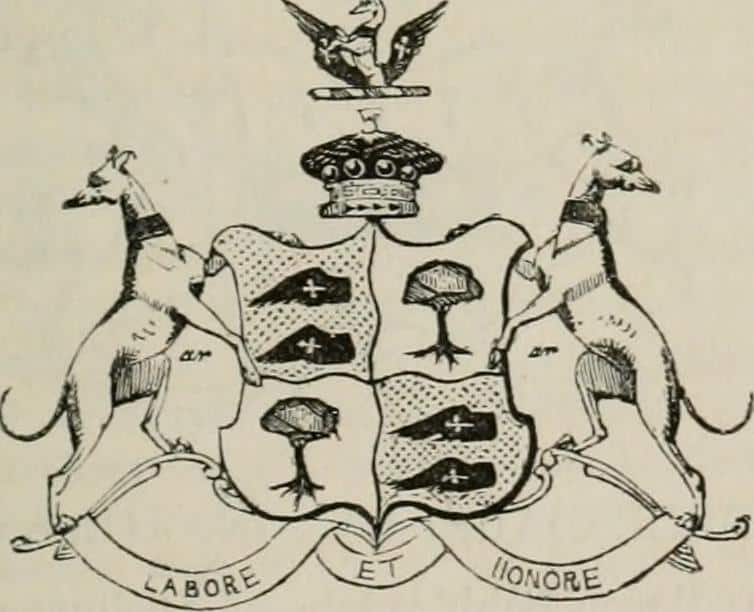
The fraud was breathtaking in scale. Whole communities had quietly rewritten their own histories. Fake coats of arms hung on real walls. Invented ancestors were buried in family plots with invented epitaphs.
This wasn’t just paperwork fraud. It was identity theft on a generational scale. Families passed lies down like heirlooms. Children grew up believing they were noble. Then Louis XIV’s investigators arrived and ripped the whole fiction apart.
The grande enquête exposed hundreds of usurpers. But it barely scratched the surface. Across Europe, similar frauds were running in parallel. The appetite for noble status , and the willingness to fake it , has never really gone away.
The taille tax system created one of history’s most powerful incentives for identity fraud. And people took full advantage of it.
The Man Who Called Himself Prince: False Titles of Nobility in the Modern Era
This event shares similarities with: Two-toed Tom: The Legendary Monster Gator That Terrorized the Deep South
The story of Stefano Černetić sounds like something from a fever dream.
Since the 1990s, this Italian national has proclaimed himself the Prince of Montenegro. Never mind that Montenegro has been a republic since 1918. Never mind that no legitimate royal house recognizes him. Černetić invented a royal lineage from scratch and ran with it , hard.
He “knighted” celebrities. He dispensed titles to anyone willing to pay. In 2015, he dubbed Pamela Anderson Countessa de Gigli in a ceremony that presumably involved a straight face. His representatives reportedly tried to sell titles for up to £500,000 each.
In 2017, Italian police raided his Turin residence on fraud suspicions. Several individuals came forward claiming he had sold them titles in exchange for thousands of pounds. He was later acquitted of some charges, partly because he never explicitly claimed state representation.
That’s the loophole that makes this world so slippery. As long as you don’t claim your fake title is legally recognized by a real government, you’re often operating in a gray area. The law struggles to catch up.
Černetić isn’t alone. Scholars estimate that fewer than 5% of title claims today are legally or historically valid. The fake title industry is worth millions of pounds annually. One real British noble , Richard Bridgeman, the 7th Earl of Bradford , runs a watchdog site called FakeTitles.com specifically to expose these schemes.
Then there’s the German adoption loophole. For roughly $100,000, some German noble families will legally adopt a commoner. The adoptee can then use a noble-sounding surname with a title attached. Want to be a baron? That’s your price. A prince? Bloomberg reported the cost runs to nearly $975,000. Germany’s monarchy ended in 1918, so these titles carry zero legal weight. But people still pay.
One buyer paid $20,000 to become a German prince. He later hired a private investigator. The investigator uncovered what appeared to be a many-layered fraud. The buyer had paid for a fantasy built on top of another fantasy.
The Scottish Laird Scam and False Titles of Nobility Online
The internet turned the fake title trade into a global industry overnight.
Websites like Established Titles sell tiny plots of Scottish land , sometimes as small as one square foot , and tell buyers they can call themselves “Lord,” “Lady,” or “Laird.” The company partnered with YouTube influencers and ran massive advertising campaigns. Millions of people bought in.
There’s just one problem. Scotland’s highest court has been crystal clear. Ownership of a souvenir plot does not give anyone the right to call themselves laird, lord, or lady. The Land Registration (Scotland) Act 2012 specifically forbids registering deeds for souvenir plots. Buyers receive no legal ownership whatsoever.
The 7th Earl of Bradford did the math on these sellers. He estimated their income at roughly $2.9 million per acre , for land that might actually be worth $100.
Established Titles eventually described their product as “a fun gift, meant for a good laugh.” But NBC News reported that many customers believed they were genuinely purchasing land and a real title. That gap between what sellers imply and what they deliver is where the strangeness lives.
Established Titles is owned by Hong Kong-based investment firm Galton Voysey Ltd. A 2026 investigation by the podcast Scams, Hacks & Frauds found that at least one property had been transferred to a new company called United Conservation Holdings Limited in March 2025. The exact relationship between the companies remains unclear.
The Manorial Society of Great Britain ran a similar operation in the UK. A judge ruled against its founder Robert Smith in 2001. The court awarded £4,500 in damages to a man who had purchased the title “Lord of the Manor of Flushing” , a manor that didn’t exist.
Historical newspaper archives show that title fraud has generated legal battles and public scandals for well over a century.
Why People Keep Falling For It
So why does this keep working?
Part of the answer is pure human psychology. A title feels like transformation. It promises that you can become someone different , someone better, someone elevated. That’s a powerful fantasy.
Part of it is legal murkiness. Under English common law, a person can call themselves almost anything as long as they’re not committing fraud or evading an obligation. That’s a wide gray zone. Sellers exploit it expertly.
And part of it is the internet’s ability to make anything look legitimate. A polished website, a wax seal graphic, some vague historical language , suddenly you’re a lord.
The genuinely purchasable titles are vanishingly rare. Scottish Barony titles , real ones , exist on the market but cost between $120,000 and $130,000 or more. Lordships and Earldoms run even higher. Michael Yellowlees of Scottish law firm Lindsays confirmed these figures to The Hustle. Real titles are expensive precisely because they’re real.
Everything else is theater. Expensive, elaborate, sometimes legally ambiguous theater.
False Titles of Nobility represent something genuinely strange about human nature. The hunger for status runs so deep that people will pay fortunes for a word , a single word , that means nothing. Lords of non-existent manors. Princes of abolished kingdoms. Lairds of one square foot of Scottish mud.
The titles are fake. The money is real. And the scam never seems to end.
Related Posts
 Phantom Time Hypothesis: The Conspiracy Theory That Claims 300 Years Never Existed
 The Hollinwell Incident: The Day 300 Children Collapsed Without Explanation
 The Yuba County Five: Five Men Vanished Into the Mountains — Only Four Were Ever Found
USS Indianapolis Shark Attack: The Deadliest Shark Encounter in History
The Yuba County Five: Five Men Vanished Into the Mountains — Only Four Were Ever Found
USS Indianapolis Shark Attack: The Deadliest Shark Encounter in History