
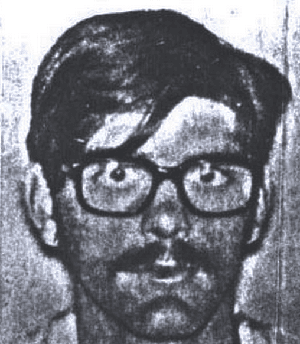
On the night of February 24, 1978, the Yuba County Five drove into the Sierra Nevada mountains , and into one of America’s most baffling unsolved mysteries. Five young men with intellectual disabilities or psychiatric conditions left for a college basketball game. They never came home. Four bodies were eventually recovered. One man simply ceased to exist. And the deeper investigators dug, the stranger and more disturbing the story became.
This wasn’t just a cold case. It was a case full of impossible questions. Why did they drive into the mountains instead of home? Why did they abandon a perfectly working car in the snow? Why did one man apparently survive for months , and then vanish without a trace? Decades later, those questions still don’t have clean answers. What we do have are clues. Dark ones.
The Night the Yuba County Five Disappeared
The five men were close friends. Bill Sterling, Jack Huett, Ted Weiher, Jack Madruga, and Gary Mathias all lived with their parents in Yuba City and Marysville, California. Their families called them “the boys.” They played basketball together on a team called the Gateway Gators. They were gentle, social, and deeply routine-driven.
On February 24, they drove 50 miles north to Chico to watch UC Davis play basketball against Chico State. They were spotted at the game, cheering loudly. Witnesses said they seemed happy. The game ended. And then they were gone.
Their car , a 1969 Mercury Montego driven by Jack Madruga , was found days later. It sat abandoned on a remote dirt road deep inside Plumas National Forest. The road was miles out of the way home. The car was in perfect working condition. It wasn’t stuck. It could have been driven out easily. But it wasn’t.
No one could explain why they went there. No one could explain why they stopped. Investigators found no signs of mechanical failure. No flat tires. No empty gas tank. The men had simply pulled onto a frozen mountain road, stopped, and walked into the dark.
A local man later came forward with a chilling account. He had spent that same night parked nearby in his own car. He told police he heard people moving around outside. He called out to them twice. Both times, the voices went silent. The flashlights went dark. Whoever was out there didn’t want to be found.
What the Yuba County Five Left Behind in the Snow
This event shares similarities with: Persian Princess: The Archaeological Hoax That Fooled the World in 2000
In June 1978, after the snowpack melted, searchers made grim discoveries. Three of the men , Madruga, Sterling, and Huett , were found as scattered bones. Animals had gotten to them first. But Ted Weiher was found inside a U.S. Forest Service trailer about 20 miles north of the abandoned car.
Weiher had been alive for a long time after the group disappeared. Estimates suggest he survived up to three months. The trailer contained food. It had heating materials. There was no reason he should have starved to death , but he did. He weighed just 80 pounds when he died.
He was also missing his shoes. Investigators found Gary Mathias’s shoes inside the trailer instead. This detail is haunting. It suggests Mathias was also in that trailer at some point. He may have survived even longer than Weiher. And then he walked out , into the mountains , and was never seen again.
Forensic analysts have pointed to a phenomenon called paradoxical undressing. In the final stages of hypothermia, the brain misfires. Peripheral blood vessels suddenly dilate. The body feels intensely hot. Victims tear off their clothing. It’s not a choice , it’s a brainstem response. A related phenomenon, terminal burrowing, causes people to crawl into small enclosed spaces as they die. Both behaviors have been documented in hypothermia deaths worldwide and may explain some of the stranger physical evidence found at the scene.
The Cover-Up Theory and the Yuba County Five Reclassification
For decades, authorities treated this as a tragic accident. Then, in October 2020, something extraordinary surfaced. An internal memo from the Yuba County Sheriff’s Office reclassified Gary Mathias’s disappearance as a “missing person/homicide” case. The memo stated he was believed to be a “victim of foul play.”
The most disturbing part? The memo included a direct instruction. It said the information was not to be forwarded to the Mathias family.
The Sheriff’s Office had quietly concluded foul play was involved , and then actively hid that conclusion from the victim’s own relatives.
The cover-up theory gained more traction when researchers discovered that the physical court file for a prior Mathias case was destroyed on July 23, 2019. This happened just months after California’s SB 1421 transparency law came into effect, requiring disclosure of police records. The file was replaced with a digital version dated the very next day. Critics have questioned what was removed and whether the digital record is complete.
Author Tony Wright spent four years investigating the case for his book Things Aren’t Right: The Disappearance of the Yuba County Five. He told A&E: “We lack concrete evidence. Mostly it’s circumstantial stuff , town talk, rumors. This case is a journey into madness.” Some investigators have pointed suspicion toward a specific individual in Mathias’s personal life. But no charges have ever been filed. No one has ever been arrested.
A Case That Refuses to Stay Buried
The story refuses to die. Netflix featured it in the docuseries Files of the Unexplained. NPR affiliate CapRadio named it one of their best stories of 2024. Multiple books have been written. Online communities obsessively map the terrain, trace the timeline, and debate the theories.
Was it hypothermia and disorientation? Was it foul play covered up by a small-town sheriff’s department? Was Gary Mathias a victim , or something else entirely? Did the five men encounter someone on that mountain road who didn’t want witnesses?
The witness who heard voices in the dark and watched the flashlights go out never got a satisfying answer either. He called out twice. They went silent. That image , five men standing in the snow, flashlights off, holding their breath , is the image that stays with you.
The Yuba County Five left for a basketball game on a Friday night in 1978. One survived for months in a frozen trailer and starved to death surrounded by food. Three became scattered bones. And one walked into the mountains and was swallowed whole. Somewhere in Plumas National Forest, or somewhere far beyond it, Gary Mathias’s fate remains sealed in silence , just like those flashlights blinking out in the dark.
Related Posts
 Phantom Time Hypothesis: The Conspiracy Theory That Claims 300 Years Never Existed
 False Titles of Nobility: The Dark History of Fake Lords, Phantom Princes, and Noble Scams
 The Hollinwell Incident: The Day 300 Children Collapsed Without Explanation
USS Indianapolis Shark Attack: The Deadliest Shark Encounter in History
The Hollinwell Incident: The Day 300 Children Collapsed Without Explanation
USS Indianapolis Shark Attack: The Deadliest Shark Encounter in History