
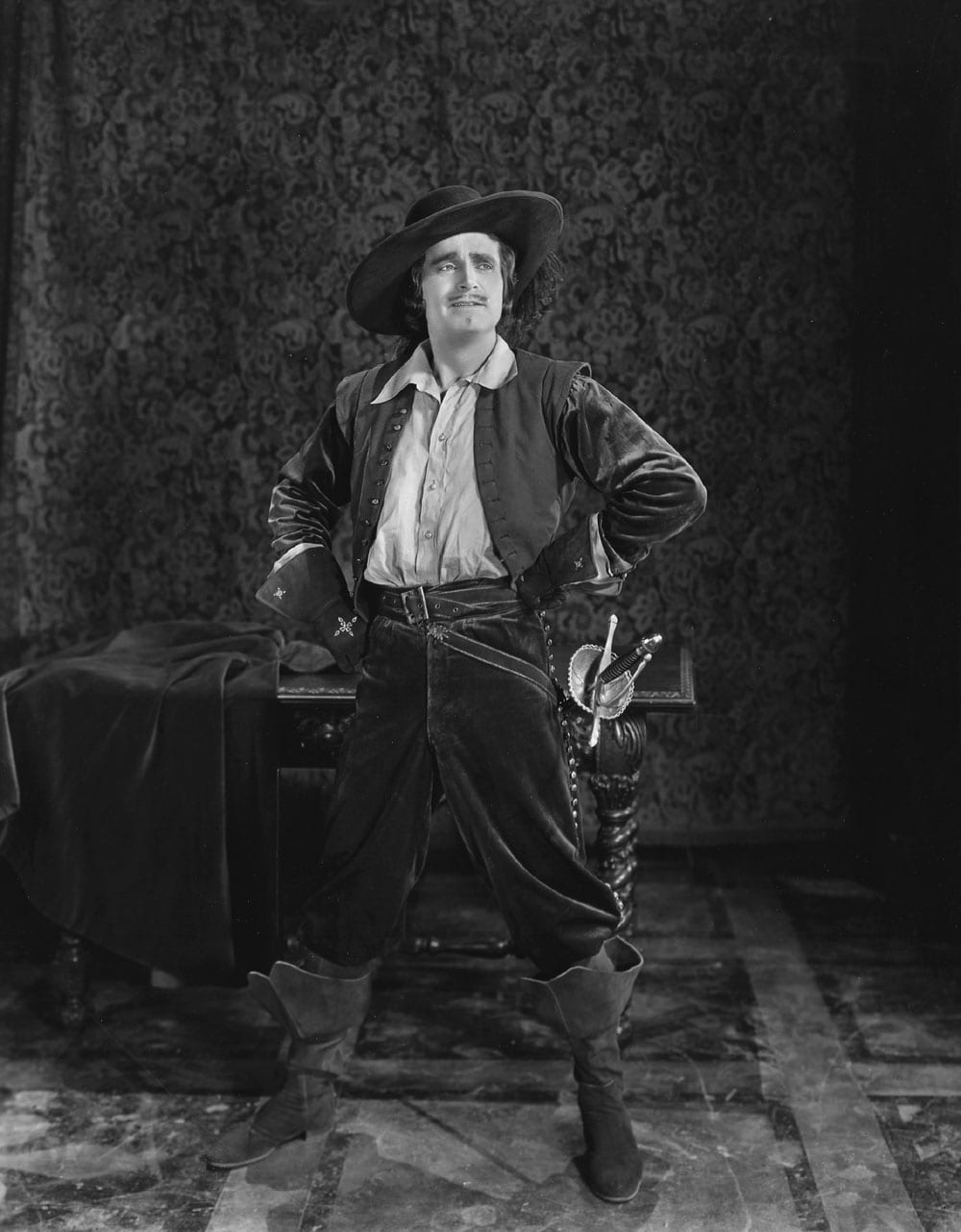
The Man in the Iron Mask is one of history’s most haunting unsolved mysteries. For 34 years, a nameless prisoner rotted in French dungeons. His face was hidden. His name was forbidden. Even after his death in 1703, the secret held. Who was this man? Why did King Louis XIV go to such extraordinary lengths to erase his existence? The answers died with the people who knew them , and the questions have driven historians mad for centuries.
This wasn’t just a prisoner. This was someone so dangerous , or so embarrassing , that the entire French state apparatus conspired to make him disappear. No trial. No public record. Just silence, iron, and stone.
The Man in the Iron Mask: A Prisoner With No Name
The arrest warrant was issued on July 19, 1669. The name on the document read “Eustache Dauger.” Almost certainly, that name was fake. Within weeks, this mysterious figure was locked inside the Pignerol dungeon , a grim fortress buried deep in the Alps. His jailer was a man named Bénigne Dauvergne de Saint-Mars. Saint-Mars received extraordinarily strict orders. The prisoner must speak to no one. He must be seen by no one. If he revealed his identity, he was to be killed immediately.
That last detail is chilling. Most prisoners don’t get executed for talking. This one would have been.
The prisoner spent 12 years at Pignerol. Then he was moved to Exilles Fort. Then to the island prison of Île Sainte-Marguerite. Finally, in 1698, he arrived at the Bastille in Paris. He died there on November 19, 1703. His cell was stripped bare after his death. The walls were scraped. The furniture was burned. Prison officials were desperate to destroy any message he might have scratched into the wood or stone.
Historical records about the prisoner confirm that the mask itself , famously described as iron , was actually black velvet cloth. Voltaire got that detail wrong. But the velvet mask is no less sinister. He wore it only when traveling between prisons or attending prayers at the Bastille. Historians believe Saint-Mars ordered the mask to boost his own importance. A mysterious masked prisoner made Saint-Mars look like a very powerful man indeed.
The Man in the Iron Mask and the Theories That Won’t Die
For more strange history, see: The Infamous Exploding Whale of 1970: A Cautionary Tale of Unintended Consequences
Over 50 different identities have been proposed for this prisoner. Fifty. That number alone tells you how desperate people have been to solve this puzzle.
The most dramatic theory came from Voltaire himself. He claimed the prisoner was Louis XIV’s older, illegitimate brother. A secret heir. A man whose very existence threatened the throne. Alexandre Dumas took it further. In his famous 1850 novel, the prisoner was Louis XIV’s identical twin , locked away at birth so there could be only one king. The idea is almost too dark to believe. A man imprisoned from infancy simply for being born.
Other theories pointed to Italian diplomat Ercole Antonio Mattioli. The prisoner’s burial certificate used the name “Marchioly” , suspiciously close to Mattioli. Some historians found this convincing. Mattioli had betrayed Louis XIV in a diplomatic deal. The king was furious. Locking him away forever and hiding his face? That sounds like royal revenge.
Then there’s the theory about Eustache Dauger de Cavoye , a French nobleman tangled up in political scandals. French historian Maurice Duvivier pushed this theory hard in 1932. It seemed solid. Then family letters surfaced in 1953 that blew it apart entirely.
Early accounts from the 19th century reveal just how obsessed writers and historians became with cracking this case. Poems, plays, novels, academic papers , all chasing the same ghost. The prisoner generated rumors even during his own lifetime. People whispered he was a Marshal of France. Or a son of Oliver Cromwell. Some said he was the Duke of Beaufort. Saint-Mars himself apparently encouraged these rumors. A mysterious prisoner meant a prestigious posting.
The Man in the Iron Mask and the Secrets His Jailer Kept
Saint-Mars is a fascinating and sinister figure in this story. He followed this prisoner for over three decades. When the prisoner moved to a new prison, Saint-Mars moved too. That’s not normal. Jailers don’t typically follow a single prisoner across four different facilities spanning 34 years.
What did Saint-Mars know? What had he been told?
The correspondence between Saint-Mars and his superiors in Paris gives us tiny, maddening glimpses. The prisoner was described as “only a valet.” He was imprisoned for “what he was employed to do” and “what he knew.” That second phrase is the terrifying one. He knew something. Something so dangerous that Louis XIV , the most powerful monarch in Europe , couldn’t risk it getting out.
The letters also show that Saint-Mars was deeply paranoid about the prisoner communicating with the outside world. When another prisoner at Pignerol accidentally came into contact with the masked man, Saint-Mars panicked. He wrote urgent letters to Paris. The contamination of information , even accidental , was treated like a crisis.
When the prisoner died, the burial certificate recorded the name “Marchioly.” But officials stripped his cell immediately. They destroyed everything that might carry a hidden message. The level of precaution was extraordinary. Even in death, the secret had to hold.
A Mystery That History Refused to Bury
The prisoner was buried in the Saint-Paul cemetery in Paris. No gravestone marked the spot. No name was carved anywhere. The French state had worked hard to make this man disappear , and in most official ways, it succeeded.
But the mystery refused to stay buried.
Voltaire kept asking questions. Dumas turned the story into legend. Historians across three centuries have hunted through royal archives, prison records, and diplomatic correspondence. They’ve found fragments. Clues. Contradictions. But never a definitive answer.
What makes this case so deeply unsettling isn’t just the unknown identity. It’s the system behind it. Louis XIV built an entire apparatus of secrecy around one man. Guards were threatened. Walls were scraped clean. Names were falsified. An entire human life was erased from the historical record , almost perfectly.
Almost.
Because we’re still talking about him. The velvet mask, the silent prisoner, the 34 years of darkness , they refused to disappear. Some secrets are too strange and too terrible to stay hidden forever. The mystery of this faceless prisoner endures as one of the strangest cover-ups in royal history. And until new documents surface from some forgotten archive, the truth stays locked away , just as he was.
Related Posts
 Uvb-76: The Mysterious Russian Radio Station That Never Stops Broadcasting
 Biblical Conspiracy Theory: The Hidden Truth About Sacred Texts and Secret Societies
 Why Are Warm-water Ports Important to Russia: The Cursed Quest That Haunts Moscow’s Naval Dreams
 Operations Plan: Argentina’s Secret Revolutionary Terror Document of 1810