
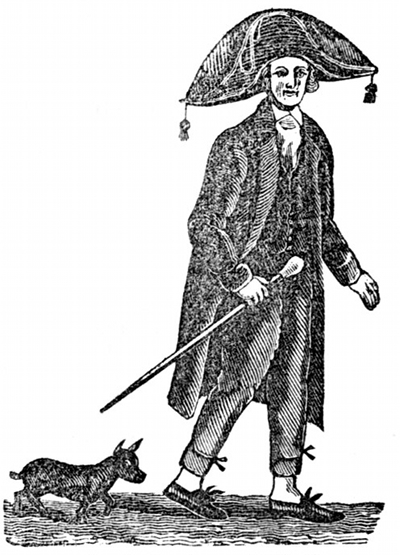
Timothy Dexter stands as one of the most peculiar figures in American business history. Born into poverty in 1747, this self-proclaimed “Lord” transformed himself into a wealthy merchant through a series of seemingly absurd investments that somehow turned profitable. His story reads like fiction, yet every bizarre detail is historically documented. Dexter’s rise from farm laborer to eccentric millionaire captures the unpredictable nature of early American commerce.
The future businessman started life with few advantages. His family had little money or social standing. At age eight, he left school to work on farms. This early departure from education would mark his entire life. He could barely read or write properly. Yet these limitations didn’t prevent his eventual success.
Timothy Dexter’s Early Business Ventures
Dexter’s path to wealth began with a calculated marriage in 1770. He wed Elizabeth Frothingham, a wealthy widow who was sixteen years his senior. This union provided the capital he needed to start his business career. The couple moved to Newburyport, Massachusetts, where they established shops selling leather goods and household items.
His first major investment came during the Revolutionary War’s aftermath. While others avoided the seemingly worthless Continental currency, Timothy Dexter bought large quantities at rock-bottom prices. When the government honored these notes, even at reduced rates, he made substantial profits. This bold move established his reputation as either a financial genius or incredibly lucky fool.
The Massachusetts Historical Society documents how Dexter used these profits to build ships and enter international trade. His lack of formal education led to business decisions that seemed destined for failure but somehow succeeded spectacularly.
The Legend of Timothy Dexter’s Impossible Profits
For more strange history, see: Coles Mills, Ohio: The Lost Ghost Town of Delaware County
Dexter’s most famous business adventures began when rivals tried to sabotage him with ridiculous suggestions. They told him to ship bed warmers to the tropical West Indies, expecting certain financial ruin. Instead, his ship captain cleverly marketed them as ladles for the molasses industry. The venture generated handsome profits.
Next came wool mittens to the Caribbean. Again, this seemed like commercial suicide. Yet Asian merchants purchased the entire shipment for export to cold Siberian markets. Each apparent disaster transformed into unexpected success.
The phrase “shipping coals to Newcastle” originated from another prank played on Dexter. Rivals suggested he send coal to Newcastle, England, where coal mining was the primary industry. By pure chance, his shipment arrived during a miners’ strike. Local buyers paid premium prices for his cargo.
Literary Ambitions and Eccentric Behavior
Despite his limited literacy, Timothy Dexter fancied himself a great philosopher and writer. In 1802, he published “A Pickle for the Knowing Ones,” a rambling book filled with his opinions on various subjects. The text contained virtually no punctuation and featured creative spelling throughout.
When readers complained about the lack of punctuation, Dexter published a second edition. He added an entire page of punctuation marks at the end, telling readers to “peper and solt it as they plese.” This response perfectly captured his defiant attitude toward conventional standards.
The book covered topics ranging from politics to religion to personal grievances. Dexter used it to settle scores with neighbors and express his unconventional views. Despite its poor writing quality, the book became something of a curiosity and sold reasonably well.
The Self-Proclaimed Lord’s Mansion and Statues
Success allowed Timothy Dexter to indulge his eccentric tastes fully. He purchased a grand mansion in Newburyport and filled the grounds with wooden statues of famous figures. These included George Washington, Thomas Jefferson, and other prominent Americans.
Most notably, he erected a statue of himself with the inscription “I am the first in the East, the first in the West, and the greatest philosopher in the Western World.” This grandiose self-assessment reflected his inflated ego and disregard for modesty.
Dexter also gave himself the title “Lord,” despite America’s rejection of aristocratic titles. He insisted others address him as “Lord Timothy Dexter” and became offended when they refused. His neighbors generally viewed him as an amusing but harmless eccentric.
The mansion served as a stage for elaborate parties and social gatherings. Dexter loved being the center of attention and used his wealth to ensure constant entertainment. He employed musicians, hosted dinners, and created spectacles that drew curious visitors from across New England.
Legacy of America’s Strangest Success Story
Timothy Dexter died in 1806, leaving behind a fortune estimated at several hundred thousand dollars,equivalent to millions today. His success story became legendary throughout New England and beyond. People struggled to understand how someone so seemingly unqualified could achieve such remarkable prosperity.
Modern historians debate whether Dexter was genuinely lucky or possessed hidden business acumen. The historical record suggests a combination of both factors contributed to his success. His willingness to take risks others avoided, combined with fortunate timing, created opportunities for profit.
His literary work, though poorly written, provides valuable insight into early American attitudes and social conditions. Scholars study “A Pickle for the Knowing Ones” as an example of vernacular writing from the period. The book reveals the thoughts and prejudices of a self-made man who rejected intellectual pretensions.
Timothy Dexter’s story continues to fascinate readers today because it challenges conventional wisdom about business success. His achievements suggest that sometimes unconventional thinking and bold action matter more than formal education or social connections. While his methods can’t be easily replicated, his legacy reminds us that American commerce has always rewarded those willing to take calculated risks on seemingly impossible ventures.
Related Posts
 András Toma: The Last WWII Prisoner of War’s 56-Year Ordeal
 Dublin Whiskey Fire: The Night Rivers of Burning Alcohol Flowed Through Irish Streets
 Shapira Scroll: The Mysterious Biblical Manuscript That Drove a Man to Suicide
 Longyou Caves: China’s 2,000-Year-Old Underground Mystery That Defies Explanation